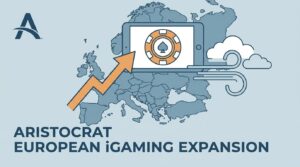
Aristocrat Leisure Limited, the Australian gaming technology giant, has signalled a renewed push into European iGaming markets even as the segment faces regulatory tightening and intensifying competition across multiple jurisdictions. The company’s strategic pivot comes at a time when European online gambling revenues continue to grow but margins are being squeezed by compliance costs, taxation shifts, and evolving player protection mandates. Still, Aristocrat appears to view the continent as a long-term growth corridor worth the near-term friction.
What Aristocrat’s European Push Means for the iGaming Landscape
The decision to deepen its European footprint reflects a broader calculation by Aristocrat that the region’s regulated markets, despite their complexity, offer durable revenue streams that outweigh the operational burden. Here are the strategic takeaways worth watching:
- Regulated market prioritisation: Aristocrat is leaning into jurisdictions where licensing frameworks are established, accepting higher compliance costs in exchange for market legitimacy and long-term stability.
- Content-first strategy: The company’s iGaming division is betting that proprietary game content, rather than platform infrastructure alone, will be the differentiator in crowded European markets.
- Cross-selling between land-based and digital channels remains a core thesis, particularly in markets where Aristocrat already has physical gaming machine footprints.
- Margin pressure is acknowledged but not deterring investment: Leadership appears willing to absorb short-term profitability headwinds to secure positioning before market consolidation accelerates.
- The move signals confidence that European regulatory fragmentation will eventually give way to more harmonised frameworks, rewarding early movers with scale advantages.
Why Europe, and Why Now?
European iGaming is not a simple market. It is, in practice, a patchwork of 30-plus national regulatory regimes, each with its own licensing requirements, tax structures, advertising restrictions, and responsible gambling mandates. Germany’s Interstate Treaty on Gambling, for instance, introduced strict deposit limits and a controversial slot spin timer that reshaped operator economics overnight. Italy and Spain have imposed sweeping advertising bans. The UK’s Gambling Commission continues to tighten affordability checks under its ongoing white paper reforms.
And yet the numbers remain compelling.
Europe’s online gambling gross gaming revenue surpassed €30 billion in recent years, with regulated markets accounting for a growing share as grey and black market operators face increasing enforcement. For a company like Aristocrat’s digital gaming division, which has been building its iGaming portfolio through both organic development and acquisitions, the calculus is straightforward: the total addressable market is large enough to justify the regulatory overhead, provided the content resonates with players across cultural and linguistic boundaries.
What remains less clear is whether Aristocrat’s land-based pedigree translates into a genuine competitive edge online, or whether it simply provides a brand halo that fades once players are inside a digital lobby choosing between hundreds of competing slot titles.
The Headwinds Are Real
Aristocrat’s optimism should be read against a backdrop of genuine operational challenges. Regulatory compliance in Europe is not a one-time cost; it compounds. Each new jurisdiction requires dedicated legal resources, localised content, payment processing integrations, and ongoing reporting obligations. Smaller operators have already begun exiting certain markets (a trend that arguably benefits larger players like Aristocrat, but one that also reflects the punishing economics involved).
Tax rates vary wildly. The Netherlands imposes a 37.8% rate on gross gaming revenue. Germany taxes turnover rather than revenue for certain products, a structure that has driven some operators to reconsider their German strategies entirely. France maintains a state-controlled monopoly on certain verticals while liberalising others.
| Market | Key Regulatory Feature | Tax Structure |
|---|---|---|
| United Kingdom | Affordability checks, white paper reforms | 21% GGR (remote gaming duty) |
| Germany | Slot spin timer, deposit limits | 5.3% turnover tax on slots |
| Netherlands | Strict advertising limitations since 2023 | 37.8% GGR |
| Italy | Comprehensive advertising ban | Varies by product; up to 25% GGR for online |
| Spain | Advertising restrictions, self-exclusion registry | 20% GGR |
These are not minor operational details. They shape product design, marketing strategy, and ultimately whether a market generates positive returns within a reasonable timeframe.
Content as the Competitive Moat
Aristocrat has historically thrived on the strength of its game library. Titles like Buffalo and Lightning Link have become fixtures in land-based casinos globally. Translating that brand equity into digital environments is the company’s central bet in Europe. But online players behave differently than those sitting in front of a physical cabinet. Session lengths are shorter. Attention is more fragmented. And the competitive set is vastly wider, with studios like Pragmatic Play, Evolution, and NetEnt commanding significant player loyalty.
The company’s acquisition of Roxor Gaming and its investment in Anaxi, its dedicated iGaming technology arm, suggest a recognition that organic content development alone may not be fast enough. Speed to market matters in a sector where player preferences shift quickly and operator procurement cycles favour suppliers who can deliver localised, certified content across multiple jurisdictions simultaneously.
How Regulatory Fragmentation Shapes Strategy
One underappreciated dimension of Aristocrat’s European ambitions is how regulatory fragmentation forces strategic choices that ripple across the entire product pipeline. A game designed for the UK market may need significant modification to comply with German spin-speed requirements. Marketing assets created for Spain are unusable in Italy. Even random number generator certifications differ between testing labs approved in different jurisdictions.
This fragmentation creates a natural barrier to entry that favours well-capitalised companies. Aristocrat, with its substantial R&D budget and global operational infrastructure, is better positioned than most to absorb these costs. But being better positioned is not the same as being immune. The question is whether the revenue generated in each individual market justifies the bespoke investment required to serve it.
Frequently Asked Questions
What is Aristocrat’s primary iGaming strategy in Europe?
Aristocrat is focusing on regulated markets where it can leverage proprietary game content and its existing land-based brand recognition. The company is investing in localised content development and regulatory compliance infrastructure to build long-term market share rather than chasing short-term revenue.
Which European markets present the biggest challenges for iGaming operators?
Germany and the Netherlands stand out due to their aggressive tax structures and restrictive product regulations. Germany’s turnover-based tax on slots, in particular, has forced several operators to reassess their presence entirely.
How does Aristocrat plan to differentiate itself from established European iGaming suppliers?
Through content. The company believes its portfolio of proven land-based titles, adapted for digital play, gives it an edge. Whether that thesis holds against digitally native competitors with years of European player data remains an open question.
Is European iGaming still growing?
Yes, though growth rates are moderating as major markets mature and regulatory costs increase. The shift from unregulated to regulated activity continues to expand the addressable market for licensed operators.