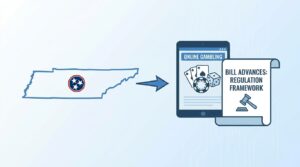
Tennessee lawmakers have advanced House Bill 1885, a significant step towards establishing a regulatory framework for online gambling in the state. The bill, which aims to provide clearer guidelines for operators and protect consumers, was passed in committee and is expected to be debated on the floor in the coming weeks. This development is crucial as states across the U.S. continue to grapple with the implications of expanding online gambling.
Strategic Insights
The progression of HB 1885 reflects a growing trend among states to regulate online gambling more effectively. As lawmakers consider the implications of this bill, several key areas emerge:
Why New Regulatory Framework matters
Developments around Tennessee Advances Bill to Regulate Online Gambling Framework can be better understood when viewed alongside parallel moves in the same market. For context, see New Regulatory Framework. Related reporting on New Regulatory Framework Set to Transform iGaming Landscape offers additional context for how operators and regulators are approaching this phase.
Reading both pieces together can help readers track how positioning, licensing priorities, and execution are evolving. (In a significant development for the iGaming industry, regulators have unveiled a new framework aimed at enhancing compliance and player protection across multiple jurisdictions….)
- Business Implications: The bill could create a structured environment for online gambling operators, potentially increasing market participation and revenue generation.
- Regulatory Impact: Establishing a clear regulatory framework may enhance consumer protections and ensure responsible gambling practices.
- Market Positioning: Tennessee’s move could position it as a leader in the Southeastern U.S. gambling market, attracting operators looking for a compliant state to enter.
- Strategic Risks: Opponents of the bill argue it may lead to increased gambling addiction and social issues, which could result in public backlash.
Legislative Context and Stakeholder Reactions
The passage of HB 1885 comes amid a broader national conversation about the regulation of online gambling. According to a report by the American Gaming Association, online gambling revenue in the U.S. reached $3.7 billion in 2020, highlighting the growing interest in this sector. Stakeholders, including gaming operators and consumer advocacy groups, have expressed their views on the proposed legislation.
Supporters argue that a regulated market ensures fairness and transparency, while critics have raised concerns about the potential for increased gambling addiction. The Tennessee Council on Problem Gambling has stated that any regulatory framework must include robust measures for addiction prevention and treatment.
Market Comparisons and Trends
As Tennessee considers its approach to online gambling, it is worth examining how other states have implemented similar regulations. States like New Jersey and Pennsylvania have established comprehensive regulatory frameworks that include licensing requirements, tax structures, and consumer protections.
In New Jersey, for example, online gambling has generated over $1 billion in revenue since its inception in 2013, demonstrating the potential economic benefits of a well-regulated market. Tennessee’s proposed framework will likely draw on these successful models while addressing the unique concerns of its constituents.
Potential Economic Impact
The economic implications of HB 1885 could be substantial. The bill aims to create a tax structure that benefits both the state and the operators. According to estimates, Tennessee could generate between $50 million to $100 million annually in tax revenue from online gambling if the bill is enacted and implemented effectively.
Furthermore, the bill could create jobs in the technology and customer service sectors, as operators will need to establish local offices and hire staff to manage their online platforms. This aligns with broader economic recovery efforts in the wake of the COVID-19 pandemic.
Looking Ahead: Industry Signaling and Future Scenarios
The advancement of HB 1885 signals a pivotal moment for Tennessee’s gambling landscape. As the bill moves closer to a vote, several scenarios could unfold:
- Best Case: If passed, the bill could lead to a thriving online gambling market, enhancing state revenues and providing consumer protections.
- Risk Case: Should the bill face significant opposition or amendments that dilute its effectiveness, Tennessee may miss out on potential economic benefits and consumer protections.
Industry experts suggest that the outcome of this legislation will influence how other states approach online gambling regulation. A successful implementation in Tennessee could encourage neighboring states to follow suit, further expanding the online gambling landscape across the Southeast.
As the legislative process unfolds, stakeholders will be closely monitoring the developments surrounding HB 1885, with implications that could resonate beyond Tennessee’s borders. The future of online gambling in the state hangs in the balance, with potential ramifications for both operators and consumers alike.
For more information on the implications of online gambling legislation, visit American Gaming Association.



