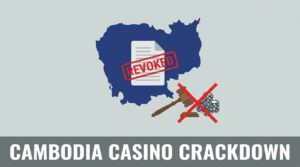
Cambodia’s gambling regulator has pulled yet another casino licence from circulation, signalling a deepening enforcement campaign against operators failing to meet the country’s tightening compliance standards. The revocation, part of a broader sweep by the Commercial Gambling Committee of Cambodia (CGCC), reflects the government’s sustained effort to clean up an industry long associated with cross-border crime, unlicensed operations, and inadequate oversight. And while the specific operator targeted in this latest action has not been widely profiled internationally, the pattern is unmistakable: Cambodia is shrinking its casino market by design, not by accident.
What Cambodia’s Latest Licence Revocation Signals for the Region
The CGCC’s enforcement posture has shifted considerably over the past two years. What was once a loosely regulated landscape, with dozens of casinos operating in border zones and special economic areas, is now subject to a licensing regime that carries real consequences. Before examining the details, here are the strategic takeaways from this latest development:
- Licence attrition is accelerating. Cambodia has revoked or suspended multiple casino licences since the CGCC began asserting authority more aggressively in 2022 and 2023, reducing the total number of authorised operators.
- The government appears to be prioritising a smaller, more controllable casino sector over volume-driven growth.
- Cross-border implications are real. Several revoked or suspended operations had ties to online gambling networks targeting players in neighbouring countries, particularly China and Vietnam.
- Operators still holding valid licences face rising compliance costs, including anti-money laundering (AML) obligations and stricter reporting requirements
- Regional regulators are watching. Cambodia’s moves parallel similar tightening in the Philippines and Myanmar, suggesting a broader Southeast Asian recalibration.
A Market Being Reshaped Through Enforcement
Cambodia’s casino sector expanded rapidly during the 2010s, fuelled by Chinese investment and a regulatory environment that asked few questions. At its peak, the country hosted well over 100 licensed and semi-licensed gambling venues, many clustered in Sihanoukville and along the borders with Thailand and Vietnam. That era is closing.
The CGCC, which operates under the Ministry of Economy and Finance, has been methodically reviewing operator compliance since Cambodia’s 2020 gambling law came into full effect. That legislation gave the regulator authority to impose conditions, demand financial transparency, and revoke licences where operators fall short. In practice, the enforcement has been uneven (a distinction regulators have been slow to acknowledge publicly), but the direction of travel is clear.
This latest revocation fits a pattern. Operators that fail to demonstrate legitimate revenue streams, adequate player protection frameworks, or proper corporate governance structures are being removed from the market. The CGCC has not published a comprehensive public register of all revocations to date, though industry estimates suggest the number of active licences has dropped significantly from its peak.
Why the Timing Matters
Cambodia is under sustained international pressure to address its role in transnational organised crime networks. The country has been linked repeatedly to cyber-scam compounds, forced labour operations, and unlicensed online gambling platforms that exploit vulnerable populations. These issues have drawn attention from the United Nations, FATF-affiliated bodies, and bilateral partners including the United States and Australia.
Revoking casino licences serves a dual purpose. It reduces the number of venues that could serve as fronts for illicit activity. It also demonstrates to international observers that Cambodia’s regulatory apparatus is functional, not merely decorative. Whether the enforcement goes deep enough to satisfy external critics remains an open question.
Still, the CGCC’s actions carry weight domestically. Each revocation sends a message to remaining operators: compliance is no longer optional, at least on paper.
How Cambodia’s Approach Compares Regionally
| Country | Regulatory Body | Recent Action | Market Direction |
|---|---|---|---|
| Cambodia | CGCC | Multiple licence revocations since 2022 | Contraction and consolidation |
| Philippines | PAGCOR | Offshore gaming operator (POGO) ban announced in 2024 | Significant reduction in offshore segment |
| Myanmar | No centralised regulator | Border casino zones linked to scam operations | Largely unregulated, under international scrutiny |
| Vietnam | Ministry of Finance | Pilot programmes for locals’ casino access under review | Cautious, controlled expansion |
The contrast with Vietnam is particularly striking. While Hanoi experiments cautiously with broadening domestic access to casinos, Phnom Penh is pulling in the opposite direction.
Reframing Compliance: What Operators Need to Understand
For operators still active in Cambodia’s market, the regulatory environment demands a fundamental shift in how they perceive compliance. This isn’t about ticking boxes on a checklist. The CGCC’s enforcement pattern suggests a regulator that increasingly views non-compliance as a reputational liability for the entire jurisdiction, not just the individual operator.
Operators who anchor their strategy to minimum requirements are arguably the most exposed. The Cambodia gambling regulatory framework under the CGCC now expects demonstrable investment in AML systems, responsible gambling protocols, and transparent ownership structures. Those who treat these as afterthoughts risk joining the growing list of revoked licensees.
But there’s a subtler dynamic at play. Operators that survive this consolidation phase stand to benefit from reduced competition and a market that, paradoxically, may become more attractive to institutional investors precisely because it is smaller and better regulated. The question is whether enough operators can clear the bar.
What Remains Unresolved
Cambodia’s enforcement push, while substantive, leaves several gaps. The CGCC has not yet established a fully transparent public database of licensed operators, making independent verification difficult. Enforcement against online gambling platforms operating from Cambodian territory has been inconsistent, with some operations simply relocating to less scrutinised provinces.
There is also the matter of political will. Regulatory crackdowns in Cambodia have historically moved in cycles, intensifying under international pressure and relaxing when attention shifts elsewhere. Whether the current trajectory represents a permanent structural change or a cyclical response to external scrutiny is something only time will clarify.
Frequently Asked Questions
How many casino licences has Cambodia revoked recently?
The CGCC has not published a single consolidated figure, but multiple revocations and suspensions have been reported since 2022. Industry analysts estimate the number of active licences has fallen meaningfully from the sector’s peak.
What triggers a licence revocation in Cambodia?
Grounds include failure to meet AML requirements, lack of financial transparency, inadequate corporate governance, and connections to unlicensed online gambling operations. The 2020 gambling law gives the CGCC broad discretionary authority.
Does this affect Cambodia’s overall economy?
Casino revenue contributes to government tax receipts and local employment, particularly in Sihanoukville. A smaller but better-regulated sector could stabilise long-term revenue, though short-term disruption in affected areas is likely.
Are other Southeast Asian countries taking similar steps?
Yes. The Philippines announced a ban on offshore gaming operators in 2024, and regional bodies have increased coordination on cross-border gambling enforcement. The trend across the region leans toward tighter controls, though implementation varies widely.