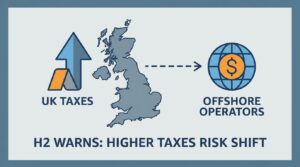
A fresh analysis from H2 Gambling Capital warns that proposed increases to UK gambling taxes could inadvertently drive players toward unlicensed offshore platforms. The consultancy’s findings arrive at a politically charged moment, with the UK government weighing fiscal options that include raising the remote gaming duty. H2 argues that steeper levies on licensed operators would erode their competitive position against unregulated alternatives, ultimately undermining both consumer protection and tax revenue. The warning adds a data-informed counterweight to what has largely been a public health–driven debate.
What the Tax Proposals Actually Mean for the Market
Before unpacking the strategic implications, it helps to frame what is at stake. The UK’s remote gaming duty currently sits at 21%, applied to gross gambling yield from online operators licensed by the UK Gambling Commission. Proposals under discussion would push that rate higher, though no final figure has been confirmed by HM Treasury. H2 Gambling Capital’s concern is straightforward: every percentage point added to the tax burden makes licensed operators less able to offer competitive odds, bonuses, and product variety relative to offshore sites that pay nothing.
- Licensed UK operators already face one of the highest effective tax rates among regulated European markets, a gap that widens with each proposed increase
- Offshore platforms, which operate outside UKGC oversight, bear no equivalent fiscal obligation and can therefore undercut on price
- H2 estimates that the UK’s channelisation rate (the share of total gambling activity occurring within the licensed market) could decline measurably if taxes rise beyond a tipping point
- A lower channelisation rate means fewer players covered by responsible gambling tools, self-exclusion schemes, and dispute resolution mechanisms
- Tax revenue itself could plateau or fall if enough volume migrates to unlicensed operators
The Channelisation Problem
Channelisation is the metric that separates a functioning regulatory regime from a nominal one. The UK has historically maintained a high channelisation rate, often cited above 90%, meaning the vast majority of gambling activity takes place within the licensed ecosystem. That figure is not guaranteed. It reflects a balance between regulatory credibility, enforcement capacity, and the commercial attractiveness of the legal market.
When taxes push operator margins thin enough, the licensed product starts to look less appealing. Not dramatically, not overnight. But at the edges, price-sensitive bettors begin exploring alternatives. And offshore operators, many of whom actively target UK consumers through social media and affiliate channels, are ready to absorb that demand.
H2’s modelling suggests the relationship between tax rates and channelisation is nonlinear. Small increases may have negligible effects. But beyond a threshold (a distinction regulators have been slow to quantify), the curve steepens. Whether the proposed rates cross that threshold remains an open question.
How Other Markets Have Handled This Tension
The UK is not the first jurisdiction to confront this trade-off. Several European markets offer instructive, if imperfect, parallels.
| Market | Remote Gaming Tax Rate | Estimated Channelisation | Regulatory Approach |
|---|---|---|---|
| UK (current) | 21% | ~90%+ | Open licensing, active enforcement |
| France | ~55% (varies by product) | ~75–80% | Restricted product range, state monopoly legacy |
| Sweden | 18% | ~80–85% | Re-regulated in 2019, enforcement still maturing |
| Italy | ~25% | ~85% | Broad product licensing with advertising restrictions |
| Netherlands | 29.5% (rising to 37.8%) | Declining, exact figures contested | Recently legalised, aggressive tax hikes already under scrutiny |
The Netherlands stands out as a cautionary case. Within two years of legalising online gambling, Dutch authorities raised the tax rate sharply. Licensed operators have publicly warned that the economics no longer support sustainable competition with offshore sites. Whether the Dutch channelisation rate has already deteriorated significantly is debated, but the direction of travel concerns H2 Gambling Capital’s advisory team enough to flag it as a pattern the UK should avoid replicating.
Why Enforcement Alone Cannot Close the Gap
A common rebuttal to channelisation concerns is that enforcement can compensate. Block unlicensed sites. Pursue payment processing. Penalise affiliates. In theory, yes. In practice, enforcement against offshore operators is resource-intensive, jurisdictionally complex, and perpetually one step behind. The UKGC has tools at its disposal, including ISP blocking orders and payment disruption, but these measures work best as complements to a commercially competitive licensed market, not as substitutes for one.
Even so, there is a behavioural dimension that pure enforcement cannot address. Players who migrate to offshore platforms often do so through peer networks, encrypted messaging groups, and VPN-enabled access. Once a user has established an account with an unlicensed operator, pulling them back into the regulated fold becomes substantially harder. The friction of re-registration, re-verification, and re-engagement with responsible gambling protocols acts as a barrier to return.
The Behavioural Economics of Player Migration
Understanding why players shift to offshore sites requires more than a tax spreadsheet. Cognitive biases play a measurable role. Loss aversion means bettors are disproportionately sensitive to perceived reductions in value, such as lower odds or smaller bonuses, even when the absolute difference is modest. Anchoring effects mean that once a player experiences the pricing of an unregulated platform, the licensed alternative feels permanently less attractive by comparison.
Framing matters too. Offshore operators often position themselves as offering “fairer” terms, leveraging distrust of regulation itself as a marketing tool. This narrative resonates particularly with younger demographics who are already sceptical of institutional oversight. Arguably, the most effective counter to this framing is not enforcement messaging but product competitiveness, which loops back to the tax question.
There is also the matter of identity and group belonging. Communities of bettors on platforms like Telegram or Discord develop shared norms around which operators to trust. These norms, once established, prove remarkably sticky. A tax-driven exodus, even a small one, can seed communities that grow organically and become self-reinforcing over time.
Frequently Asked Questions
What is the current UK remote gaming duty rate?
The rate stands at 21% of gross gambling yield for online operators licensed by the UK Gambling Commission.
Has the UK government confirmed a specific tax increase?
No final figure has been announced. The proposals remain under review, with HM Treasury yet to publish detailed plans.
What does channelisation mean in gambling regulation?
Channelisation refers to the proportion of total gambling activity that occurs within the licensed, regulated market rather than through unlicensed offshore operators. A high channelisation rate is generally considered a sign that the regulatory framework is working, keeping players within a system that offers consumer protections, responsible gambling tools, and tax contributions.
Could higher taxes actually reduce government revenue?
In theory, yes. If a tax increase drives enough volume to offshore platforms, the taxable base shrinks. H2 Gambling Capital’s analysis suggests this is a realistic scenario beyond a certain rate threshold, though the precise inflection point depends on multiple variables including enforcement intensity and operator pricing strategies.
What the UK decides in the coming months will set a precedent that extends well beyond its borders. Other regulated markets are watching closely, not least because the same fiscal pressures exist everywhere, and the offshore alternative never stops recruiting.