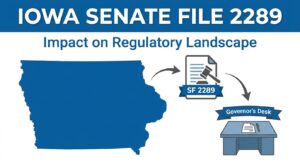
Iowa’s legislature has forwarded Senate File 2289 to Governor Kim Reynolds after securing approval in both the state House and Senate. The bill, which addresses regulatory and policy adjustments within the state, now awaits the governor’s signature or veto. Its passage through both chambers signals broad bipartisan momentum, though the practical consequences for businesses and residents will depend heavily on implementation details that remain, at least on paper, somewhat open-ended.
Why Senate File 2289 Matters for Iowa’s Business Community
Before diving into the specifics, it helps to frame what this legislation represents in the broader context of Iowa’s policy direction. The bill touches on governance structures and regulatory processes that directly affect how companies operate within the state. Here are the strategic takeaways worth tracking:
- Legislative alignment: Both chambers backing the bill suggests a level of political consensus that makes a gubernatorial veto unlikely, though not impossible
- The bill’s regulatory adjustments could reshape compliance obligations for businesses operating across multiple Iowa jurisdictions
- Timeline pressure: Governor Reynolds faces a decision window that will determine whether the provisions take effect in the current fiscal cycle or get pushed into the next legislative session
- Industry groups have been watching this bill since its introduction, with several filing public comments during committee review stages
- Precedent factor: Iowa’s approach here may influence similar legislative efforts in neighboring Midwestern states
The Legislative Path That Got It Here
Senate File 2289 did not arrive on the governor’s desk without friction. The bill underwent multiple rounds of amendment during committee hearings, with lawmakers on both sides negotiating language that balanced regulatory oversight with operational flexibility for affected entities. That balancing act is what ultimately secured the votes needed in both chambers.
What stands out is the speed. Bills of this scope in Iowa’s legislature often stall between chambers, caught in procedural limbo or competing priorities. This one moved with unusual efficiency (a detail that suggests coordinated leadership support from the outset). Whether that coordination reflects genuine policy urgency or election-year positioning is a question observers are quietly asking.
How Governor Reynolds Could Respond
Governor Reynolds has built a track record of supporting legislation that reduces regulatory friction for Iowa businesses. Her office has not issued a formal statement on Senate File 2289, but the bill’s alignment with her broader governance philosophy makes a signature the most probable outcome. The Iowa Governor’s Office typically signals its position within days of receiving passed legislation.
Still, governors sometimes use the signing process to extract concessions or signal priorities for future sessions. A line-item veto, if the bill’s structure permits one, could reshape specific provisions without killing the legislation outright. That possibility keeps stakeholders attentive.
What a Signature Would Trigger
If signed, the bill’s provisions would begin a phased implementation process. State agencies would need to update compliance frameworks, issue guidance documents, and in some cases hire or reassign personnel to manage new oversight responsibilities. For businesses, the practical impact depends on sector and scale. Larger enterprises with dedicated compliance teams will likely absorb the changes without disruption. Smaller operators face a steeper adjustment curve.
Broader Implications Across the Midwest
Iowa does not legislate in isolation. Policy decisions in Des Moines ripple outward, particularly when they touch regulatory structures that neighboring states share in some form. Minnesota, Wisconsin, and Illinois have all considered similar measures in recent sessions without advancing them to a vote.
Iowa’s willingness to move first creates a natural case study. If the implementation goes smoothly and produces measurable outcomes, expect other state legislatures to reference Senate File 2289 in their own committee debates. If it stumbles, the bill becomes a cautionary example. Either way, the Midwest’s regulatory conversation just shifted.
| Factor | Current Status | Potential Impact |
|---|---|---|
| Legislative approval | Passed both chambers | High probability of enactment |
| Governor’s position | No formal statement yet | Signature expected based on policy alignment |
| Business compliance burden | Under review by industry groups | Varies significantly by company size and sector |
| Implementation timeline | Phased rollout anticipated | State agencies will need several months to issue updated guidance and operational frameworks |
Reading Between the Lines: What Stakeholders Should Prepare For
Legislation like Senate File 2289 rarely tells the full story on its face. The real consequences emerge during rulemaking, when state agencies translate statutory language into enforceable standards. Businesses that wait for final rules before acting tend to find themselves scrambling. Those that begin internal assessments now, mapping their operations against the bill’s likely requirements, position themselves to adapt without disruption.
And this is where framing matters. Organizations that view regulatory change purely as a compliance cost miss the strategic dimension. New rules create new competitive dynamics. Companies that align early often gain advantages in procurement, licensing, and public trust that slower-moving competitors cannot easily replicate. The cognitive reframe from burden to opportunity is not just motivational language; it is a measurable differentiator in how quickly organizations execute change.
Consider the anchoring effect at play here. The first businesses to establish compliance benchmarks under the new framework effectively set the standard that peers and regulators reference. That first-mover anchoring shapes expectations for an entire sector. Leaders who recognize this pattern and act on it tend to define the terms of engagement rather than react to them.
Uncertainty, paradoxically, is the asset right now. While competitors hesitate, waiting for clarity that may take months to arrive, proactive organizations can build internal alignment, train teams, and establish relationships with the state agencies responsible for implementation. The window between passage and enforcement is where strategic advantage gets built.
Frequently Asked Questions
What is Senate File 2289?
Senate File 2289 is a piece of Iowa legislation that passed both the state House and Senate and has been sent to Governor Kim Reynolds for her signature. It addresses regulatory and governance adjustments affecting businesses and state agencies.
Has Governor Reynolds signed the bill?
Not yet. The bill is awaiting her decision. Based on her policy track record, most observers expect a signature, though no official statement has been released.
When would the bill take effect?
If signed, implementation would follow a phased approach. State agencies would need time to develop guidance and update compliance frameworks before enforcement begins.
Does this affect businesses outside Iowa?
Directly, no. But the bill could serve as a model for similar legislation in other Midwestern states, making it relevant for companies with multi-state operations across the region.



