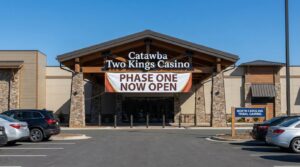
The Catawba Indian Nation has opened the first phase of the Catawba Two Kings Casino Resort in Kings Mountain, North Carolina, marking a pivotal moment for tribal gaming expansion in the southeastern United States. The opening transforms what was previously a temporary gaming facility into a permanent, full-scale resort destination. Located roughly 35 miles west of Charlotte, the property positions itself to capture a significant share of the region’s growing entertainment and hospitality market. And while the celebration was unmistakably festive, tribal leadership used the occasion to deliver a broader message about sovereignty, economic self-determination, and long-term vision.
What the Phase One Opening Means for Tribal Gaming Strategy
The launch of the Catawba Two Kings Casino Resort’s first phase goes well beyond a ribbon-cutting ceremony. It represents a calculated step in a multi-phase development plan that could reshape the competitive dynamics of gaming in the Carolinas. Below are the strategic takeaways worth watching:
- The permanent facility replaces a temporary structure that had been operating since 2021, giving the Catawba Nation a credible, long-term gaming footprint in a high-demand corridor near Charlotte.
- Phase one includes expanded gaming floor space, new dining options, and upgraded guest amenities designed to compete with established regional casino resorts.
- The project reinforces the Catawba Nation’s assertion of tribal sovereignty over gaming operations on its trust land, a legal position that has faced challenges but remains intact.
- Revenue generated from the resort is earmarked for tribal services, infrastructure, and community development, tying commercial success directly to social outcomes for tribal members.
- Proximity to Charlotte’s metropolitan population of over 2.6 million gives the property a geographic advantage that few tribal gaming operations in the Southeast can match.
A Facility Built to Compete
Phase one of the resort delivers a noticeable upgrade in scale and quality. The permanent casino floor features a substantially larger gaming area compared to the temporary facility, with hundreds of new slot machines and table games. Dining venues have been expanded to include multiple restaurant concepts, and the overall design reflects a hospitality standard aimed squarely at the mid-to-upper market segment.
Still, this is only the beginning.
Future phases are expected to add a hotel tower, convention space, entertainment venues, and additional food and beverage outlets. The full buildout, once complete, would position Catawba Two Kings Casino Resort as one of the largest integrated gaming and hospitality complexes in the region. Whether the timeline holds will depend on regulatory conditions, capital availability, and market absorption rates (a combination that rarely aligns as neatly as developers hope).
Sovereignty as Strategy
Tribal leadership has been deliberate in framing the casino not merely as a business venture but as an exercise of inherent sovereign rights. The Catawba Indian Nation’s federal recognition and the trust status of the land on which the resort sits provide the legal foundation for its gaming operations under the Indian Gaming Regulatory Act.
That foundation has not gone unchallenged. The Eastern Band of Cherokee Indians, which operates two casinos in western North Carolina, previously raised legal objections to the Catawba project. Federal courts ultimately allowed the development to proceed, but the dispute underscored the complexity of overlapping tribal interests and state-level gaming politics in the region.
By opening a permanent facility, the Catawba Nation is reinforcing a fait accompli. The resort exists. It generates revenue. It employs hundreds of people. Each phase of construction deepens the economic and political roots of the operation, making reversal increasingly impractical.
Economic Ripple Effects Beyond the Casino Floor
The resort’s impact extends into the surrounding Kings Mountain community and Cleveland County more broadly. Construction alone has injected millions into the local economy through contracts, materials procurement, and labor. Ongoing operations create permanent jobs across hospitality, food service, security, and management functions.
Local businesses stand to benefit from increased visitor traffic, particularly restaurants, hotels, and retail establishments along the Interstate 85 corridor. The multiplier effect of a destination-scale resort in a previously underserved market can be significant, though measuring it precisely takes years of data collection.
| Impact Area | Phase One Contribution | Expected Full Buildout |
|---|---|---|
| Gaming positions | Expanded slot and table game inventory | Substantially larger floor with additional game types |
| Employment | Hundreds of permanent roles created | Projected to exceed 1,000+ jobs at full capacity |
| Dining & hospitality | Multiple new restaurant concepts | Hotel tower, convention center, entertainment complex |
| Community investment | Revenue directed to tribal services and infrastructure | Broader regional economic development anticipated |
How Tribal Gaming Shapes Community Identity and Purpose
Beyond the financial metrics, the Catawba Two Kings Casino Resort carries a psychological dimension that deserves attention. For the Catawba Indian Nation, the project embodies a narrative of resilience and self-determination that stretches back centuries. The ability to build, operate, and profit from a major commercial enterprise on sovereign land reframes the tribe’s relationship with the broader economy. It shifts the dynamic from dependency to agency.
This kind of identity-level transformation matters in ways that balance sheets cannot capture. When a community sees itself as the architect of its own economic future rather than a passive recipient of external decisions, the effects ripple through education, health outcomes, civic engagement, and intergenerational ambition. Tribal members working at or benefiting from the resort are participating in something that carries meaning beyond a paycheck. The resort becomes a tangible symbol of what collective action and strategic patience can produce.
For neighboring communities, the presence of a thriving tribal enterprise also challenges assumptions and creates new points of connection. Partnerships between tribal and non-tribal businesses, shared infrastructure investments, and collaborative workforce development programs all become possible when a project of this scale takes root. The question is whether local and state leaders will engage with those opportunities proactively or let them develop unevenly.
Arguably, the most underappreciated aspect of tribal gaming projects like this one is their capacity to rewrite the story a community tells about itself. Economic development is important. But the sense of ownership, pride, and forward momentum that accompanies it can be the more durable legacy.
Frequently Asked Questions
Where is the Catawba Two Kings Casino Resort located?
The resort sits in Kings Mountain, North Carolina, approximately 35 miles west of Charlotte along the Interstate 85 corridor.
What does phase one of the resort include?
Phase one features an expanded permanent gaming floor with new slot machines and table games, multiple dining venues, and upgraded guest amenities. It replaces the temporary facility that had been operating since 2021.
What is planned for future phases?
Subsequent phases are expected to bring a hotel tower, convention and event space, additional entertainment venues, and more food and beverage options. No firm completion date for the full buildout has been publicly confirmed.
Why has the project faced legal challenges?
The Eastern Band of Cherokee Indians challenged the legality of the Catawba gaming operation, citing concerns about the trust status of the land. Federal courts ruled in favor of allowing the project to proceed, though the broader legal and political dynamics remain nuanced.
How does the casino benefit the Catawba Indian Nation?
Revenue from the resort funds tribal services, community infrastructure, and development programs. The project also creates employment opportunities and strengthens the tribe’s economic sovereignty.



