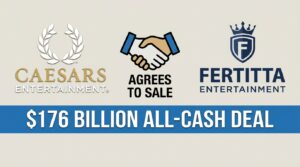
Caesars Entertainment, one of the largest casino and hospitality operators in the United States, has agreed to be acquired by Fertitta Entertainment in what would be a staggering $176 billion all-cash transaction. The deal, if finalized, would represent one of the most significant consolidation moves the gaming industry has witnessed in decades. Tilman Fertitta, the billionaire behind Fertitta Entertainment who already controls the Golden Nugget brand and the Houston Rockets NBA franchise, would gain command of a sprawling empire of casinos, resorts, and digital gaming assets stretching across the country.
What This Mega-Deal Signals for the Casino and Hospitality Sector
A transaction of this magnitude doesn’t just reshape one company’s balance sheet. It reconfigures the competitive landscape for every operator, supplier, and regulator with a stake in the U.S. gaming market. Below are the strategic takeaways that matter most for industry stakeholders.
- Scale meets ambition: Fertitta Entertainment’s acquisition of Caesars would create one of the most vertically integrated gaming-hospitality conglomerates in the world, combining Caesars’ 50+ domestic properties with Fertitta’s existing restaurant, hotel, and casino holdings.
- Regulatory scrutiny is inevitable: A deal this size will face intense review from gaming commissions in multiple states, the FTC, and potentially state attorneys general concerned about market concentration in key jurisdictions like Nevada and New Jersey.
- The all-cash structure suggests Fertitta Entertainment has secured significant financing commitments, likely involving a consortium of banks and private credit providers, which itself will draw attention from debt market analysts.
- Digital gaming implications: Caesars’ growing online sportsbook and iGaming operations add a digital dimension that Fertitta’s portfolio currently lacks at comparable scale, making this as much a technology play as a real estate one.
- Employee and operational continuity: With Caesars employing tens of thousands of workers across its properties, workforce integration and labor relations will be a front-and-center concern during any transition period.
Tilman Fertitta’s Expanding Empire
Tilman Fertitta is no stranger to large-scale dealmaking. His $4.6 billion take-private of Landry’s Inc. and subsequent acquisition of the Golden Nugget casinos established him as a force in both hospitality and gaming. The purchase of the Houston Rockets for $2.2 billion in 2017 further cemented his profile as one of America’s most aggressive dealmakers. But this proposed acquisition of Caesars Entertainment’s casino and resort portfolio dwarfs everything that came before it.
What makes Fertitta’s approach distinctive is his preference for operational control. Unlike private equity buyers who often install management teams and seek exits within defined windows, Fertitta tends to run what he buys. That philosophy could mean a longer integration timeline but also a more hands-on transformation of Caesars’ operations, from food and beverage offerings at individual properties to the broader loyalty program strategy that has been central to Caesars’ customer retention.
How Would Regulators Respond?
Gaming regulators across at least a dozen states would need to approve the transaction. Nevada’s Gaming Control Board and the New Jersey Division of Gaming Enforcement are arguably the two most consequential gatekeepers. Both have historically applied rigorous suitability standards to prospective casino owners, examining financial stability, personal background, and business associations in granular detail.
Still, Fertitta already holds gaming licenses in multiple jurisdictions through his Golden Nugget operations. That existing regulatory footprint could streamline portions of the approval process (a distinction that shouldn’t be overstated, given the sheer scale difference between Golden Nugget and Caesars). Antitrust review at the federal level adds another layer. In markets like Las Vegas, where both Caesars and Golden Nugget operate properties, regulators may require divestitures to preserve competitive balance.
Financing a $176 Billion Bet
The all-cash nature of this deal raises immediate questions about capital structure. Fertitta Entertainment, while privately held and profitable, does not independently possess the liquidity to fund a transaction of this size without external financing. Market observers expect a combination of syndicated bank loans, high-yield bond issuances, and possibly commitments from sovereign wealth funds or large institutional investors.
Caesars itself carries substantial existing debt, a legacy of its 2020 merger with Eldorado Resorts. Any acquirer would need to either refinance or assume that debt, adding complexity to an already intricate financial architecture. The cost of capital in the current interest rate environment makes this particularly consequential.
Key Financial Dimensions at a Glance
| Metric | Detail |
|---|---|
| Transaction Value | $176 billion (all cash) |
| Acquirer | Fertitta Entertainment |
| Target | Caesars Entertainment |
| Caesars U.S. Properties | 50+ |
| Existing Caesars Debt | Significant; legacy of 2020 Eldorado merger |
| Regulatory Jurisdictions Involved | 12+ state gaming commissions, plus federal antitrust review |
The Digital Gaming Angle
One dimension that deserves separate attention is Caesars’ digital business. The company has invested heavily in its Caesars Sportsbook platform and iGaming products, competing directly with DraftKings, FanDuel, and BetMGM for market share in the rapidly expanding U.S. online wagering space. Fertitta Entertainment’s existing digital footprint through Golden Nugget’s online casino platform is meaningful but smaller in scope.
Combining these digital assets under one roof could create operational synergies in technology infrastructure, marketing spend, and data analytics. And while the online sports betting market has proven more expensive to penetrate than early projections suggested, the long-term addressable market remains substantial as more states legalize digital wagering.
What Stakeholders Should Watch For
Beyond the headline number, several threads will determine whether this deal ultimately closes and on what terms. The regulatory timeline alone could stretch well beyond twelve months. Financing conditions may shift if credit markets tighten further. And Caesars’ board, while reportedly supportive, will face pressure from shareholders to ensure the per-share price reflects the full value of the company’s physical and digital assets.
Whether this transaction ultimately reshapes the American gaming industry or stalls under its own weight depends on variables that no single party fully controls.
Frequently Asked Questions
Who is Tilman Fertitta?
Tilman Fertitta is a Houston-based billionaire entrepreneur who owns Fertitta Entertainment, which controls Landry’s Inc., the Golden Nugget Hotels & Casinos, and the NBA’s Houston Rockets. He is known for his hands-on management style and aggressive acquisition strategy across hospitality, gaming, and sports.
Why is this deal significant for the gaming industry?
At $176 billion, this would rank among the largest transactions in gaming history. It would consolidate a massive portfolio of physical casinos, digital wagering platforms, and hospitality assets under a single private owner, fundamentally altering competitive dynamics in key U.S. markets.
What regulatory hurdles does the acquisition face?
The deal requires approval from gaming regulators in more than a dozen states where Caesars operates, as well as potential federal antitrust review. Suitability investigations, market concentration analysis, and possible divestiture requirements could extend the approval process significantly.
How will this affect Caesars employees?
Caesars employs tens of thousands of workers across its properties. While no workforce plans have been publicly detailed, large-scale acquisitions in the hospitality sector typically involve some degree of operational restructuring, though Fertitta’s track record suggests he favors retaining operational teams rather than replacing them wholesale.



