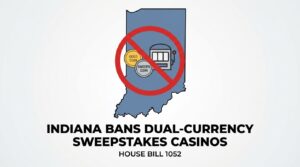
Indiana has shut the door on dual-currency sweepstakes casinos. House Bill 1052, signed into law, explicitly prohibits the sweepstakes casino model that uses two virtual currencies to simulate real-money gambling. The legislation positions Indiana among a growing number of U.S. states cracking down on what regulators increasingly view as unlicensed gambling operations dressed up as promotional contests. For operators, affiliates, and players across the social casino ecosystem, the implications are immediate and far-reaching.
What Indiana’s Sweepstakes Casino Ban Means for the Industry
Before diving into the specifics, it helps to frame the strategic weight of this move. Indiana isn’t a small market. It’s a state with a mature regulated gambling infrastructure, including licensed riverboat casinos, sports betting, and a growing iGaming conversation. By targeting the dual-currency sweepstakes model specifically, lawmakers have drawn a line that other state legislatures are likely watching closely.
- House Bill 1052 bans the use of dual virtual currencies (typically “gold coins” and “sweepstakes coins”) that allow players to redeem winnings for real prizes or cash equivalents
- Operators running sweepstakes-style platforms in Indiana now face potential legal consequences for continuing to offer these products
- The law does not appear to target traditional social casinos that operate purely on a play-for-fun basis without redemption mechanics
- Indiana joins states like Washington and others that have moved to restrict or regulate sweepstakes casino activity
- Licensed gambling operators in Indiana may benefit from reduced competition from unregulated sweepstakes platforms
How the Dual-Currency Model Works (and Why Regulators Object)
The sweepstakes casino model has thrived in a legal grey zone for years. Players purchase a virtual currency, often called “gold coins,” which cannot be redeemed. But bundled with that purchase comes a second currency, “sweepstakes coins” or similar, which can be used to play casino-style games and, critically, redeemed for cash prizes. Operators have long argued this structure constitutes a lawful promotional sweepstakes rather than gambling, since no direct purchase of the redeemable currency occurs.
Regulators and state attorneys general have grown skeptical. The economic reality, they argue, mirrors real-money gambling in every meaningful way (a distinction regulators have been slow to enforce in many jurisdictions, but one Indiana has now addressed head-on). Players deposit money. They play slots, table games, poker variants. They cash out. The two-currency wrapper, critics contend, is a legal fiction.
And that skepticism has now hardened into statute in Indiana.
The Regulatory Ripple Beyond Indiana
What makes this legislation particularly consequential is timing. The sweepstakes casino sector has been expanding aggressively, with platforms like Chumba Casino’s sweepstakes gaming platform and others attracting millions of users nationwide. Several states have introduced or considered similar restrictions in recent legislative sessions. Indiana’s move adds momentum to a regulatory trend that could reshape the social casino landscape within the next two to three years.
Still, not every state sees it the same way. Some legislatures have explored frameworks to regulate and tax sweepstakes casinos rather than ban them outright, viewing the model as a potential revenue source. The divergence creates a patchwork of rules that complicates compliance for multi-state operators and raises questions about whether federal intervention might eventually be warranted.
Impact on Operators and Market Dynamics
For sweepstakes casino operators, Indiana’s ban forces a binary choice: exit the state or restructure their product to comply. Neither option is painless.
| Stakeholder | Likely Impact | Strategic Response |
|---|---|---|
| Sweepstakes casino operators | Loss of Indiana market access; potential legal exposure for non-compliance | Geo-block Indiana users; explore regulated licensing in other states |
| Licensed Indiana casinos | Reduced competition from unregulated platforms | Potential to capture displaced players through digital offerings |
| Affiliate marketers | Reduced promotional opportunities in Indiana | Shift focus to states where sweepstakes models remain operational |
| Players | Loss of access to sweepstakes platforms within the state | Migration to licensed alternatives or out-of-state workarounds, though the latter carries its own risks |
Reframing the Narrative: Why Language Shapes Regulation
One underappreciated dimension of this debate is how language itself has shaped regulatory outcomes. Applying principles from neuro-linguistic programming, the framing of sweepstakes casinos as “free-to-play” or “promotional” platforms has been central to their legal defense. Words like “sweepstakes,” “coins,” and “no purchase necessary” anchor the model in the consumer’s mind as something fundamentally different from gambling. That linguistic architecture was deliberate, designed to trigger associations with harmless contests rather than casino floors.
But legislators in Indiana and elsewhere have started reframing the conversation. By using terms like “simulated gambling” and “unlicensed wagering” in legislative text and committee hearings, lawmakers shift the cognitive frame. The product hasn’t changed. The words around it have. And those words carry legal weight.
This reframing matters because it influences not just legal outcomes but public perception. When a state legislature labels something as gambling, voters and advocacy groups respond accordingly. The anchoring effect is powerful: once the “gambling” label sticks in public discourse, the burden of proof shifts to operators trying to argue otherwise. Arguably, the sweepstakes industry’s greatest vulnerability was never the legal argument itself but the fragility of the linguistic frame holding it together.
Operators who understand this dynamic may need to rethink not just their legal strategy but their entire communications approach. Positioning matters. And in a regulatory environment where perception increasingly drives policy, the words a company uses to describe its own product can become either a shield or a liability.
Frequently Asked Questions
Does House Bill 1052 ban all social casinos in Indiana?
No. The legislation specifically targets the dual-currency sweepstakes model where one currency can be redeemed for real-world prizes or cash. Traditional social casinos that offer play-for-fun games without any redemption mechanism are not addressed by this bill.
When does the ban take effect?
The bill has been signed into law, though specific enforcement timelines and transition periods may vary. Operators should consult legal counsel regarding compliance deadlines.
Could other states follow Indiana’s approach?
Several states have already introduced or are considering similar legislation. Indiana’s move adds significant precedent, though some states may opt for regulation rather than prohibition.
What happens to players who currently use sweepstakes platforms in Indiana?
Players in Indiana will likely lose access to dual-currency sweepstakes platforms as operators geo-block the state to comply with the new law. Whether those players migrate to licensed alternatives or simply stop playing remains an open question that the market hasn’t yet answered.