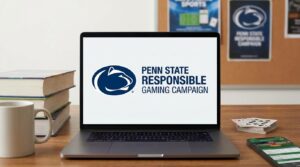
Penn State University has rolled out a new responsible gaming awareness initiative targeting its student population, a move that arrives as sports betting and online gambling gain unprecedented visibility across college campuses nationwide. The campaign, developed through the university’s Student Affairs division, aims to educate students about the risks associated with gambling behavior before habits calcify. With legal sports betting now accessible in Pennsylvania and aggressive marketing from operators saturating game-day environments, the timing reflects a growing institutional concern that higher education has been slow to address.
Why Penn State’s Gambling Awareness Push Matters Right Now
The proliferation of mobile sportsbooks and the normalization of wagering in collegiate sports culture have created a landscape where students encounter gambling prompts constantly. Before diving into the specifics, here are the strategic takeaways from this development:
- Institutional accountability is shifting: Universities are beginning to treat gambling harm as a campus health issue on par with alcohol and substance misuse, not merely a personal choice.
- Operator marketing is a catalyst: The saturation of sportsbook advertising during college sporting events has forced schools to respond with counter-messaging.
- Penn State’s campaign could serve as a template for other Big Ten institutions weighing similar initiatives.
- Regulatory gaps persist: While Pennsylvania permits legal sports betting, there is no state-level mandate requiring universities to provide gambling education (a distinction regulators have been slow to enforce).
- Student mental health infrastructure is being tested by a behavioral risk category that most campus counseling centers were not designed to handle.
What the Campaign Actually Involves
Penn State’s initiative centers on peer-to-peer education, digital outreach, and integration with existing student wellness programming. Rather than adopting a prohibition-style message, the university has opted for a harm-reduction framework. Students are encouraged to recognize early warning signs of problematic gambling, understand the mathematical realities behind sports betting odds, and access confidential support through campus counseling services.
The campaign also includes partnerships with national responsible gambling organizations. Resources from the National Council on Problem Gambling feature prominently in the program’s educational materials, providing students with self-assessment tools and crisis support pathways.
Still, the question of reach looms. Peer education models depend on voluntary engagement, and the students most at risk may be the least likely to participate in awareness programming.
A Campus Culture Reshaped by Legal Betting
Pennsylvania legalized sports betting in 2018 following the Supreme Court’s decision to strike down the Professional and Amateur Sports Protection Act. Since then, the state has become one of the largest regulated sports betting markets in the country, generating over $500 million in annual operator revenue. For students at Penn State, this means gambling is not an abstraction. It is an app on their phone, a promo code in their social media feed, and a conversation at every tailgate.
Research from the International Center for Responsible Gaming suggests that young adults aged 18–24 are disproportionately vulnerable to developing gambling disorders. The combination of impulsivity, financial inexperience, and social pressure creates a risk profile that universities can no longer afford to ignore. And while Penn State is not the first institution to act, its size and athletic prominence give this campaign outsized visibility.
How Behavioral Framing Shapes Student Decision-Making
One underappreciated dimension of campus gambling culture involves how students cognitively frame risk. Neuro-linguistic programming principles offer a useful lens here. The language surrounding sports betting is deliberately constructed to minimize perceived risk and maximize engagement. Terms like “free bet,” “risk-free wager,” and “guaranteed bonus” exploit anchoring bias, creating a mental model where gambling feels like a no-lose proposition.
Effective counter-messaging needs to disrupt these frames. Penn State’s approach reportedly includes exercises that reframe gambling outcomes in concrete financial terms. Instead of presenting abstract odds, students are shown what a typical bettor’s monthly losses look like over a semester. That shift from probability language to dollar-amount language changes the internal representation of risk.
Representational systems matter. Visual learners respond to loss charts. Kinesthetic processors benefit from interactive simulations where they track a hypothetical bankroll over time. Auditory learners absorb testimonials from peers who experienced gambling-related financial harm. By diversifying the sensory channels through which information is delivered, the campaign increases the likelihood that its message actually lands. The meta-model of language, borrowed from NLP practice, also suggests that challenging vague claims like “everyone bets” with specificity questions (“Who exactly? How much? How often?”) can break the social proof loop that normalizes excessive wagering among student populations.
Arguably, the most powerful tool in this framework is future pacing. When students are guided to vividly imagine the downstream consequences of unchecked gambling behavior, the emotional weight of that imagined future competes with the immediate dopamine hit of placing a bet. This is not therapy. It is strategic communication designed to make the abstract feel visceral.
What Other Institutions Should Be Watching
Penn State operates within the Big Ten Conference, a media and athletic powerhouse that recently signed broadcast deals worth billions. Those deals bring more eyeballs to college sports, and more eyeballs attract more sportsbook advertising. The feedback loop is obvious.
Whether peer institutions like Ohio State, Michigan, or the University of Southern California develop comparable programs remains to be seen. But the pressure is building. The NCAA has publicly expressed concern about gambling’s encroachment on collegiate athletics, and several state legislatures are considering bills that would require publicly funded universities to implement gambling education programs.
Frequently Asked Questions
Is sports betting legal for Penn State students?
In Pennsylvania, individuals aged 21 and older can legally place sports bets through licensed operators. Students under 21 are prohibited from participating, though enforcement on mobile platforms remains a persistent challenge.
Does the campaign ban gambling on campus?
No. The initiative is educational, not prohibitive. It operates within a harm-reduction model that acknowledges legal gambling while equipping students to make informed decisions.
Are other universities running similar programs?
A growing number of institutions have begun addressing gambling, but comprehensive, campus-wide campaigns remain relatively uncommon. Penn State’s effort is among the more visible examples at a Power Four conference school.
Where can students access support?
Penn State’s counseling and psychological services are available to students experiencing gambling-related distress. The national problem gambling helpline (1-800-522-4700) also provides 24/7 confidential support.



