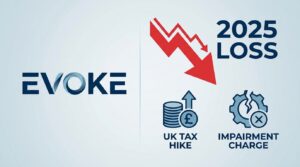
Evoke, the gambling group behind brands including William Hill and 888, disclosed a significantly deeper loss for the first half of 2025, driven by the impact of higher UK gambling taxes and a substantial impairment charge that weighed heavily on its bottom line. The results underscore mounting pressure on major operators navigating a shifting regulatory and fiscal landscape in the UK market. While revenue showed pockets of resilience in certain segments, the headline figures paint a stark picture for a company still working to stabilise after years of integration challenges.
What Evoke’s First-Half Numbers Reveal for Investors and Competitors
The scale of the loss widening caught attention across the sector, and the underlying drivers carry implications well beyond a single reporting period. Here are the critical takeaways:
- The UK’s increased point-of-consumption tax rate directly eroded margins, a burden shared across all licensed operators but felt acutely by those with heavy domestic exposure like Evoke.
- A large impairment charge signals that management has reassessed the carrying value of key assets, likely tied to goodwill from prior acquisitions (a distinction that raises questions about the long-term return on the 888 deal).
- Operational costs remain elevated, suggesting that the integration of William Hill and 888 under the Evoke umbrella continues to absorb capital and management bandwidth.
- Despite the loss, revenue trends in select international markets offered some counterbalance, hinting at a geographic diversification strategy that has yet to fully offset UK headwinds.
- Debt servicing costs remain a persistent drag, compounding the effect of weaker operating performance on the group’s net position.
The UK Tax Increase: A Structural Shift, Not a One-Off
When the UK government raised the remote gaming duty rate, operators across the board flagged the move as a material headwind. For Evoke, the effect proved particularly pronounced. The company generates a significant share of its gross gaming revenue from UK customers, and the higher tax rate compresses margins on every pound wagered. Unlike a promotional expense or a one-time restructuring cost, this is a permanent change to the operating economics of the UK online gambling market.
That shift matters because it forces operators into a binary choice: absorb the cost and accept thinner margins, or pass it through to customers via less generous odds and promotions. Neither option is painless. And while larger, more diversified rivals can lean on international revenue streams to cushion the blow, Evoke’s UK-heavy portfolio leaves less room to manoeuvre.
Impairment Charges and What They Signal
The impairment charge disclosed in the results deserves scrutiny beyond its headline number. Impairments of this nature typically reflect a downward revision in expected future cash flows from acquired businesses or intangible assets. In Evoke’s case, the charge likely relates to goodwill accumulated through the 888-William Hill combination, a deal that was supposed to create a scaled, multi-brand powerhouse capable of competing with Flutter and Entain.
Whether the market had already priced in this write-down is one question. The harder one: does this impairment mark the bottom of a revaluation cycle, or is further adjustment possible if UK market conditions deteriorate?
Management has not provided granular detail on the specific assets impaired. Still, the magnitude suggests this was not a routine accounting adjustment.
How Evoke’s Position Compares Across the Sector
| Factor | Evoke | Broader UK Operator Landscape |
|---|---|---|
| UK Revenue Exposure | High — core market remains domestic | Varies; Flutter and Entain more geographically diversified |
| Impact of Tax Increase | Directly material to margin | Felt across all operators, but diluted for those with US/international scale |
| Integration Status | Ongoing; cost synergies still being realised | Most major peers have completed recent M&A integrations |
| Debt Profile | Elevated, with significant servicing costs | Competitors generally carry lighter leverage ratios |
| Impairment Risk | Crystallised in this reporting period | Selectively present but less acute elsewhere |
Reframing the Strategic Narrative
Evoke’s leadership has consistently pointed to international expansion and digital product innovation as the twin engines of future growth. The group’s portfolio of gambling and betting brands spans multiple markets, and there are signs of traction in regions outside the UK. But traction and profitability are not the same thing, at least not yet.
The company’s ability to reduce its cost base while simultaneously investing in technology and customer acquisition will arguably determine whether the current loss trajectory reverses in 2026. Analysts tracking the stock have noted that Evoke’s path to sustainable free cash flow generation remains contingent on delivering integration savings that have, to date, materialised more slowly than initially projected.
One area worth watching: regulatory developments beyond tax. The UK Gambling Commission’s evolving approach to affordability checks and stake limits could introduce additional compliance costs. Operators already operating on compressed margins have less buffer to absorb these.
What Operators and Stakeholders Should Watch Next
Several threads from this earnings release will shape the narrative in coming quarters. The interplay between them is where the real story sits.
- Debt refinancing timeline: Evoke’s leverage remains a focal point for credit analysts. Any refinancing activity will signal management’s confidence in forward cash flows.
- Further impairment risk: If UK regulatory tightening accelerates, additional write-downs cannot be ruled out.
- International revenue as a percentage of total group revenue — this metric will tell us whether diversification is rhetoric or reality.
- Cost synergy delivery: The gap between announced targets and realised savings continues to narrow, but not fast enough for some investors.
Frequently Asked Questions
Why did Evoke’s loss widen so significantly in 2025?
Two primary factors drove the deeper loss: the UK government’s increase in remote gaming duty, which directly reduced margins on domestic revenue, and a large impairment charge related to the carrying value of previously acquired assets. Together, these overwhelmed any gains from revenue growth in other segments.
What is the impairment charge related to?
While Evoke has not broken out every component, the charge is widely understood to reflect a reassessment of goodwill and intangible assets stemming from the 888-William Hill acquisition. In plain terms, the expected future value of those businesses has been marked down.
Does this affect Evoke’s ability to operate normally?
An impairment is a non-cash accounting adjustment. It does not directly reduce the company’s available cash or its ability to run day-to-day operations. That said, it does affect reported equity and can influence lending covenants and investor sentiment, both of which matter for a company carrying significant debt.
How does Evoke compare to competitors like Flutter or Entain?
Flutter and Entain benefit from substantially greater geographic diversification, particularly through US operations. Evoke’s heavier reliance on the UK market makes it more exposed to domestic tax and regulatory changes. The competitive gap, at least on paper, has widened.



