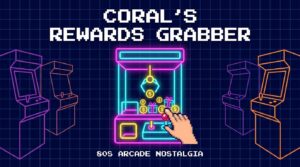
Coral, the UK-based betting brand operated by Entain, has launched a new advertising campaign centred on its “Rewards Grabber” promotion, leaning heavily into 1980s arcade aesthetics and nostalgia. The campaign positions Coral’s loyalty rewards programme within a retro gaming framework, using the familiar imagery of claw-grab machines to communicate the tactile thrill of winning prizes. It marks another step in the operator’s broader strategy to differentiate its brand through experiential marketing rather than odds-driven messaging alone.
What the Rewards Grabber Campaign Signals for Coral’s Brand Strategy
Coral’s decision to anchor a promotional campaign in nostalgia rather than product mechanics reflects a wider shift across UK gambling operators. With advertising restrictions tightening and regulators scrutinising how promotions are framed, the creative territory available to betting brands has narrowed considerably. Before unpacking the strategic implications, here are the key points worth noting:
- The Rewards Grabber advert uses 1980s arcade claw machine imagery to frame Coral’s loyalty rewards in an emotionally engaging, gamified context
- Coral continues to invest in brand-led campaigns that prioritise experience and entertainment over direct promotional offers
- The nostalgic creative direction targets a demographic old enough to remember physical arcades, arguably aligning with responsible gambling principles by skewing away from younger audiences
- Entain’s portfolio brands are increasingly competing on loyalty programme depth, not just sign-up bonuses
- UK operators face a regulatory environment where tone and framing matter as much as the offer itself
Why Nostalgia Works in a Restricted Advertising Landscape
There’s a reason betting brands keep reaching backward. The UK Gambling Commission and the Advertising Standards Authority have both sharpened their focus on how gambling promotions appeal to consumers, particularly younger demographics. Nostalgia, by its nature, filters out audiences who weren’t alive during the referenced era. That’s not accidental.
Coral’s use of the claw machine motif does something specific: it reframes a digital loyalty programme as something physical, tangible, almost innocent. The 1980s arcade was a social space, not a solitary one. And while the Rewards Grabber is ultimately a digital mechanic tied to Coral’s online betting and gaming platform, wrapping it in that visual language softens the transactional edge.
Still, the creative choice carries risk. Regulators have previously flagged gamification elements in gambling advertising as potentially problematic (a distinction that remains inconsistently enforced across different media channels). Whether a claw machine aesthetic crosses that line depends on execution and context, and Coral appears to have calibrated the tone carefully enough to stay within bounds.
Entain’s Loyalty Arms Race
This campaign doesn’t exist in isolation. Entain, which operates Coral alongside Ladbrokes and other brands, has been steadily building out its rewards infrastructure. The logic is straightforward: in a mature, heavily regulated market like the UK, customer retention matters more than acquisition. Sign-up offers are capped, affordability checks are tightening, and the cost of acquiring a new customer keeps climbing.
Loyalty programmes offer a different lever. They reward existing behaviour rather than incentivising new risk. For Entain, the Rewards Grabber mechanic serves a dual purpose. It gives existing customers a reason to stay engaged with the Coral brand, and it provides a marketing hook that feels less like a gambling advert and more like entertainment content. That second function matters enormously when every creative asset faces potential regulatory review.
How Nostalgia Anchors Consumer Trust
From a behavioural perspective, nostalgia operates as a trust accelerator. Cognitive research consistently shows that familiar stimuli reduce perceived risk and increase emotional warmth toward a brand. When Coral deploys 1980s visual cues, it activates memory networks associated with leisure, simplicity, and reward without consequence. These associations aren’t random. They’re engineered.
The framing also taps into what psychologists call the “peak-end rule,” where people judge experiences based on their most intense moment and how they conclude. A claw machine is, by design, a peak-end experience. You watch, you grab, you either win or you don’t. Translating that emotional arc into a rewards programme gives the digital interaction a narrative shape it would otherwise lack. Customers aren’t just redeeming points. They’re playing a game they already understand.
This matters because digital loyalty programmes often fail on engagement. Points accumulate silently. Redemption feels administrative. By layering a familiar game mechanic on top, Coral introduces anticipation and agency into what would otherwise be a passive process. Whether that translates into measurable retention gains remains to be seen, but the psychological scaffolding is sound.
Regulatory Context: What Operators Can and Cannot Say
UK gambling advertising operates under one of the most restrictive frameworks globally. The Gambling Act 2005 review, combined with the white paper published in April 2023, has reshaped what operators can communicate and how. Direct promotional incentives face increasing scrutiny. Creative that could appeal to children or vulnerable individuals triggers enforcement action.
Coral’s Rewards Grabber campaign threads a narrow needle. The retro aesthetic is inherently adult-oriented. The messaging focuses on rewards rather than wagering. And the gamification element, while present, mirrors a skill-based arcade game rather than a slot machine or roulette wheel.
But here’s the tension that won’t resolve easily: every time an operator successfully gamifies a loyalty programme, it raises the question of where promotion ends and product begins.
Frequently Asked Questions
What is Coral’s Rewards Grabber?
It’s a promotional mechanic tied to Coral’s customer loyalty programme, presented through the visual framework of a 1980s-style arcade claw machine. Customers can engage with the feature to claim rewards as part of their ongoing activity with the brand.
Why did Coral choose a 1980s theme?
Nostalgia-driven creative helps operators appeal to adult demographics while sidestepping regulatory concerns about youth appeal. The arcade aesthetic also makes a digital rewards process feel more interactive and emotionally engaging.
Does this campaign comply with UK gambling advertising rules?
Coral operates under Entain’s compliance framework, and the campaign appears designed to align with current ASA and Gambling Commission guidelines. The retro framing targets adults, and the focus remains on rewards rather than direct wagering incentives. No regulatory action has been reported in connection with the advert.
Is gamification in gambling advertising controversial?
Yes. Regulators have flagged gamification elements as a potential concern, particularly when they blur the line between marketing and product experience. The degree of scrutiny depends heavily on execution, audience targeting, and the specific mechanic involved.



