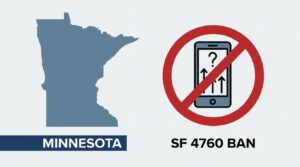
Minnesota’s Legislature has passed Senate File 4760, a sweeping public safety omnibus bill that includes what appears to be the first explicit state-level prohibition on prediction market platforms in the United States. The measure cleared the House 100-32 and the Senate 57-9 on 12 May 2026, and it now sits on Governor Tim Walz’s desk. If signed into law, the ban on so-called “event contract” platforms would take effect on 1 August 2026, directly targeting operations like those run by Kalshi and Polymarket.
What Minnesota’s Prediction Market Ban Means for the Industry
The inclusion of prediction markets in a public safety bill is itself a signal worth reading carefully. Legislators framed the prohibition not as a financial regulation issue but as a consumer protection and anti-gambling measure. That framing matters, because it sets a precedent for how other states might classify and restrict these platforms going forward.
Before diving into the strategic implications, here’s what industry stakeholders should take away from this development:
- First-mover precedent: Minnesota is now the first state to draw a statutory line around event contracts, giving other legislatures a legislative template to replicate or adapt.
- Regulatory classification shift: By housing the ban within a public safety bill rather than financial services legislation, lawmakers effectively categorised prediction markets alongside gambling, not trading.
- The 1 August 2026 effective date leaves a narrow window for platforms to adjust operations, challenge the law, or withdraw from the state entirely.
- Bipartisan margins: The lopsided votes in both chambers (100-32 in the House, 57-9 in the Senate) suggest this wasn’t a close call politically, which may embolden similar efforts elsewhere.
- Federal ambiguity persists: The CFTC’s evolving stance on event contracts at the federal level has left a patchwork of regulatory uncertainty that state-level action like this only deepens.
How SF 4760 Defines and Restricts Event Contracts
The bill’s language targets platforms that allow users to buy and sell contracts tied to the outcome of real-world events, from elections and economic indicators to weather patterns and cultural milestones. Minnesota’s statute doesn’t merely regulate these instruments. It prohibits them outright within the state’s borders.
That distinction is critical. Other jurisdictions have explored licensing frameworks or disclosure requirements for prediction markets. Minnesota chose a different path entirely, one that treats the activity as inherently incompatible with its public safety and consumer protection goals (a distinction regulators in other states have been slow to enforce).
Platforms like Kalshi, which operates as a CFTC-regulated exchange, and Polymarket, which has built its user base largely through crypto-native infrastructure, now face a binary question in Minnesota: comply or exit. There is no middle ground in the statute as written.
The Gambling Frame: Why It Changes the Debate
Arguably the most consequential aspect of SF 4760 is where it lives legislatively. Prediction market operators have spent years arguing that their platforms are closer to financial exchanges than sportsbooks. They point to price discovery, hedging utility, and informational efficiency as evidence that event contracts serve a legitimate economic function.
Minnesota’s Legislature rejected that framing. By embedding the ban in a public safety omnibus alongside provisions addressing gambling enforcement, the state has made a definitional choice that carries weight beyond its borders. And while prediction market advocates may dispute the analogy, the political reality is stark: when a ban passes with those margins, the intellectual argument has already lost the room.
Still, not everyone sees it that way. Industry groups have signalled that legal challenges could follow, potentially on First Amendment grounds or under the dormant Commerce Clause. Whether those challenges gain traction depends in part on how the federal regulatory picture evolves over the coming months.
What Other States Are Watching
At least a handful of state legislatures have introduced or considered similar restrictions on event contracts in 2026. Minnesota’s passage of SF 4760 gives those efforts a concrete reference point.
| Factor | Minnesota (SF 4760) | Federal (CFTC Approach) |
|---|---|---|
| Classification | Gambling / public safety | Financial instrument (contested) |
| Regulatory stance | Outright prohibition | Selective approval with restrictions |
| Effective date | 1 August 2026 | Ongoing rulemaking, no fixed timeline |
| Political consensus | Strong bipartisan support | Divided among commissioners, with shifting priorities depending on administration |
The tension between state prohibition and federal permissiveness creates a compliance landscape that is, at best, fragmented. Platforms operating nationally will need state-by-state legal analysis, which raises operational costs and complicates user access.
Reframing Risk: What Prediction Market Operators Should Consider Now
For operators in this space, the instinct may be to treat Minnesota as an outlier. That would be a mistake. Legislative momentum tends to compound, and the bipartisan nature of this vote removes the convenient excuse that the ban is ideologically driven. It passed because lawmakers on both sides found the argument persuasive enough to act on.
Operators should be asking harder questions about their state-level government affairs strategies. The platforms that invested heavily in federal lobbying while neglecting statehouse relationships may find themselves outflanked. Decentralised prediction market platforms face an additional layer of complexity: enforcement against blockchain-native protocols is technically difficult but not impossible, and Minnesota’s law doesn’t carve out exceptions based on underlying technology.
What remains less clear is whether Governor Walz will sign the bill, let it become law without his signature, or exercise a veto. His office has not publicly commented on the prediction market provisions specifically, though the bill’s broad public safety mandate may make a line-item veto politically costly.
Frequently Asked Questions
Does SF 4760 only affect prediction markets?
No. The bill is a comprehensive public safety omnibus that covers a range of issues. The prediction market ban is one provision within a much larger legislative package, which is partly why it attracted less standalone debate than it might have otherwise.
Can platforms like Kalshi still operate in Minnesota after 1 August 2026?
If the bill becomes law as written, event contract platforms would be prohibited from offering services to Minnesota residents. Platforms would need to geoblock or otherwise restrict access.
Is this likely to be challenged in court?
Industry observers expect legal challenges, though no formal action has been announced yet. The strongest arguments would likely centre on federal preemption or constitutional commerce protections, but outcomes are far from certain.
How does this compare to the CFTC’s position?
The CFTC has taken a more nuanced approach, approving certain event contracts while restricting others (particularly those tied to elections). Minnesota’s law is blunter: it bans the category entirely at the state level, regardless of federal approval status.



