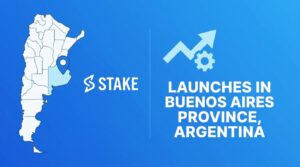
Stake, the crypto-native gaming and entertainment platform, has gone live in the Province of Buenos Aires, marking a significant expansion into Argentina’s most populous jurisdiction. The move gives the operator access to roughly 17 million residents and positions it within a regulated provincial framework that has been gradually opening to licensed online gaming. For Stake, which has built its brand around cryptocurrency-first wagering, the Buenos Aires launch signals a broader Latin American growth strategy that now touches one of the region’s most commercially important markets.
What Stake’s Buenos Aires Entry Means for the Market
Argentina’s online gambling landscape is fragmented by design. Each province controls its own licensing regime, and Buenos Aires — home to approximately 40% of the country’s population — has emerged as the single most consequential market for operators seeking scale. Stake’s entry here is not merely geographic expansion; it represents a calculated bet on regulatory maturity and consumer demand in a province that has steadily refined its digital gaming framework since 2021.
Below are the strategic takeaways from this development:
- Market access at scale: Buenos Aires Province dwarfs other Argentine jurisdictions in population and economic output, giving Stake immediate access to the country’s largest addressable audience
- The launch reinforces Stake’s pivot toward regulated markets, a shift that carries reputational and compliance implications for a brand historically associated with crypto-first, offshore operations
- Competitive positioning: Stake now competes directly with established operators already licensed in the province, including several with deep local partnerships
- Latin American momentum: This is part of a wider regional push — and arguably the most commercially significant step Stake has taken in South America to date
Why Buenos Aires, and Why Now?
The Province of Buenos Aires began formalizing its online gambling regulations under the authority of the Instituto Provincial de Lotería y Casinos (IPLyC). That regulatory body has been issuing licenses to both domestic and international operators, creating a framework that balances market openness with consumer protection mandates. Stake’s ability to secure authorization here suggests the platform has met local compliance thresholds around responsible gambling, anti-money laundering protocols, and technical standards — requirements that have filtered out less prepared entrants.
Timing matters too. Argentina’s broader economic volatility, including persistent inflation and currency controls, has made digital entertainment platforms with crypto payment rails particularly attractive to local consumers. Stake’s crypto-native wagering platform fits neatly into that dynamic, offering users an alternative to peso-denominated transactions that lose value in real time (a distinction regulators have been slow to address directly).
Argentina’s Provincial Licensing Puzzle
Understanding why this launch carries weight requires a brief look at how Argentina structures its gambling market. There is no single national regulator. Instead, each of the country’s 23 provinces — plus the Autonomous City of Buenos Aires — maintains independent authority over gaming within its borders.
| Jurisdiction | Regulator | Online Gambling Status | Population (approx.) |
|---|---|---|---|
| Province of Buenos Aires | IPLyC | Licensed and operational | ~17 million |
| City of Buenos Aires (CABA) | LOTBA | Licensed, active market | ~3 million |
| Córdoba | Lotería de Córdoba | Regulated, limited operators | ~3.8 million |
| Mendoza | IPJyC Mendoza | Operational with restrictions | ~2 million |
The province-by-province approach means operators must navigate distinct regulatory environments for each territory. Stake’s Buenos Aires license does not automatically grant it access to Córdoba or Mendoza. Each requires separate authorization. Still, Buenos Aires alone represents a market large enough to justify standalone investment.
How This Reshapes Competitive Dynamics
Stake enters a Buenos Aires market where operators like Codere, Betsson, and bet365 have already established footholds. But Stake’s differentiator has never been conventional sportsbook depth or legacy brand recognition. Its edge lies in a younger, digitally native user base drawn to cryptocurrency integration, community-driven engagement, and a product experience built around speed and transparency.
Whether that translates in Buenos Aires depends on several factors the company cannot fully control. Local payment infrastructure, consumer trust in crypto-denominated platforms, and the regulatory appetite for innovation all play a role. What remains less clear is how provincial authorities will treat crypto-specific wagering mechanics as the market matures — particularly if consumer complaints or AML concerns surface.
The Broader Latin American Trajectory
Stake’s Buenos Aires launch does not exist in isolation. Latin America has become one of the most contested regions in global online gambling, with Brazil’s newly regulated market drawing the most attention. Argentina, while smaller in absolute terms, offers something Brazil’s federal model does not: operational provinces where licenses are already being issued and enforced.
And while Brazil’s regulatory framework continues to evolve through 2025, Argentine provinces like Buenos Aires offer operators a functioning, revenue-generating environment today. For Stake, that distinction is worth more than speculative positioning in a market still finalizing its rules.
Frequently Asked Questions
Is Stake now available across all of Argentina?
No. Stake has launched specifically in the Province of Buenos Aires. Argentina’s gambling regulation operates at the provincial level, so each jurisdiction requires its own license. Access in other provinces would depend on separate regulatory approvals.
What makes Stake different from other operators in Buenos Aires?
Stake is a crypto-native platform, meaning it was built around cryptocurrency transactions from the outset. Most competitors in the province operate primarily with traditional fiat payment methods. This gives Stake a distinct product identity, though it also introduces regulatory questions around crypto-specific compliance that other operators do not face.
Does this affect Stake’s operations in other countries?
Not directly. The Buenos Aires license is jurisdiction-specific. However, it reinforces a pattern of Stake pursuing regulated market entry across multiple geographies, which could influence how other regulators perceive the brand.



