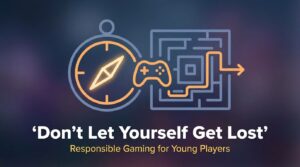
A fresh responsible gaming initiative titled Don’t Let Yourself Get Lost has launched with a clear demographic in focus: young people. The campaign aims to equip younger audiences with practical guidance on maintaining healthy gambling habits, addressing a population segment that regulators and advocacy groups increasingly view as vulnerable. While details on the campaign’s full scope remain limited, its arrival coincides with mounting pressure across multiple jurisdictions to strengthen youth-oriented gambling protections.
Why a Youth-Focused Gambling Campaign Matters Right Now
The timing here is anything but accidental. Across Europe, North America, and parts of Asia-Pacific, regulators have spent the past 18 months tightening rules around advertising exposure, age verification, and affordability checks. Young adults, particularly those aged 18 to 25, sit at the intersection of several risk factors: high smartphone usage, heavy exposure to sports betting advertising, and limited financial literacy. That combination has drawn scrutiny from lawmakers and public health bodies alike.
Before diving into the strategic dimensions, here are the core takeaways from this initiative:
- Demographic precision: The campaign explicitly targets young people, a group that accounts for a disproportionate share of problem gambling referrals in several markets
- Preventive framing: Rather than intervening after harm occurs, the initiative positions itself as an upstream educational tool
- It reflects a broader industry shift toward proactive responsibility messaging, partly driven by regulatory expectation and partly by reputational calculus
- Brand positioning: Operators and affiliates backing such campaigns may gain goodwill with regulators during licensing reviews and compliance audits
- Open question: Whether awareness campaigns alone move the needle on youth gambling harm remains a subject of genuine debate among researchers
The Landscape Behind the Message
Youth gambling risk is not a new concern, but the channels through which young people encounter gambling have shifted dramatically. Social media influencers promoting betting tips, in-app advertisements embedded in mobile games, and the normalisation of wagering through fantasy sports platforms have all contributed to what some researchers describe as an ambient gambling environment. A 2023 study by the UK Gambling Commission found that 31% of 18-to-24-year-olds had gambled in the previous four weeks, a figure that, while lower than older cohorts, carried higher rates of at-risk behaviour.
Campaigns like Don’t Let Yourself Get Lost attempt to cut through that noise. Still, the effectiveness of awareness-driven approaches depends heavily on distribution, messaging quality, and whether the campaign reaches audiences at the right moment (a distinction regulators have been slow to enforce).
What Responsible Gaming Education Actually Requires
Telling someone to “gamble responsibly” has never been enough. The phrase itself has drawn criticism for placing the burden of harm prevention entirely on the individual. Effective youth-focused campaigns need to go further, and the best ones do.
Behavioural science offers some useful anchors here. According to neuro-linguistic programming principles and broader cognitive-behavioural frameworks, the way information is framed shapes how people internalise it. Young people respond differently to fear-based messaging than they do to empowerment-based messaging. A campaign that says “you could lose everything” triggers defensive processing. One that says “you’re in control of how you play” activates a sense of agency.
This matters because gambling behaviour among young adults is often tied to identity formation and social belonging. Peer groups, online communities, and even the language used in betting apps all reinforce certain behavioural patterns. Responsible gaming campaigns that acknowledge these social dynamics, rather than treating gambling as a purely individual decision, tend to produce better engagement and recall. Framing the message around self-awareness and personal boundaries, as the campaign title suggests, aligns with what psychologists call an internal locus of control. The name itself, Don’t Let Yourself Get Lost, implies navigation and self-direction rather than prohibition.
Anchoring techniques, another NLP concept, can also play a role. Associating responsible gambling with positive emotional states, such as confidence and clarity, rather than shame or fear, creates mental shortcuts that young people are more likely to access in real-time decision-making moments. Whether this particular campaign deploys such techniques remains to be seen.
Regulatory Tailwinds and Industry Incentives
Operators have commercial reasons to back these efforts. In markets like the UK, Italy, and several Australian states, responsible gambling commitments and youth protection measures factor directly into licensing decisions. And while sceptics argue that some campaigns amount to little more than corporate window dressing, the regulatory direction is unmistakable: do more, or face tighter restrictions.
The European Gaming and Betting Association has repeatedly called on its members to invest in player protection tools and educational outreach. Whether Don’t Let Yourself Get Lost becomes a template or a footnote depends largely on measurable outcomes. Campaigns that track engagement, behavioural change, and referral rates to support services will carry far more weight than those that simply count impressions.
Frequently Asked Questions
Who is the target audience for the Don’t Let Yourself Get Lost campaign?
The campaign is directed at young people, broadly understood as those in the 18-to-25 age bracket, who are considered at elevated risk for developing problematic gambling behaviours.
Does awareness alone reduce youth gambling harm?
Evidence is mixed. Awareness campaigns can shift attitudes and increase help-seeking behaviour, but they work best when paired with structural protections like deposit limits, self-exclusion tools, and stricter advertising rules. On their own, they are necessary but arguably not sufficient.
Why is responsible gaming messaging for young people different from general campaigns?
Young adults process risk differently and are more influenced by peer behaviour and social identity. Effective youth campaigns use empowerment-based language and acknowledge social context rather than relying on generic warnings.