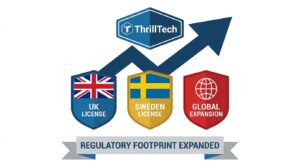
ThrillTech, the B2B gaming technology supplier, has broadened its regulatory reach by securing additional operating licences in the United Kingdom, Sweden, and several other jurisdictions. The expansion signals a deliberate push into regulated markets at a time when compliance credentials increasingly determine which suppliers win integration deals. For a company building its presence across multiple verticals, the licensing milestones represent both a commercial accelerator and a strategic moat against competitors still navigating fragmented regulatory landscapes.
What ThrillTech’s Licensing Push Means for the B2B Gaming Sector
Securing multi-jurisdictional licences is no small undertaking. The process demands sustained investment in compliance infrastructure, responsible gambling frameworks, and technical audits that vary significantly from one regulator to the next. ThrillTech’s ability to clear these hurdles across markets as distinct as the UK and Sweden suggests a maturing operational backbone. Here’s what stands out:
- UK market access: Holding a licence from the UK Gambling Commission opens the door to one of Europe’s most lucrative and heavily scrutinised igaming markets, where operator demand for compliant B2B partners remains high.
- Swedish regulatory alignment: Sweden’s Spelinspektionen enforces strict advertising and player protection rules. Approval here positions ThrillTech to serve Nordic-facing operators under a framework that has thinned the field of eligible suppliers.
- Additional jurisdictions, while not individually named, collectively reduce ThrillTech’s dependency on any single market and diversify revenue risk.
- Competitive differentiation: In a crowded supplier landscape, multi-market licensing acts as a trust signal for operators evaluating long-term technology partnerships.
Why Timing Matters
Regulatory environments across Europe and beyond have tightened considerably over the past two years. The UK, in particular, underwent a sweeping review of its gambling laws through the 2023 White Paper, which introduced new requirements around affordability checks, stake limits for online slots, and enhanced due diligence obligations for operators. Suppliers that cannot demonstrate compliance readiness risk being excluded from procurement shortlists altogether.
Sweden has followed a parallel trajectory. Spelinspektionen has revoked or suspended licences from operators that failed to meet bonus restrictions and self-exclusion protocols. The regulator’s posture has made it harder for new entrants to gain approval, which arguably makes ThrillTech’s licence there more valuable than it would have been even 18 months ago.
And while some competitors have retreated from regulated markets due to rising compliance costs, ThrillTech appears to be leaning in.
The Commercial Calculus Behind Multi-Market Licensing
There’s a straightforward commercial logic at work. Operators increasingly prefer suppliers who can serve them across multiple regulated territories through a single integration. Every additional licence ThrillTech holds reduces friction for potential clients evaluating platform migrations or content partnerships. That matters.
Consider the alternative: an operator active in the UK, Sweden, and, say, Malta would need to vet separate suppliers for each jurisdiction if no single partner held all the relevant approvals. The operational overhead, the legal review cycles, the technical redundancy (a distinction regulators have been slow to standardise across borders) all compound. A supplier like ThrillTech with licences spanning multiple regulated markets collapses that complexity into a single relationship.
How Strategic Positioning Shapes Supplier Selection
Beyond the regulatory mechanics, there is a psychological dimension to how operators evaluate technology partners. Decision-makers in procurement and compliance roles are, at their core, managing risk. Their internal framing of a supplier relationship is shaped not just by product capability but by perceived reliability and regulatory standing.
When a supplier demonstrates multi-jurisdictional licensing, it triggers what behavioural strategists would call a credibility anchor. The licence itself becomes a proxy for broader organisational competence. Operators begin to associate the supplier with reduced regulatory risk, even in markets where the licence may not directly apply. This halo effect is well-documented in B2B decision-making research and plays a measurable role in shortlisting outcomes.
Still, perception alone doesn’t close deals. What ThrillTech will need to demonstrate next is that its technology stack and content pipeline can match the breadth of its compliance footprint. Operators want proof that a supplier’s product roadmap aligns with market-specific player preferences, not just regulatory checkboxes. The gap between holding a licence and winning meaningful market share in that jurisdiction can be wide, and it’s bridged only through localised execution.
Whether ThrillTech can convert these licences into sustained commercial traction across each market remains the question that will define the next phase of its growth story.
Frequently Asked Questions
What jurisdictions has ThrillTech recently been licensed in?
ThrillTech has added licences in the United Kingdom, Sweden, and other jurisdictions, expanding its regulated market presence significantly.
Why is a UK Gambling Commission licence important for B2B suppliers?
The UK represents one of Europe’s largest and most regulated igaming markets. Holding a UKGC licence allows B2B suppliers to partner with UK-licensed operators, a prerequisite for accessing this high-value market. Without it, suppliers are effectively locked out of a substantial revenue pool.
Does multi-jurisdictional licensing guarantee commercial success?
Not on its own. Licensing opens doors, but converting market access into revenue requires competitive products, localised content strategies, and strong operator relationships. It is a necessary condition, not a sufficient one.