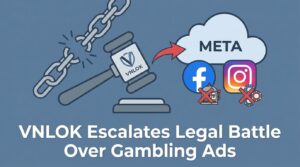
The Dutch trade association VNLOK has intensified its campaign against Meta Platforms, announcing it will involve the European Commission in legal proceedings over what it describes as the large-scale dissemination of illegal gambling advertisements on Facebook and Instagram. The move marks a significant escalation in the ongoing dispute between licensed gambling operators in the Netherlands and the tech giant’s advertising practices. By bringing EU-level regulators into the fold, VNLOK signals that national enforcement alone has proven insufficient to curb the flow of unauthorised gambling promotions across Meta’s platforms.
Why VNLOK’s Push Against Meta Matters for European Gambling Regulation
This is not simply a bilateral spat between a trade body and a social media company. The implications stretch across the entire European regulatory landscape for online gambling, digital advertising accountability, and platform liability. Here’s what industry stakeholders should take away from this development:
- Regulatory escalation to EU level: VNLOK’s decision to involve the European Commission suggests that Dutch national authorities have been unable or unwilling to force Meta into compliance on their own
- The case could set a precedent for how other EU member states approach unlicensed gambling advertising on major social platforms
- Platform accountability under scrutiny: If the Commission takes up the matter, Meta may face pressure under the Digital Services Act (DSA) to demonstrate more robust ad-screening mechanisms for gambling content
- Licensed operators bear the cost: VNLOK’s members, who operate under strict Dutch licensing conditions, argue they are commercially disadvantaged by unlicensed competitors who advertise freely on Meta’s platforms without equivalent regulatory oversight
- The dispute highlights a growing tension between self-regulatory ad policies at tech platforms and binding legal frameworks in regulated markets
The Core Dispute: Unlicensed Gambling Ads Flooding Dutch Social Media
VNLOK represents licensed gambling operators in the Netherlands, a market that underwent a major regulatory overhaul when the Remote Gambling Act (Kansspelen op afstand, or KOA) took effect in October 2021. Since then, only operators holding a licence from the Kansspelautoriteit (KSA) are permitted to offer online gambling services and advertise to Dutch consumers.
Yet the association contends that Facebook and Instagram continue to host gambling advertisements from unlicensed operators at scale. That’s the crux of the problem. Licensed operators invest heavily in compliance, responsible gambling measures, and advertising restrictions imposed by the KSA. Unlicensed competitors, operating outside these rules, face no such constraints when purchasing ad inventory on Meta’s platforms.
The competitive distortion is tangible.
VNLOK has argued repeatedly that Meta’s ad review systems fail to adequately screen for gambling content targeting Dutch users from unauthorised sources. Whether this reflects a technical shortcoming or an economic incentive to keep ad revenue flowing (a distinction regulators have been slow to interrogate) remains an open question.
What the European Commission Involvement Could Change
Bringing the European Commission into the dispute transforms it from a domestic enforcement issue into a potential test case under EU digital regulation. The Digital Services Act, which became fully applicable in February 2024, imposes specific obligations on very large online platforms like Meta regarding illegal content, including advertising that violates member state laws.
Under the DSA, platforms designated as “very large” must conduct systemic risk assessments and take reasonable measures to mitigate risks associated with illegal content dissemination. If VNLOK can demonstrate that Meta has failed to address known, recurring patterns of unlicensed gambling advertising, the Commission could open a formal investigation. And while enforcement under the DSA is still finding its footing, the political appetite for holding Big Tech accountable has arguably never been stronger in Brussels.
Still, the path from complaint to enforcement is neither short nor certain. The Commission must weigh competing priorities, and Meta will likely argue that its automated systems already flag and remove violating ads. Whether those systems work well enough in practice is precisely what VNLOK disputes.
Broader Market Implications for Digital Gambling Advertising
The Netherlands is far from the only European market grappling with this issue. Several EU member states have tightened gambling advertising rules in recent years, and the gap between what national law prohibits and what platforms actually permit has become a recurring source of friction.
| Market | Gambling Ad Restrictions | Platform Enforcement Challenges |
|---|---|---|
| Netherlands | Only KSA-licensed operators may advertise; strict content rules since 2023 ban on untargeted ads | VNLOK alleges persistent unlicensed ad placement on Meta platforms |
| Italy | Near-total gambling advertising ban since 2019 (Dignity Decree) | Enforcement against offshore operators advertising via social media remains inconsistent |
| Belgium | Comprehensive advertising restrictions enacted in 2023 | Monitoring of social media compliance is still developing |
| Germany | Interstate Treaty limits advertising hours and content | Fragmented state-level enforcement complicates platform oversight, with some operators exploiting jurisdictional gaps |
A successful VNLOK action at the EU level could catalyse similar efforts across these markets, creating a coordinated pressure point that individual national regulators have struggled to achieve alone.
How Platform Liability Is Reshaping Operator Strategy
For licensed operators, the stakes extend beyond fair competition. The presence of unlicensed gambling ads on mainstream platforms undermines public trust in regulated markets and complicates responsible gambling messaging. When consumers encounter ads from both licensed and unlicensed sources in the same feed, the distinction between legal and illegal offerings blurs. That erosion of clarity is something no amount of compliance spending can fully counteract.
VNLOK’s legal strategy reflects a broader shift in how industry associations approach platform accountability. Rather than relying solely on national gambling regulators to police advertising, trade bodies are increasingly leveraging digital regulation frameworks, consumer protection law, and competition arguments to force change. The approach is pragmatic: if gambling regulators lack jurisdiction over platforms, find a regulator who does.
Frequently Asked Questions
What is VNLOK?
VNLOK is a Dutch trade association representing licensed gambling operators in the Netherlands. It advocates for fair market conditions and regulatory compliance within the Dutch gambling sector.
Why is the European Commission being involved?
VNLOK believes that national-level enforcement has not been sufficient to stop Meta from hosting unlicensed gambling advertisements. The European Commission has oversight powers under the Digital Services Act that could compel platforms to act more decisively against illegal advertising content.
Could this affect Meta’s operations beyond the Netherlands?
Potentially, yes. Any enforcement action or formal guidance from the Commission would apply to Meta’s operations across all EU member states, not just the Dutch market. The ripple effects could reshape how the platform handles gambling ad verification continent-wide.
What is the Digital Services Act’s role here?
The DSA requires very large online platforms to assess and mitigate systemic risks, including the spread of illegal content such as unauthorised gambling ads. It gives the Commission direct supervisory authority over platforms like Meta that meet the designation threshold.