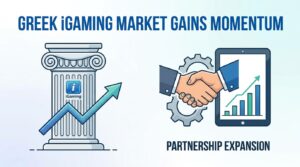
A game development studio is broadening its footprint in Greece by entering a new distribution partnership, a move that signals growing commercial interest in one of Southern Europe’s more tightly regulated iGaming markets. The deal positions the developer to reach a wider base of licensed Greek operators, at a time when the country’s regulated online gambling framework continues to mature following its overhaul in recent years. While the specific terms of the agreement remain undisclosed, the partnership underscores a pattern: content suppliers are increasingly treating Greece not as a peripheral European market but as a destination worth dedicated effort.
What This Partnership Means for the Greek iGaming Landscape
Greece re-regulated its online gambling sector under a licensing framework administered by the Hellenic Gaming Commission (HGC), which began issuing operator licences in 2022. Since then, the market has attracted a steady stream of international operators and content providers seeking compliant access. That regulatory clarity, however limited in some operational details, has made Greece a more appealing target for studios that previously focused on larger Western European jurisdictions.
Before diving into the strategic implications, here’s what stands out from this development:
- The developer is using a partnership model rather than direct integration, suggesting a deliberate strategy to scale quickly without building local infrastructure from scratch
- Greece’s regulated operator base has grown enough to justify dedicated content distribution agreements, a shift from even two years ago
- Market access in Greece requires HGC-certified content, which means the developer’s games have either already passed certification or are in the pipeline for approval
- The move reflects a broader industry trend where mid-tier and emerging studios are prioritising regulated Southern European markets alongside traditional strongholds like the UK and Malta
Why Greece, and Why Now?
Greece’s online gambling market generated significant tax revenue in its first full year of regulated operation, and operator numbers have continued to climb. The country’s population of roughly 10.4 million may seem modest compared to Germany or Italy, but player engagement rates in Southern Europe tend to punch above demographic weight. Greek players show strong appetite for slots and live casino content, two categories where content partnerships matter most.
And while the HGC has been deliberate (some would say cautious) in its licensing pace, the result is a market with fewer but more committed operators. For a content developer, that’s arguably a better environment than a fragmented one with dozens of undercapitalised licensees. Fewer partners, deeper integrations, more predictable revenue.
Still, entering Greece is not without friction. Certification timelines can stretch, and the regulatory framework imposes specific technical requirements on game suppliers that differ from, say, the Malta Gaming Authority’s standards. The partnership model helps absorb some of that complexity by leveraging a distributor already embedded in the local compliance ecosystem.
The Distribution Model: Speed Over Control
Choosing a distribution partner over direct operator-by-operator integration is a trade-off. The developer sacrifices some margin and direct relationship management in exchange for faster market penetration. In a market like Greece, where the window of competitive advantage is still relatively open, speed matters more than margin optimisation.
This approach has become increasingly common among studios expanding into newly regulated European markets. The Hellenic Gaming Commission’s certified supplier requirements add a layer of due diligence that makes local partnerships especially practical. A distributor with existing operator relationships and regulatory familiarity can compress what might otherwise be a 12-to-18-month market entry timeline into something considerably shorter.
How Content Suppliers Are Rethinking European Expansion
The Greek expansion fits a wider recalibration across the European iGaming supply chain. Studios that once focused almost exclusively on the UK, Sweden, and Malta are now allocating development and compliance resources to markets like Greece, Romania, and Croatia. The logic is straightforward: these markets offer regulated growth with less saturation.
What remains less clear is whether the economics of these smaller regulated markets can sustain the compliance overhead they demand. Each jurisdiction requires dedicated certification, localised content, and ongoing regulatory monitoring. For larger studios, the cost is absorbed easily. For smaller developers, the calculus is tighter, and partnerships become not just convenient but essential.
Regulatory Maturity and Its Effect on Content Strategy
Greece’s regulatory environment, while still evolving, has reached a stage where content suppliers can plan with reasonable confidence. The HGC has demonstrated consistency in its enforcement posture, and the licensing framework provides a stable commercial foundation. That stability attracts investment.
But regulatory maturity also raises the bar. Operators in Greece are becoming more selective about which content they onboard, favouring suppliers with proven performance data and certified portfolios. A developer entering through a well-connected distribution partner gains not just access but credibility, a distinction that matters when operator shelf space is finite.
Frequently Asked Questions
What is the Hellenic Gaming Commission?
The HGC is Greece’s gambling regulator, responsible for licensing operators and certifying game content for the country’s regulated online market. It began issuing licences under the current framework in 2022.
Why do developers use distribution partners to enter new markets?
Distribution partners offer pre-existing operator relationships, local regulatory expertise, and faster integration timelines. This reduces the cost and complexity of entering a new jurisdiction independently, particularly in markets with specific certification requirements.
Is Greece a significant iGaming market in Europe?
Greece is a growing regulated market with strong player engagement, particularly in slots and live casino. While smaller than the UK or Germany in absolute terms, its regulated structure and operator quality make it commercially attractive for content suppliers willing to invest in compliance.