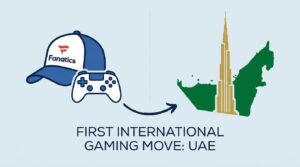
Fanatics, the sports merchandise and betting giant, has selected the United Arab Emirates as the launchpad for its first gaming venture outside the United States. The move signals a deliberate pivot toward a region where regulated sports betting infrastructure is still nascent but growing fast. By partnering with a UAE-based entity, Fanatics is positioning itself at the front of a queue that other major operators have been slower to join. The timing is no accident.
Why the UAE Matters for Fanatics’ Global Ambitions
Before unpacking the operational details, it helps to understand what this expansion reveals about the company’s broader strategy and the shifting dynamics of international gaming markets.
- Fanatics is bypassing more established European and Latin American markets in favour of a region with fewer entrenched competitors
- The UAE’s evolving regulatory posture toward gaming and entertainment creates a first-mover window that may not stay open indefinitely
- Brand leverage: Fanatics’ existing relationships with major sports leagues give it a credibility advantage that pure-play gambling operators lack in a market sensitive to reputational risk
- This entry could serve as a template for further expansion into Gulf Cooperation Council (GCC) states and broader Middle Eastern markets
- The decision reflects a calculated bet that regulated gaming in the Gulf will scale faster than most Western analysts currently project
A Market Still Writing Its Own Rules
The UAE has historically maintained strict prohibitions on gambling. But the country’s broader economic diversification strategy, particularly under Abu Dhabi and Dubai’s competing visions for tourism and entertainment, has opened doors that were firmly shut a decade ago. Regulated gaming, at least on paper, now fits within a wider framework of attracting international capital and high-net-worth visitors.
Fanatics enters this environment with a distinct profile. Unlike legacy sportsbook operators whose brands carry the weight of decades in gambling markets, Fanatics’ roots in licensed sports merchandise and collectibles give it a softer entry point. That distinction matters in a jurisdiction where cultural and regulatory sensitivities around gambling remain significant (a distinction regulators have been slow to codify in formal licensing frameworks).
Still, the regulatory picture is far from settled. The UAE has not published a comprehensive federal gaming law, and much of the current activity operates through emirate-level frameworks and special economic zones. What Fanatics is banking on is that the direction of travel is clear enough to justify early commitment.
How Does This Fit Fanatics’ Domestic Trajectory?
In the United States, Fanatics Betting & Gaming launched its sportsbook in 2023, entering a market already crowded with DraftKings, FanDuel, BetMGM, and others. The company leaned heavily on its existing customer base of sports fans, using loyalty programs and merchandise tie-ins to differentiate. Results have been mixed. Market share gains have come slowly against deeply capitalized incumbents.
The UAE move arguably reflects a lesson learned from that domestic experience. Rather than fighting for incremental share in saturated markets, Fanatics appears to be seeking territories where it can establish dominance before the competitive field fills up. Whether that logic holds depends on execution and, critically, on the pace at which UAE regulators formalize their approach to gaming licenses.
Competitive Landscape in the Region
| Factor | Fanatics | Potential Competitors |
|---|---|---|
| Brand recognition in sports | Strong globally through league partnerships | Limited regional presence for most Western operators |
| Regulatory relationships | Building from scratch in UAE | Some European operators have explored preliminary discussions |
| Product diversification | Sportsbook, collectibles, merchandise ecosystem | Typically single-vertical (betting or casino) |
| Cultural positioning | Sports-first brand identity reduces friction | Gambling-first brands face higher reputational barriers in the Gulf |
The Strategic Psychology Behind Market Timing
Fanatics’ decision to enter the UAE first, rather than the UK or a Latin American jurisdiction, reveals something about how the company frames risk and opportunity internally. In behavioural terms, this is a classic anchoring play. By establishing presence in a high-profile, emerging market, Fanatics anchors its international narrative around ambition and exclusivity rather than incremental geographic expansion.
There is a persuasion architecture at work here that extends beyond simple market economics. The UAE carries symbolic weight. For investors, partners, and future regulators in neighbouring jurisdictions, a successful UAE operation functions as social proof. It signals that Fanatics can navigate complex regulatory environments, operate across cultural boundaries, and build a gaming product that meets standards beyond the American market’s expectations.
This framing also shapes internal organizational behaviour. Teams tasked with international expansion will calibrate their ambitions against the UAE benchmark. And potential partners in Saudi Arabia, Qatar, or Bahrain will evaluate Fanatics through the lens of its UAE performance rather than its US track record. The choice of first market, in other words, is as much a communication strategy as a business one.
Yet the risks of anchoring too heavily on a single market are real. If regulatory delays stall the UAE operation, or if cultural resistance proves stronger than anticipated, the reputational spillover could slow expansion elsewhere in the region. Fanatics will need to demonstrate operational flexibility alongside its strategic ambition.
Frequently Asked Questions
Is gambling legal in the UAE?
The UAE has historically prohibited gambling, but recent regulatory shifts at the emirate level have opened limited pathways for regulated gaming activities, particularly within designated zones and under specific licensing frameworks. The federal legal picture remains in development.
Why did Fanatics choose the UAE over European markets?
Arguably, the decision reflects a preference for markets where Fanatics can establish early dominance rather than compete against entrenched operators. The UAE’s emerging regulatory environment and limited existing competition offered a strategic opening that mature European markets do not.
What products will Fanatics offer in the UAE?
Specific product details have not been fully disclosed. Given the company’s US operations, a sportsbook offering integrated with its broader sports merchandise and collectibles ecosystem is the most likely initial format.
Could this lead to expansion into other Gulf states?
That possibility is clearly part of the strategic calculus. A successful UAE operation would give Fanatics both the operational template and the regional credibility to pursue opportunities in neighbouring markets as their regulatory frameworks evolve.