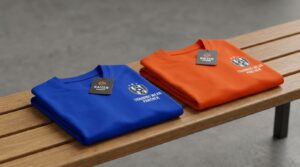
Kaizen Gaming, the operator behind the Betano and Stoiximan brands, has signed a sponsorship agreement to become the club’s official training wear partner. The deal marks another step in the company’s aggressive push into sports sponsorship, a strategy that has seen it accumulate partnerships across European football over the past several years. While financial terms of the arrangement have not been disclosed, the move signals Kaizen’s intent to deepen brand visibility in matchday and training environments alike.
What This Partnership Means for Kaizen’s Sponsorship Strategy
Training wear deals sit in a particular tier of sports sponsorship. They lack the headline glamour of front-of-shirt arrangements, but they offer something arguably more valuable: sustained, everyday brand exposure across social media content, behind-the-scenes footage, and pre-match coverage. For a company like Kaizen Gaming, which operates one of Europe’s fastest-growing betting platforms, that kind of ambient visibility compounds over time.
- Brand integration beyond matchday: Training wear partnerships ensure the brand appears in daily club content, training ground imagery, and player-focused media, not just during 90-minute windows.
- Cost-efficient exposure: Compared to primary shirt sponsorships, training wear deals typically carry lower rights fees while still delivering significant digital impressions.
- The deal reinforces Kaizen’s pattern of layering multiple mid-tier sponsorships rather than concentrating spend on a single marquee arrangement.
- Regulatory positioning: In markets where gambling advertising faces tightening restrictions, training wear branding occupies a grey zone that, at least on paper, draws less scrutiny than pitch-side or broadcast advertising.
Kaizen’s Expanding Footprint Across European Football
This is not Kaizen Gaming’s first foray into football sponsorship. The Athens-headquartered company has built a portfolio of partnerships spanning multiple leagues and competitions. Betano, its internationally facing brand, holds deals with clubs and federations in Portugal, Romania, Brazil, and Germany, among others. Stoiximan, its Greek-market brand, maintains deep ties with domestic football.
What distinguishes Kaizen from some competitors is the breadth of its approach. Rather than anchoring its entire sponsorship budget to one or two high-profile clubs, the company has spread its investment across geographies and tiers. That diversification serves a dual purpose: it hedges against the reputational risk of any single club underperforming, and it builds brand recognition in multiple regulated markets simultaneously.
Still, the question of whether this strategy delivers proportional returns remains open. Sponsorship ROI in the gambling sector is notoriously difficult to isolate from other acquisition channels.
How Training Wear Deals Are Reshaping Club Revenue
Football clubs have become increasingly creative in segmenting their commercial inventory. Where once a club might have offered a primary shirt sponsor, a sleeve sponsor, and a handful of stadium naming rights, the modern commercial department slices sponsorship into dozens of categories. Training wear is one of the more lucrative sub-categories to emerge over the past decade.
| Sponsorship Category | Typical Visibility | Relative Cost |
|---|---|---|
| Front-of-shirt | Broadcast, matchday, merchandise | High |
| Sleeve sponsor | Broadcast, matchday | Medium-High |
| Training wear | Digital content, pre-match, training footage | Medium |
| Stadium naming | Broadcast graphics, travel, navigation | Very High (long-term commitment) |
The shift toward digital-first content consumption has made training wear deals more attractive than they were even five years ago. Clubs now produce daily video content from training sessions, and players routinely post images in training kit to millions of followers. That organic reach is something broadcast-only sponsors simply cannot replicate.
The Regulatory Dimension Worth Watching
Gambling sponsorship in European football operates under a patchwork of national regulations. Italy banned gambling advertising outright in 2019. The UK has moved toward a voluntary “whistle-to-whistle” ban on TV advertising and is weighing further restrictions on shirt sponsorship. Spain and Belgium have introduced their own constraints.
Against that backdrop, training wear partnerships occupy an interesting position. They are less visible in regulated broadcast environments but highly visible in unregulated digital spaces (a distinction regulators have been slow to enforce). Whether this category eventually falls under stricter scrutiny depends on how regulators define “advertising” versus “brand presence” in the context of social media content.
Kaizen Gaming, for its part, has publicly committed to responsible gambling messaging across its sponsorship activations. But the gap between stated commitments and enforcement mechanisms remains wide across the industry.
Frequently Asked Questions
What does a training wear partner do?
A training wear partner provides branded apparel worn by players and staff during practice sessions, warm-ups, and non-matchday activities. The brand logo appears on all training kit, giving the sponsor visibility in club content produced outside of competitive fixtures.
Why are gambling companies investing heavily in football sponsorship?
Football offers unmatched reach across demographics and geographies. For gambling operators, associating their brand with clubs builds trust and recognition in competitive markets where customer acquisition costs are rising sharply. It also provides a platform for localised marketing in specific regulated jurisdictions.
Is Kaizen Gaming publicly listed?
No. Kaizen Gaming remains privately held. The company is headquartered in Athens, Greece, and has expanded operations across more than 12 markets globally, though it has not pursued an IPO as of this writing.
Could this type of sponsorship face future restrictions?
Possibly. Regulatory trends across Europe suggest that gambling-related sponsorship in sport will face increasing constraints. Training wear deals, while currently less scrutinised than shirt sponsorships, could be drawn into broader advertising bans depending on how individual jurisdictions define the scope of their restrictions.