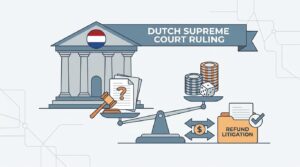
The Dutch Supreme Court (Hoge Raad) has issued a landmark preliminary ruling under case ECLI:NL:HR:2026:1159, concluding that consumer contracts formed with unlicensed online gambling operators before October 2021 are not automatically null and void. The ruling directly addresses legal questions escalated by the District Courts of Amsterdam and North Holland, where thousands of plaintiffs had pursued civil refunds for net gambling losses accumulated on grey-market platforms before the Remote Gambling Act (Kansspelen op afstand, or KOA) took effect. This judgement fundamentally alters the legal landscape for mass litigation claims against offshore operators and reshapes how Dutch courts will handle the intersection of regulatory licensing and private contract law.
What the Ruling Actually Settles
At the heart of the dispute was a deceptively simple question: does the absence of a Dutch licence under the legacy Betting and Gaming Act (Wet op de kansspelen) render a gambling contract civilly invalid? Plaintiffs argued yes, contending that because operators lacked authorisation, every transaction was tainted from inception. The Supreme Court disagreed.
By finding that the old Betting and Gaming Act does not implicitly dictate civil invalidity, the court drew a sharp line between regulatory non-compliance and contractual nullity. These are distinct legal concepts (a distinction regulators have been slow to enforce in other European jurisdictions). An operator’s failure to hold a licence may trigger administrative or criminal consequences, but it does not, on its own, unravel the private-law relationship between the operator and the consumer.
That shift matters because it removes the most powerful weapon plaintiffs had: the argument that every euro wagered on an unlicensed platform was recoverable as a matter of law, without needing to prove individual harm or reliance.
Strategic Implications for the Dutch iGaming Market
Before diving into the takeaways, it is worth recognising the scale of what was at stake. Litigation firms and claims aggregators had assembled cases representing tens of thousands of Dutch consumers, with potential aggregate exposure for operators running into hundreds of millions of euros. The Supreme Court’s ruling does not eliminate these claims entirely, but it strips away their broadest legal foundation.
- Mass refund claims lose their default mechanism. Plaintiffs can no longer rely on automatic contract nullity. Each claim will likely need to demonstrate specific grounds for invalidity or damages, raising the evidentiary burden considerably.
- Operators active before KOA regulation gain partial legal shelter. Grey-market platforms that served Dutch consumers prior to October 2021 now face a narrower corridor of civil liability, though administrative penalties remain unaffected.
- The ruling reinforces the principle that regulatory frameworks and private contract law operate on separate tracks in the Netherlands, a position not universally shared across EU member states.
- Claims aggregators face a business model challenge. The economics of no-win-no-fee litigation shift dramatically when individual proof of harm replaces blanket nullity arguments.
- Licensed operators under the Dutch Gambling Authority (Kansspelautoriteit) framework may benefit from reduced competitive distortion, as the ruling discourages retroactive market correction through civil courts.
How Dutch Courts Will Likely Proceed
District courts in Amsterdam and North Holland now have their answer, but applying it will not be straightforward. Judges must evaluate remaining claims on narrower grounds: was there fraud? Did the operator engage in unfair commercial practices? Did the consumer suffer quantifiable harm beyond simply losing a wager?
Each of these questions demands case-specific analysis. And while some claims may survive on consumer protection grounds under EU directives, the volume of successful recoveries is almost certain to drop.
Less clear is what happens to cases already settled or in advanced mediation stages. Operators who agreed to refunds under the shadow of potential nullity rulings may find themselves questioning whether those settlements were premature.
A Broader European Signal?
The Netherlands is not the only jurisdiction grappling with this tension. Austria has seen waves of similar litigation against unlicensed operators, with courts there sometimes reaching the opposite conclusion. Germany’s fragmented state-level gambling regime has produced its own inconsistencies. The Dutch Supreme Court’s reasoning, grounded in a strict separation between public regulatory law and private contractual validity, arguably offers the most analytically rigorous framework yet.
Whether other EU courts adopt similar reasoning remains an open question. But for operators with cross-border exposure, this ruling provides a defensible precedent worth citing.
The Consumer Protection Dimension
Critics of the ruling will point to an uncomfortable reality: consumers who gambled on platforms operating without oversight or responsible gambling safeguards now have fewer avenues for redress. The pre-KOA grey market in the Netherlands was substantial, with estimates suggesting that unlicensed operators captured a majority of online gambling revenue before regulation arrived.
Yet the court’s logic carries its own internal consistency. Contract law exists to govern agreements between parties. Regulatory law exists to govern market access. Collapsing one into the other, the court implied, creates unpredictable consequences that neither framework was designed to absorb. Still, for consumers who developed gambling problems on unregulated platforms, the practical effect is a door that just got harder to open.
Frequently Asked Questions
Does this ruling mean consumers cannot recover any gambling losses?
No. The ruling eliminates automatic nullity as a basis for recovery, but consumers may still pursue claims grounded in fraud, unfair commercial practices, or specific consumer protection statutes. The bar is higher, though, and each case will require individual assessment.
Which operators does this affect?
Primarily those that served Dutch consumers before October 2021 without holding a Dutch licence. Operators now licensed under the KOA framework are subject to a different regulatory and contractual regime entirely.
Could this precedent influence other EU jurisdictions?
Potentially. The Dutch Supreme Court’s separation of regulatory and contractual law offers a structured framework that other courts could reference, particularly in Austria and Germany where similar litigation is active. But each jurisdiction applies its own civil code, so direct transplantation is unlikely.
What happens to pending mass claims?
They continue, but on significantly weaker footing. Claims aggregators will need to pivot from blanket nullity arguments to more granular theories of liability, which increases cost and reduces the probability of large-scale recoveries.
Reframing Risk in a Post-Ruling Market
For industry participants, the psychological dimension of this ruling deserves attention alongside the legal one. Operators who spent years calculating worst-case exposure based on total nullity scenarios can now recalibrate their risk models. That recalibration affects everything from reserve provisioning to M&A valuations for companies with pre-KOA Dutch market history. Investors and acquirers who previously discounted asset values due to litigation overhang have a concrete reason to revisit those assumptions. The ruling also sends a signal about judicial temperament: Dutch courts, at least at the highest level, appear unwilling to use private law as a retroactive corrective for regulatory gaps that existed before the KOA framework matured. This institutional posture rewards forward-looking compliance over backward-looking punishment, a framing that should influence how operators approach emerging regulated markets elsewhere in Europe. For compliance teams, the takeaway is nuanced but clear: securing a licence remains essential for market access and administrative legitimacy, but the absence of one does not automatically create a civil liability time bomb. The distinction between these two consequences is where strategic planning should focus.