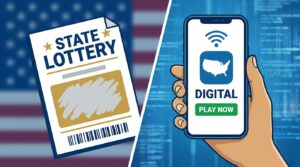
A US state lottery has launched digital ticket sales for the first time, opening a new chapter in how public lotteries reach players and generate revenue. The move signals a broader willingness among state-run gaming operations to embrace online platforms, a shift that has been years in the making but accelerated by changing consumer habits and mounting pressure to modernize revenue streams. While details on the specific state remain limited, the development carries implications for regulators, technology vendors, and the competitive landscape of legal gaming across the country.
Why This Digital Lottery Launch Matters for the Industry
State lotteries collectively generate tens of billions of dollars annually in the United States, funding education, infrastructure, and public services. Yet many have been slow to move beyond physical retail. This first-time digital launch represents more than a technology upgrade; it reflects a strategic recalibration in how lotteries compete for consumer attention in an era dominated by mobile entertainment and sports betting apps.
- Digital sales open a direct-to-consumer channel that bypasses traditional retail dependency, potentially reshaping lottery distribution economics
- The launch creates a precedent that other holdout states may follow, particularly those watching revenue performance closely
- Online lottery platforms generate richer player data, enabling more targeted marketing and responsible gaming interventions
- Technology vendors specializing in lottery digitization stand to benefit from what could become a wave of similar state-level deployments
- Retail partners may face disruption as player behavior shifts toward mobile purchasing
The Slow March Toward Digital
For years, the US lottery sector has operated in something of a paradox. Americans increasingly buy everything online, from groceries to cars, yet lottery tickets remained stubbornly tethered to gas stations and convenience stores. Part of the hesitation was regulatory. Part was political, with powerful retail lobbies arguing that digital sales would cannibalize foot traffic. And part was simply institutional inertia (a force that should not be underestimated in government-run enterprises).
But the math has been shifting. States that adopted third-party lottery courier and digital ordering services earlier have reported incremental revenue gains without the catastrophic retail decline opponents predicted. Georgia, Illinois, Michigan, and others have operated some form of online lottery sales for years. Still, a meaningful number of states held back, citing concerns over age verification, problem gambling, and the integrity of draw-based games in a digital environment.
This latest launch suggests those concerns, while valid, are no longer sufficient to justify staying offline.
What Digital Means in Practice
Going digital doesn’t simply mean replicating a paper ticket on a screen. The operational shift involves identity verification systems, geolocation technology to ensure compliance with state boundaries, secure payment processing, and integration with existing lottery draw infrastructure. Each of these layers introduces complexity but also opportunity.
Consider the data dimension alone. A physical lottery ticket tells the operator almost nothing about who bought it. A digital transaction, by contrast, captures age, location, purchase frequency, game preference, and spending patterns. That information is valuable not only for marketing but arguably more important for responsible gaming programs, which have historically struggled with the anonymity of cash-based retail purchases.
There’s a tension here, though. More data means more responsibility. States entering the digital lottery space will face scrutiny over how they use player information, whether their platforms adequately flag at-risk behavior, and how aggressively they market to existing players. These are questions the iGaming and sports betting sectors have already confronted, with mixed results.
Competitive Pressure From Legal Sports Betting
One factor that rarely gets enough attention in lottery digitization discussions: competition. Since the Supreme Court struck down PASPA in 2018, legal sports betting has expanded to more than 30 states. Sportsbook operators spend heavily on customer acquisition, offering slick mobile apps and promotional incentives that make traditional lottery products look dated by comparison.
Lotteries have noticed. Revenue growth in some states has plateaued or slowed, and while correlation is not causation, the timing aligns uncomfortably with the sports betting boom. Going digital is, at least in part, a defensive move. If lotteries cannot meet players where they already are, on their phones, they risk losing share of the discretionary gaming dollar to operators who can.
How State Lotteries Compare: Digital Adoption Snapshot
| State | Digital Sales Status | Year Launched | Notable Feature |
|---|---|---|---|
| Georgia | Active | 2012 | Full online draw and instant games |
| Illinois | Active | 2012 | Subscription-based model initially |
| Michigan | Active | 2014 | Extensive instant-win catalog |
| Pennsylvania | Active | 2018 | iLottery integrated with broader iGaming |
| Latest entrant | Newly launched | 2025 | First-ever digital offering for the state |
Reframing the Lottery Experience Through Behavioral Insights
Digital platforms don’t just change where people buy tickets. They change how people experience the lottery itself. Behavioral research consistently shows that the medium of interaction shapes decision-making in ways that go beyond convenience. When a player opens an app, the interface design, the color palette, the sequencing of options, and the framing of jackpot amounts all influence purchasing behavior at a subconscious level. This is where neuro-linguistic programming principles intersect with product design in ways lottery operators are only beginning to explore.
Language matters enormously. The difference between “You could win $10 million” and “Join 4.2 million players chasing tonight’s $10 million draw” is not trivial. The second version activates social proof and urgency simultaneously, two of the most powerful motivational triggers in behavioral psychology. Digital platforms allow operators to test and iterate on these framings in real time, something a printed billboard or point-of-sale display simply cannot do.
Visual anchoring plays a role as well. Presenting a jackpot figure prominently at the top of an app screen, before the player sees the ticket price, creates a mental anchor that makes the cost feel proportionally small. These techniques are well understood in e-commerce and fintech. Their application in lottery, particularly state-run lottery with a public-interest mandate, raises questions about where persuasion ends and manipulation begins. Responsible operators will need to balance engagement optimization with genuine player protection, and regulators will need frameworks sophisticated enough to evaluate that balance.
What remains less clear is whether state lottery commissions have the internal expertise to manage these dynamics or whether they will rely heavily on third-party platform providers who bring their own commercial incentives to the table.
Frequently Asked Questions
Which US state just launched digital lottery sales for the first time?
The specific state has entered the digital lottery space in 2025, making it the latest to offer online ticket purchasing to residents within its borders.
How do digital lottery sales work?
Players typically register on a state-authorized platform or app, verify their identity and location, and purchase draw-based or instant-win tickets electronically. Winnings are credited directly to their accounts.
Will digital lottery sales replace physical retail?
Not likely in the near term. Evidence from states with established digital programs suggests online sales supplement rather than replace retail. Convenience stores and gas stations remain significant distribution points, though their relative share may gradually decline.
Are digital lottery platforms safe?
State-authorized platforms use geolocation, identity verification, and encryption technologies to ensure compliance and security. However, as with any online transaction, players should only use officially sanctioned platforms and avoid unauthorized third-party sellers.



