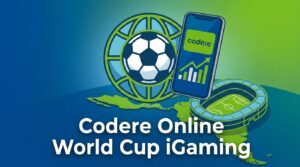
Codere Online, the digital arm of Spain-headquartered gaming operator Codere Group, has seized on the intersection of the FIFA World Cup and online gambling to amplify player acquisition and engagement across its core Latin American and European markets. The operator positioned its platform as a destination for sports bettors during one of the most-watched sporting events on the planet, blending live betting features with promotional campaigns tied to tournament fixtures. It’s a playbook that reflects a broader industry pattern: major sporting events functioning as accelerants for iGaming growth, particularly in markets where regulatory frameworks have recently matured.
What Codere Online’s World Cup Strategy Signals for the iGaming Sector
The convergence of global sporting events and digital wagering platforms has become one of the most reliable growth catalysts in the online gambling industry. Codere Online’s approach during the World Cup underscores how operators with strong regional footprints can translate temporary spikes in sports viewership into lasting customer relationships. Below are the key strategic takeaways from the operator’s campaign:
- Cross-sell opportunity: World Cup betting traffic was funneled toward Codere Online’s broader product suite, including casino verticals, creating revenue diversification beyond pure sportsbook activity
- The campaign targeted markets in Mexico, Colombia, and Spain, where Codere already holds established licenses and brand recognition from its retail heritage
- Player retention mechanics: Promotional structures were designed not just for acquisition but to encourage repeat engagement well after the tournament’s final whistle
- Codere Online’s public listing status (traded on Nasdaq) means these campaigns carry investor-facing implications, tying marketing spend directly to quarterly performance narratives
Why the World Cup Remains a Pivotal Moment for Online Operators
Few events compress global attention the way a FIFA World Cup does. For iGaming operators, the tournament creates a window where casual bettors, many of them first-time users, enter the funnel in large numbers. That influx matters enormously in Latin America, where online sports betting penetration remains lower than in mature European markets but is climbing fast.
Codere Online’s decision to build integrated campaigns around match schedules, in-play betting options, and social media engagement reflects a sophisticated understanding of how modern bettors consume sport. They don’t just watch. They participate. And the operator’s omnichannel presence (a distinction that separates it from digital-only competitors) gives it a physical touchpoint that reinforces brand trust in markets like Mexico, where retail betting shops still carry cultural weight.
Still, the real test isn’t whether World Cup promotions drive sign-ups. It’s whether those sign-ups convert into habitual users once the tournament ends.
Latin America’s Regulatory Landscape Shapes the Opportunity
Codere Online operates in a region where the regulatory picture is evolving unevenly. Mexico’s federal framework for online gambling remains a work in progress, though operators like Codere hold permits that allow legal digital wagering. Colombia, by contrast, has built one of the most structured online gambling regimes in the region through its Coljuegos regulatory body, issuing licenses and enforcing compliance with increasing rigor.
Spain, Codere’s home market, presents a different challenge altogether. Advertising restrictions introduced in recent years have constrained how aggressively operators can promote during sporting events. The Royal Decree on Commercial Communications for Gambling Activities, enacted in 2021, limits sponsorship visibility and bonus advertising in ways that directly affect World Cup campaign design.
These regulatory asymmetries force operators to run parallel strategies across jurisdictions. What works in Bogotá won’t fly in Madrid. And what’s permitted in Mexico City may shift as federal lawmakers continue debating updates to the country’s gaming laws.
Market-by-Market Regulatory Snapshot
| Market | Regulatory Body | Online Betting Status | Advertising Constraints |
|---|---|---|---|
| Mexico | SEGOB (Dirección General de Juegos y Sorteos) | Permitted under federal permits; framework under review | Moderate; evolving guidelines |
| Colombia | Coljuegos | Fully licensed and regulated since 2016 | Defined but less restrictive than Spain |
| Spain | DGOJ (Dirección General de Ordenación del Juego) | Fully regulated | Strict; 2021 Royal Decree limits promotional activity significantly |
The Business Model Behind the Buzz
Codere Online’s World Cup activation wasn’t simply a marketing exercise. It was a stress test for the platform’s scalability. Major tournaments generate traffic surges that can expose infrastructure weaknesses, from latency in live odds feeds to payment processing bottlenecks. Operators that handle these spikes smoothly earn user trust that compounds over time.
The company, which completed its business combination with a special purpose acquisition company (SPAC) to list on Nasdaq, faces the dual pressure of growing revenue while demonstrating a credible path toward profitability. World Cup periods offer a chance to show investors that customer acquisition costs can be justified by lifetime value metrics. Whether the math actually works depends on retention data that typically surfaces in the quarters following a major tournament.
Codere Online’s digital gaming platform spanning Latin America and Spain benefits from the Codere Group’s decades-long presence in physical gaming halls, giving it a brand equity advantage that purely digital entrants struggle to replicate.
How Operators Frame Sporting Events Through Behavioral Engagement
Beyond the commercial mechanics, there’s a psychological dimension to how operators like Codere Online structure their World Cup campaigns. Drawing on principles aligned with behavioral engagement, the design of promotions taps into several cognitive triggers that shape user decisions. Scarcity framing, for instance, plays a central role: match-specific offers that expire at kickoff create urgency that accelerates conversion. Social proof is another lever, with leaderboards and community betting features reinforcing the idea that participation is a shared, validated experience rather than an isolated act.
Anchoring effects appear in how odds boosts are presented. By showing the “standard” odds alongside an enhanced price, operators create a perceived value gap that nudges users toward placing bets they might otherwise skip. These techniques aren’t unique to Codere, but their deployment during a high-emotion event like the World Cup amplifies their effectiveness considerably. The emotional intensity of national team competition lowers the threshold for impulsive engagement, which is precisely why responsible gambling safeguards become more important during these windows. Operators that balance acquisition aggression with visible responsible gambling tools tend to fare better with regulators in post-event reviews. Codere Online has publicly committed to responsible gaming protocols across its markets, though the granularity of enforcement varies by jurisdiction. The interplay between behavioral design and regulatory expectation is, arguably, the most underexamined tension in modern iGaming.
Frequently Asked Questions
What markets does Codere Online operate in?
Codere Online holds licenses and operates digital gaming platforms in Mexico, Colombia, Panama, and Spain. Its strongest brand recognition stems from the Codere Group’s long-established retail presence in these regions.
Is Codere Online a publicly traded company?
Yes. Codere Online completed a SPAC merger and trades on the Nasdaq exchange, which subjects it to U.S. public company reporting requirements and investor scrutiny around growth and profitability metrics.
How do World Cup campaigns differ from regular sports betting promotions?
Tournament campaigns compress acquisition spending into a short, high-attention window. They typically feature match-specific bonuses, enhanced odds, and cross-sell mechanics designed to introduce sportsbook users to casino products. The scale of audience engagement during a World Cup is simply not replicable during regular league seasons.
What responsible gambling measures apply during major events?
Requirements vary by market. In Spain, the 2021 Royal Decree restricts bonus advertising and mandates cooling-off features. Colombia’s Coljuegos enforces its own compliance standards. Operators are generally expected to increase visibility of deposit limits, self-exclusion tools, and problem gambling resources during peak betting periods.