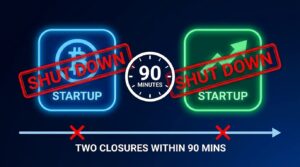
In a striking coincidence that underscores the fragility of niche crypto verticals, two prediction market startups announced their closures on Monday morning, separated by barely 90 minutes. Both platforms have given users until September 30 to withdraw their funds. Trepa, which operated on Solana with a proprietary payout mechanism, and its unnamed counterpart occupied opposite ends of the prediction market spectrum, yet arrived at the same endpoint on the same day.
What the Simultaneous Shutdowns Signal for Prediction Markets
The near-simultaneous nature of these closures is difficult to dismiss as mere coincidence. While neither startup has publicly linked its decision to the other’s, the timing raises questions about shared pressures facing smaller prediction market operators. Below are the key strategic takeaways from this development:
- Liquidity concentration is accelerating: Smaller prediction market venues have struggled to attract and retain sufficient trading volume, especially as dominant platforms like Polymarket continue to absorb market share.
- Regulatory ambiguity remains a drag: Prediction markets sit in a grey zone between gambling and financial derivatives in most jurisdictions, making it harder for startups to secure banking relationships and institutional backing.
- The September 30 withdrawal deadline suggests both platforms still hold user funds, a detail that will test their operational integrity during wind-down.
- Builder fatigue in crypto niches: Even with blockchain infrastructure maturing, the unit economics of running a prediction market for a small user base appear increasingly untenable.
Trepa’s Solana-Based Model and Why It Wasn’t Enough
Trepa distinguished itself by building a custom mechanism on the Solana blockchain, paying users based on how accurately their predictions tracked real-world outcomes. That design choice offered speed and low transaction costs, two qualities Solana is known for. But technical elegance doesn’t guarantee commercial viability.
The prediction market category demands something harder to engineer than smart contracts: deep, persistent liquidity. Without enough participants on both sides of a market, spreads widen, payouts shrink, and users drift toward platforms where their capital works harder. Trepa, for all its architectural ambition, appears to have hit that wall.
A Category Under Pressure
Prediction markets enjoyed a surge of attention during the 2024 U.S. election cycle, with platforms processing hundreds of millions of dollars in wagers on political outcomes. That wave lifted the entire category’s profile. But it also concentrated attention (and capital) on a handful of large operators.
For smaller entrants, the post-election hangover has been severe. Trading volumes on political events dropped sharply after November 2024, and the next major catalyst, likely the 2026 midterms, remains distant enough to starve platforms of the engagement they need to survive. Crypto prediction markets focused on sports, weather, or entertainment have yet to find the same cultural resonance that political betting briefly achieved.
Still, the broader concept retains serious intellectual backing. Economists have long argued that prediction markets aggregate information more efficiently than polls or expert panels (a distinction regulators have been slow to formally recognize). The problem isn’t the idea. It’s the business model underneath it.
How Users Should Respond Before the September Deadline
Both platforms have set September 30 as the final date for fund withdrawals. Users with assets on either venue should act well before that deadline. Waiting until the last day introduces unnecessary risk: smart contract interactions can fail, network congestion can delay transactions, and support teams at winding-down startups tend to thin out quickly.
A few practical steps:
- Verify wallet connections and ensure withdrawal addresses are current
- Check for any locked positions or pending settlements that might delay access to funds
- Document all transactions for tax reporting purposes, since closing a position on a prediction market may trigger taxable events depending on jurisdiction
What Shapes the Future of Decentralized Prediction Markets?
The closures don’t necessarily spell doom for the category. Polymarket, the current market leader, continues to operate at scale and has attracted significant venture capital. And the underlying technology, using blockchain-based smart contracts to create trustless, transparent betting markets, remains sound. What’s being tested is whether the market can support more than one or two dominant players.
Consolidation in crypto sub-sectors tends to follow a familiar arc: a burst of experimentation, a shakeout, and then a period where survivors absorb the lessons (and sometimes the users) of those who didn’t make it. Prediction markets appear to be entering that middle phase now. Whether the survivors emerge as regulated financial instruments or remain in the grey zone between DeFi experimentation and gambling will depend as much on regulatory decisions in Washington and Brussels as on any technical innovation.
One thing worth watching: the CFTC’s evolving stance on event contracts. The agency has alternated between enforcement actions and tentative approvals, creating a regulatory landscape that is, at best, inconsistent. Startups building in this space can’t plan around a framework that shifts with each commissioner’s priorities.
Frequently Asked Questions
What are crypto prediction markets?
They are blockchain-based platforms where users buy and sell contracts tied to the outcome of real-world events, from elections to sports results. Payouts depend on whether the predicted outcome occurs, and prices fluctuate based on collective market sentiment.
Why did both startups close on the same day?
Neither company has publicly explained the timing overlap. It may reflect shared market conditions, such as declining user activity and difficulty raising new capital, rather than any coordinated decision.
Is my money safe if I have funds on one of these platforms?
Both have committed to allowing withdrawals through September 30, 2025. However, users should initiate withdrawals as early as possible to avoid last-minute complications. Blockchain transactions are irreversible, so double-check wallet addresses before confirming.
Does this mean prediction markets are failing?
Not exactly. Larger platforms continue to grow. These closures reflect the difficulty of competing in a category where liquidity gravitates toward a small number of dominant venues, a dynamic common across financial markets, not unique to crypto.



