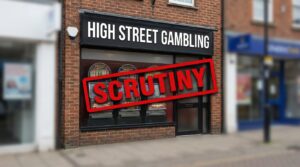
Andy Burnham, the Mayor of Greater Manchester, has escalated his campaign against high street gambling by turning attention squarely toward land-based slot machines operating in betting shops and adult gaming centres. The move signals a broadening of regulatory pressure beyond online gambling, placing physical premises under a level of political scrutiny they have largely avoided in recent years. With local authorities increasingly vocal about the social costs of gambling in deprived communities, Burnham’s intervention could set a precedent for how cities across the UK approach the issue.
What Burnham’s High Street Clampdown Means for the Sector
The mayor’s focus on land-based slots represents a shift in the regulatory conversation. While Westminster has spent much of the past three years debating the Gambling Act review and its implications for online operators, the terrestrial side of the industry has operated with comparatively less heat. That changes now. Below are the key strategic takeaways from this development:
- Political risk for land-based operators is rising fast. Burnham’s stance gives other metro mayors and local council leaders a template to follow, potentially triggering a patchwork of local-level restrictions.
- High street betting shops face a second wave of machine-related pressure. The 2019 reduction of fixed-odds betting terminal (FOBT) stakes to £2 already reshaped the economics of many premises. Further restrictions on remaining slot products could erode footfall-dependent revenue models.
- Adult gaming centres, which rely almost entirely on machine income, sit in a particularly exposed position
- The social harm narrative is gaining institutional weight. Burnham’s framing ties gambling premises directly to deprivation indices, making it harder for operators to argue that their presence is economically neutral.
- Industry lobbying will need to recalibrate. Trade bodies like the Betting and Gaming Council have focused heavily on the online White Paper response. A parallel land-based front demands different arguments and different allies.
Why the Timing Matters
Burnham’s intervention does not arrive in a vacuum. Greater Manchester has been at the forefront of public health-led approaches to gambling harm, and the city-region’s integrated care system has already piloted treatment pathways for problem gamblers. What distinguishes this latest move is its explicit targeting of the machines themselves, rather than the broader licensing framework.
The political calculus is straightforward. Constituencies with high concentrations of betting shops tend to overlap with areas experiencing economic hardship (a correlation that researchers at the University of Bristol and others have documented repeatedly). For a mayor building a platform around inequality reduction, gambling premises on struggling high streets present both a policy target and a symbolic one.
Still, whether Burnham possesses the direct regulatory levers to restrict slot machine provision remains an open question. Licensing authority sits primarily with local councils under the Gambling Act 2005, and the Gambling Commission retains oversight of machine categories and stake limits. Mayoral influence here is more about agenda-setting than rule-making.
The Economics of Land-Based Slots Under Pressure
Land-based gaming machines generate significant revenue for operators, but the margin picture has been tightening. Since the FOBT stake cut took effect in April 2019, major operators including Entain’s Ladbrokes and Coral brands closed hundreds of shops. The remaining estate has leaned more heavily on Category C and D machines, which carry lower stakes and prizes but also lower per-unit profitability.
| Machine Category | Maximum Stake | Maximum Prize | Typical Location |
|---|---|---|---|
| B2 (FOBT) | £2 (reduced from £100) | £500 | Betting shops |
| C | £1 | £100 | Pubs, betting shops, AGCs |
| D (non-money prize) | £1 | £8 | Arcades, family entertainment centres |
| B3A | £2 | £500 | Adult gaming centres |
Any further tightening of stake or prize limits on Category C or B3A machines would compress already thin margins. For adult gaming centres operating without the cross-subsidy of sports betting revenue, the arithmetic becomes particularly unforgiving.
A Broader Pattern: Local Power and Gambling Policy
Burnham’s approach fits within a wider trend of devolved and local authorities asserting themselves on gambling policy. In 2023, several London boroughs explored cumulative impact assessments for betting shop clustering. Sheffield and Leeds have both seen council-level debates about the density of gambling premises near schools and social housing.
But there is a tension at the heart of this. The Gambling Act 2005 was designed to create a national framework, and local authorities have limited grounds under existing law to refuse or revoke premises licences purely on public health grounds. The “aim to permit” principle embedded in the Act means that licensing committees must generally approve applications unless specific statutory objections apply. Burnham’s campaign may ultimately be less about what he can enforce and more about what pressure he can generate for legislative change at the national level.
How Operators Might Respond
Industry responses to politically driven pressure tend to follow a familiar sequence: voluntary commitments first, regulatory engagement second, legal challenge as a last resort. The Betting and Gaming Council has previously pointed to responsible gambling measures already in place across its members’ estates, including spend limits, self-exclusion tools, and staff training programmes.
Yet voluntary measures have a credibility problem when the political mood shifts. And Burnham’s framing, which connects slot machines to visible deprivation on high streets, is harder to counter with process-based arguments about compliance. Operators may need to demonstrate measurable outcomes rather than procedural inputs.
Frequently Asked Questions
Can the Mayor of Greater Manchester directly ban slot machines?
No. Licensing authority rests with local councils and the Gambling Commission. The mayor’s role here is primarily one of political influence and agenda-setting, though that influence can shape council-level decisions and national debate.
Which types of gambling premises are most affected?
Adult gaming centres face the greatest exposure, given their near-total dependence on machine revenue. Betting shops are also vulnerable, though they benefit from diversified income streams including over-the-counter and online betting.
Has anything like this succeeded before?
The 2019 FOBT stake reduction from £100 to £2 demonstrated that sustained political and media pressure can force regulatory action, even against significant industry opposition. Whether land-based slots attract the same intensity of campaigning remains to be seen.
What would national legislative change look like?
Possible reforms could include giving local authorities explicit public health grounds to refuse premises licences, reducing machine allocations per premises, or further lowering stake and prize limits across machine categories. None of these are currently proposed in legislation.