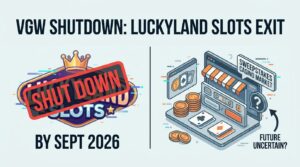
VGW, the Australia-headquartered social gaming company, has confirmed it will permanently close LuckyLand Slots on September 14, 2026. The decision marks the end of one of the more recognizable sweepstakes casino brands in the United States, a platform that carved out a niche during a period of rapid growth in the social and sweepstakes gaming segment. While VGW has not disclosed granular reasons behind the shutdown, the move arrives at a time when regulatory scrutiny of sweepstakes casinos has intensified across multiple U.S. states. The closure raises pointed questions about the long-term viability of the sweepstakes model itself.
Strategic Implications of the LuckyLand Closure
The shuttering of a brand with LuckyLand’s market presence doesn’t happen in a vacuum. Below are the key business and industry takeaways that executives, operators, and regulators should weigh carefully.
- Regulatory pressure is reshaping operator calculus. Several U.S. states have moved to restrict or redefine sweepstakes casino operations, and VGW’s decision may reflect a strategic retreat from an increasingly hostile compliance landscape.
- Brand consolidation within VGW’s portfolio. VGW also operates Global Poker and Chumba Casino. Shutting LuckyLand could signal a deliberate effort to concentrate resources on fewer, more defensible brands.
- The closure gives competing sweepstakes platforms a window to absorb displaced players, but also heightens scrutiny on those that remain.
- Player trust and transition logistics will be critical over the next 15 months. How VGW handles outstanding balances, prize redemptions, and communication will set a precedent.
- For investors and partners in the social gaming space, this is a data point that complicates growth narratives built on the sweepstakes model’s perceived regulatory advantages over traditional online gambling.
Why Now? The Regulatory Backdrop
Sweepstakes casinos have operated in a legal gray zone for years, relying on a model where players purchase virtual currency (often called “Gold Coins”) and receive a secondary currency (“Sweeps Coins”) that can be redeemed for prizes. The distinction between this structure and real-money gambling has been contested by attorneys general in states including Washington, where VGW previously faced legal action.
That earlier Washington state case resulted in a settlement. But it wasn’t an isolated incident. Legislators in states like Georgia and Illinois have introduced bills aimed at bringing sweepstakes casinos under gambling regulatory frameworks. And while none of these efforts have produced a unified federal standard, the cumulative effect is unmistakable: the operating environment is tightening.
VGW’s decision to wind down LuckyLand Slots rather than fight for its survival in every jurisdiction suggests a cost-benefit analysis that no longer favors the brand. Still, the company has not abandoned the sweepstakes model entirely (a distinction worth watching closely over the next year).
What Happens to LuckyLand’s Player Base?
This is arguably the most immediate operational question. LuckyLand Slots attracted a loyal user base drawn to its slot-style games and relatively straightforward redemption process. With the September 2026 deadline now public, players face a 15-month runway to use remaining balances and redeem any outstanding Sweeps Coins.
VGW has historically maintained LuckyLand Slots’ platform and customer support infrastructure at a level consistent with its other brands, so an orderly wind-down is expected. But expected and guaranteed are different things. Players who have accumulated significant virtual currency balances will want clarity sooner rather than later on redemption timelines and any changes to terms of service during the sunset period.
Competing operators, including Stake.us, WOW Vegas, and others in the sweepstakes space, are likely already positioning to capture migrating users. Whether they can absorb that demand without triggering their own regulatory complications remains an open question.
VGW’s Broader Portfolio and Strategic Direction
VGW still operates Chumba Casino, which holds a larger market share in the sweepstakes segment, and Global Poker, which targets a different player demographic entirely. The company’s willingness to retire LuckyLand while maintaining these other brands hints at a portfolio rationalization strategy rather than a full exit from sweepstakes gaming.
| VGW Brand | Category | Status |
|---|---|---|
| LuckyLand Slots | Sweepstakes Casino (Slots) | Closing September 14, 2026 |
| Chumba Casino | Sweepstakes Casino (Multi-game) | Active — flagship brand with broader game library and larger user base |
| Global Poker | Sweepstakes Poker | Active |
Concentrating on fewer brands allows VGW to reduce compliance overhead, streamline marketing spend, and focus legal resources on defending the platforms that generate the most revenue. Whether Chumba Casino faces similar pressures down the line depends heavily on how state-level regulation evolves.
How the Sweepstakes Model Is Being Reframed
The psychology behind sweepstakes casino adoption is worth examining through a behavioral lens. Players gravitate toward these platforms partly because they perceive lower risk: no direct gambling deposit, free-to-play entry points, and the framing of prizes as “sweepstakes winnings” rather than gambling payouts. This reframing, rooted in how language shapes perception and decision-making, has been central to the model’s appeal.
Operators have leveraged anchoring effects by offering large Gold Coin packages with “bonus” Sweeps Coins, creating a sense of value that mirrors promotional tactics in traditional casinos. The loss aversion dynamic also plays a role. Once players accumulate virtual currency, the psychological cost of walking away increases, even when the monetary value is modest. These behavioral patterns help explain why sweepstakes platforms have grown so rapidly despite offering games that are functionally identical to real-money slots.
Yet that very similarity is what regulators are now targeting. When the framing collapses under legal scrutiny and courts or legislators decide that the sweepstakes wrapper doesn’t meaningfully distinguish the activity from gambling, the model’s core advantage evaporates. VGW’s closure of LuckyLand may be an early acknowledgment that this reframing has a shelf life.
Frequently Asked Questions
When exactly will LuckyLand Slots stop operating?
VGW has set September 14, 2026, as the final date. Players have roughly 15 months from the announcement to use or redeem any remaining balances on the platform.
Will Chumba Casino or Global Poker also close?
VGW has made no indication that its other brands face closure. The decision appears specific to LuckyLand Slots, though the broader regulatory environment could affect all sweepstakes operators over time.
Can players transfer their LuckyLand balances to another VGW platform?
No official policy on cross-platform transfers has been announced. Players should monitor VGW’s communications for updates on redemption procedures during the wind-down period.
Why are sweepstakes casinos facing more regulatory pressure?
Multiple U.S. states have begun questioning whether the sweepstakes model constitutes gambling under existing or proposed law. Legal actions, legislative proposals, and shifting public sentiment have all contributed to a more challenging operating environment for these platforms.



