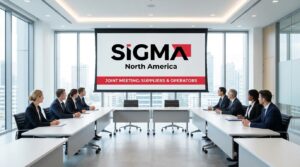
Two prominent industry groups are set to convene suppliers and operators under one roof at SiGMA North America, signalling a deliberate push toward closer collaboration across the gaming value chain. The meeting, scheduled during one of the continent’s fastest-growing igaming and sports betting conferences, aims to bridge the operational gap between technology providers and the platforms that deploy their products. While joint gatherings of this kind aren’t entirely new, the timing reflects a market where alignment between suppliers and operators has become less optional and more existential.
Why This Joint Gathering Carries Strategic Weight
The decision to bring suppliers and operators into a shared forum at SiGMA North America speaks to a broader recalibration happening across the regulated gaming sector. As North American markets mature and regulatory frameworks tighten state by state, the old model of siloed negotiations between vendors and platform operators is showing its limits. Below are the key strategic takeaways from this development:
- Supply chain cohesion is becoming a competitive differentiator. Operators who integrate supplier feedback earlier in their product cycles tend to reach compliance benchmarks faster and reduce time-to-market for new verticals.
- Regulatory complexity demands shared problem-solving. With over 30 U.S. states now offering some form of legal sports betting or igaming, navigating a patchwork of licensing and technical requirements is a burden neither side can shoulder alone.
- Joint forums reduce friction in contract cycles, which historically stretch months longer than either party prefers
- Talent and knowledge gaps narrow when operators understand supplier constraints and vice versa, particularly around responsible gaming tooling and real-time data infrastructure.
SiGMA North America as the Venue: Not Accidental
SiGMA’s expanding North American conference footprint has positioned the event as a gravitational centre for deal-making in the Western Hemisphere’s gaming sector. The event draws C-suite executives, compliance officers, and product leads from both the supplier and operator sides. Choosing this venue for a joint meeting isn’t merely logistical convenience. It’s a statement about where the industry’s centre of gravity is shifting.
And while European expos like ICE London have long served as the default meeting ground for global gaming stakeholders, SiGMA North America has carved out a distinct identity. Its programming leans heavily into regulatory panels, startup showcases, and cross-vertical networking that blurs the line between B2B tech and gaming entertainment.
What Operators and Suppliers Actually Need From Each Other
The relationship between suppliers and operators in regulated gaming has always been transactional at its core. But that dynamic is under pressure. Operators increasingly want suppliers who function less like vendors and more like embedded partners, capable of adapting products to jurisdiction-specific requirements without lengthy customisation cycles. Suppliers, for their part, want operators who provide clearer roadmaps and commit to longer integration timelines rather than switching platforms every 18 months.
This tension plays out in concrete ways:
| Operator Pain Points | Supplier Pain Points |
|---|---|
| Slow localisation of content for new state launches | Unclear operator requirements during RFP stages |
| Limited flexibility in back-end platform architecture | Short contract windows that discourage deep R&D investment |
| Compliance tooling that lags behind regulatory updates | Operators demanding exclusivity without volume guarantees |
| Inconsistent API documentation and support response times | Fragmented feedback loops across operator teams, making iteration difficult and slow to resolve |
A joint meeting doesn’t resolve all of this. But it creates the conditions for structured dialogue that bilateral calls and trade show floor conversations rarely achieve.
The Broader Industry Context: Collaboration as a Survival Mechanism
North America’s legal gaming market generated an estimated $60 billion in revenue in 2023 across commercial and tribal operations, according to the American Gaming Association. Yet margins remain thin for many operators, particularly in sports betting, where customer acquisition costs continue to outpace lifetime value in several states. Suppliers face their own squeeze: consolidation among operators means fewer buyers with more leverage.
Still, the opportunity is enormous. States like New York, Illinois, and New Jersey continue to post record handle figures. Emerging markets in states considering legislation (arguably including Texas and Georgia, though neither has moved decisively) represent untapped volume that both suppliers and operators want to be positioned for.
That positioning requires trust. And trust, in practice, gets built in rooms like the one being organised at SiGMA North America (a distinction that virtual meetings have struggled to replicate, despite the industry’s post-pandemic embrace of remote collaboration).
How Structured Dialogue Shapes Better Outcomes
There’s a principle in negotiation theory worth applying here: parties who understand each other’s constraints make better deals than parties who only understand each other’s demands. When suppliers hear directly from operators about the regulatory bottlenecks delaying a product launch in, say, Michigan versus Pennsylvania, they can prioritise engineering resources more effectively. When operators see the R&D pipeline a supplier is investing in, they can plan their own product roadmaps with greater confidence.
This kind of transparency doesn’t happen by accident. It requires a forum designed for it. The fact that two groups are formalising this at a major industry event suggests the ad hoc approach has run its course.
Whether this particular meeting produces binding commitments or simply opens channels for future negotiation remains to be seen. What’s harder to dispute is the direction of travel: an industry where the line between supplier and operator grows thinner with each regulatory cycle, and where the organisations that adapt to that reality fastest will hold the advantage.
Frequently Asked Questions
What is SiGMA North America?
SiGMA North America is a major gaming industry conference that brings together operators, suppliers, regulators, and investors focused on igaming, sports betting, and adjacent technology sectors across the continent.
Why are suppliers and operators meeting jointly?
The joint meeting reflects growing recognition that the challenges facing both sides, from regulatory complexity to product localisation, are interconnected. Solving them in isolation has become increasingly impractical as the North American market expands.
Will this meeting lead to specific deals or partnerships?
That depends entirely on the participants. Forums like this typically function as relationship-building exercises first, with commercial outcomes following in subsequent months. Some past SiGMA meetings have led directly to partnership announcements, though most produce results that surface later and less visibly.



