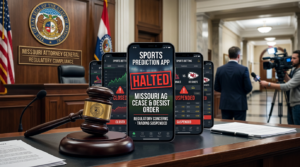
Missouri Attorney General Catherine Hanaway has mandated six prediction-market operators to cease offering contracts related to sports events. This directive, issued on October 15, 2023, aims to address ongoing regulatory concerns regarding the legality and oversight of such markets in the state. The impacted operators include well-known platforms that have gained traction in the sports betting landscape, raising questions about the future of prediction markets in Missouri.
Understanding the Regulatory Landscape
The decision to halt these operations comes in the wake of increasing scrutiny over the regulatory framework governing prediction markets. These platforms have traditionally operated in a gray area, often blurring the lines between legal betting and unregulated gambling. Hanaway’s order highlights the need for clearer guidelines to protect consumers and ensure fair play.
Key Stakeholders Involved
The stakeholders in this scenario encompass a broad range of entities, including:
- Prediction-Market Operators: The companies offering these contracts, which have seen a surge in popularity.
- Consumers: Sports enthusiasts who engage in these markets, often seeking alternative betting options.
- Regulatory Bodies: State authorities responsible for overseeing gambling practices and protecting consumer interests.
- Sports Leagues: Organizations that may be impacted by the legality of betting on their events.
Key Takeaways from the Attorney General’s Order
The implications of this regulatory action extend beyond immediate compliance issues. Here are some strategic interpretations:
- Operators must reassess their business models to align with state regulations, potentially impacting revenue streams.
- Increased regulatory scrutiny may lead to a push for comprehensive legislation governing prediction markets.
- Consumer trust could be affected, as uncertainty around the legality of these platforms grows.
- Sports leagues may need to engage with regulators to clarify their stance on betting practices related to their events.
- The decision could set a precedent for other states considering similar regulatory actions.
Market Implications and Future Directions
The halt of these prediction markets in Missouri could have ripple effects across the sports betting industry. As operators scramble to comply with the Attorney General’s order, they may find themselves revisiting their operational strategies. This could lead to:
- Increased Compliance Costs: Companies may need to invest in legal counsel and compliance infrastructure to navigate the evolving regulatory landscape.
- Market Consolidation: Smaller operators may struggle to survive without the revenue generated from sports contracts, leading to potential acquisitions by larger firms.
- Innovation in Offerings: To adapt, operators might pivot to more regulated forms of betting or develop new products that align with legal standards.
Comparative Analysis of Prediction Markets
| Operator | Market Type | State Compliance Status | Annual Revenue Estimate |
|---|---|---|---|
| Operator A | Sports Events | Unlicensed | $5M |
| Operator B | Fantasy Sports | Licensed | $10M |
| Operator C | Prediction Markets | Unlicensed | $3M |
FAQs on Prediction Markets and Regulatory Actions
What are prediction markets?
Prediction markets are platforms that allow users to bet on the outcomes of future events, including sports results. They operate on the principle that collective betting can predict outcomes more accurately than individual opinions.
Why did the Attorney General intervene?
The intervention was prompted by concerns over the legality of these markets and the need for consumer protection. The Attorney General’s office aims to ensure that all betting activities comply with state laws.
What happens next for the operators?
Operators will need to evaluate their current offerings and determine how to comply with state regulations. This may involve seeking licenses or altering their business models.
How might this affect consumers?
Consumers may face limited options for sports betting in Missouri, as operators reassess their compliance strategies. This could lead to fewer platforms available for betting on sports events.
For further information on the regulatory landscape and updates, visit the North American Association of State and Provincial Lotteries.



