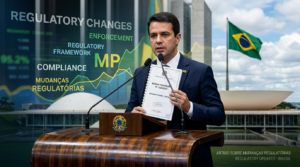
The Brazilian government has announced its latest actions regarding the enforcement of a provisional measure aimed at tightening regulations in the financial sector. This update follows the provisional measure published last week, which introduces significant changes affecting various stakeholders, including financial institutions and consumers. The move is part of a broader strategy to enhance transparency and accountability within Brazil’s financial ecosystem.
Strategic Insights on Regulatory Enforcement
As the Brazilian government ramps up its regulatory oversight, industry stakeholders must adapt to the evolving landscape. The implications of this enforcement are far-reaching and merit close attention. Here are some critical takeaways for executives and industry professionals:
- Financial institutions must prepare for increased compliance costs as new reporting requirements come into effect.
- This regulatory shift could lead to a consolidation of smaller players in the market, as compliance becomes more burdensome.
- Consumer protection measures will likely enhance trust in financial institutions, potentially increasing customer engagement.
- Firms that proactively adapt to these changes may gain a competitive edge in the marketplace.
Contextual Background of the Provisional Measure
The provisional measure, which was enacted to address gaps in the current regulatory framework, aims to strengthen consumer protections and improve the overall integrity of the financial system. According to the government, this measure is designed to combat fraud and promote fair practices among financial service providers.
Specific provisions of the measure include stricter guidelines for loan origination and enhanced oversight of financial transactions. These changes are a response to growing consumer demand for more transparent banking practices and the need to align with international standards.
Market Implications
With the enforcement of this provisional measure, the Brazilian financial market is poised for notable shifts. Analysts predict that the immediate impact will be felt across various sectors:
- Increased Compliance Burden: Financial institutions will need to allocate more resources to compliance departments, which may affect profitability in the short term.
- Consumer Confidence Boost: Enhanced regulations could lead to higher consumer trust, driving increased participation in financial products.
- Potential for Market Consolidation: Smaller institutions may struggle to meet new compliance requirements, leading to possible mergers or exits from the market.
Stakeholder Reactions
The response from industry stakeholders has been mixed. Some financial institutions have expressed concern over the potential costs associated with compliance, while consumer advocacy groups have welcomed the move as a necessary step towards greater accountability. Notably, the Brazilian Federation of Banks (Febraban) has stated that while they support the intention behind the measure, the practical implications must be carefully considered to avoid unintended consequences.
Potential Future Developments
As the government moves forward with enforcement, several key questions remain unanswered:
- How will the government ensure that these new regulations are enforced uniformly across all financial institutions?
- What support mechanisms will be available for smaller institutions struggling with compliance?
- Will there be further amendments to the provisional measure based on stakeholder feedback?
Comparative Analysis: Global Perspectives
Similar regulatory measures have been implemented in other markets, including the European Union and the United States, where financial regulations have evolved to enhance consumer protection and market integrity. For instance, the EU’s General Data Protection Regulation (GDPR) has set a precedent for stringent compliance requirements. Brazilian regulators may draw lessons from these international frameworks to refine their approach.
FAQ Section
What is the purpose of the provisional measure?
The provisional measure aims to strengthen consumer protections and improve the integrity of Brazil’s financial system by introducing stricter regulations for financial institutions.
How will this affect consumers?
Consumers may benefit from improved transparency and accountability in financial transactions, potentially leading to increased trust in financial institutions.
What challenges might financial institutions face?
Institutions may encounter higher compliance costs and operational adjustments as they implement the new regulations.
Conclusion: Navigating the New Regulatory Landscape
As Brazil’s financial sector braces for these changes, the ability to adapt swiftly will be crucial. Firms that recognize the strategic importance of compliance and consumer trust may find new opportunities for growth in an evolving market. For further details on Brazilian financial regulations, visit the official website of the Brazilian Federation of Banks.