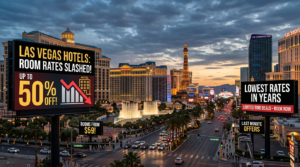
In August 2026, hotels in Las Vegas reduced their average room rates to the lowest levels seen this year, reflecting a notable shift in market dynamics. This price adjustment comes as the city grapples with decreased demand from both leisure and business travelers, prompting hoteliers to adopt aggressive pricing strategies. The decision to lower rates is particularly significant for a destination heavily reliant on tourism revenue.
Strategic Insights on Pricing Trends
The recent trend of declining room rates in Las Vegas presents several implications for stakeholders in the hospitality industry. Understanding these changes can help businesses navigate the current market landscape more effectively.
- Lower average rates may attract budget-conscious travelers, potentially increasing occupancy rates.
- Hotels must balance price reductions with maintaining service quality to avoid long-term brand dilution.
- Competitors may respond with similar pricing strategies, leading to a potential price war.
- Monitoring consumer behavior during this period will be crucial for forecasting future demand trends.
- Hoteliers should consider enhancing value propositions, such as bundled services, to retain margins despite lower rates.
Market Context and Competitive Landscape
Las Vegas has long been a premier destination for tourists, but recent economic factors have led to a slowdown in travel. According to the latest data from the Las Vegas Convention and Visitors Authority, overall visitor numbers have dipped by approximately 12% compared to the previous year. This decline is attributed to several factors, including economic uncertainty and changing travel preferences.
As hotels reduce their rates, they face the challenge of maintaining profitability. The average room rate in August fell to $125, down from $140 in July. Such reductions are not merely tactical; they are a response to a broader trend where potential guests are increasingly price-sensitive, seeking value over luxury.
Implications for Revenue Management
For revenue managers, this environment necessitates a reevaluation of pricing strategies. The following considerations are critical:
- Implement dynamic pricing models that can adapt to fluctuating demand in real-time.
- Utilize data analytics to identify customer segments that may respond positively to lower rates.
- Explore partnerships with local attractions to create package deals that enhance perceived value.
Moreover, the rise of online travel agencies (OTAs) has intensified competition, making it essential for hotels to maintain visibility across all distribution channels. As room rates decrease, the focus should also shift toward enhancing the overall guest experience to foster loyalty.
Potential for Recovery: What Lies Ahead?
Despite the current challenges, there are signs that the market may rebound. A recent survey indicated that 65% of travelers plan to visit Las Vegas within the next year, suggesting a latent demand that could be tapped with the right marketing strategies. However, the question remains: how will hotels position themselves to capitalize on this potential recovery?
Additionally, the upcoming events, including major conventions and entertainment shows, could serve as catalysts for increased bookings. As the city gears up for these events, hoteliers must remain agile in their pricing and promotional efforts.
Frequently Asked Questions
Why are hotel rates dropping in Las Vegas?
The decline in hotel rates is primarily due to reduced demand from travelers, driven by economic uncertainties and changing preferences.
What impact does this have on hotel profitability?
While lower rates may increase occupancy, they can also squeeze profit margins, necessitating careful revenue management strategies.
How can hotels attract more guests during this period?
Hotels can enhance their value propositions through package deals, improved services, and targeted marketing efforts to specific traveler segments.
Conclusion
The current landscape in Las Vegas hotels illustrates a critical moment for the hospitality sector. As average room rates reach their lowest levels of 2026, the focus must shift towards innovative strategies that not only attract guests but also maintain brand integrity. The future will depend on how effectively hotels can adapt to these market conditions.
For more information about the Las Vegas hotel scene, visit Las Vegas Hotels.



