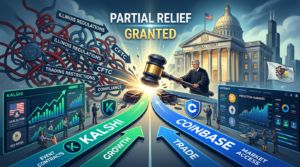
A federal judge in the United States has recently ruled in favor of Kalshi and Coinbase, offering them partial protection against the restrictions imposed by Illinois on prediction markets. This decision comes amid ongoing legal scrutiny regarding the regulation of such markets, which have gained traction in recent years. With the case still under deliberation, this ruling has significant implications for the future of prediction markets and the companies operating within this space.
Implications of the Ruling on Prediction Markets
The ruling by Judge John Tharp, which was issued on [insert date], allows Kalshi and Coinbase to continue their operations while the legal proceedings unfold. This development is crucial for both companies as they navigate the complexities of state and federal regulations surrounding prediction markets. The protection serves not only as a temporary relief but also highlights the evolving landscape of regulatory frameworks that govern market activities.
Understanding the Stakeholders
Key stakeholders in this case include:
- Kalshi: A regulated exchange for event contracts, allowing users to trade on the outcomes of future events.
- Coinbase: A prominent cryptocurrency exchange that has ventured into the prediction market space.
- Illinois State Regulators: Authorities aiming to impose restrictions on prediction markets to safeguard consumers and maintain market integrity.
- Investors and Traders: Individuals and entities looking to leverage prediction markets for investment opportunities.
Key Takeaways from the Ruling
This ruling carries significant implications for the future of prediction markets and their regulation. Here are some strategic insights:
- Kalshi and Coinbase can continue operations, potentially attracting more users and capital.
- The ruling may set a precedent for how prediction markets are regulated across different states.
- Investors may view this as a signal of increasing legitimacy for prediction markets.
- Regulatory clarity could foster innovation and competition in the prediction market space.
- The case underscores the tension between state regulations and federal oversight in financial markets.
Market Context and Regulatory Landscape
The prediction market sector has been emerging as a viable alternative to traditional betting platforms, with significant interest from both consumers and institutional investors. The Illinois restrictions aimed to impose stricter controls on how these markets operate, citing concerns over consumer protection and market fairness. However, the federal judge’s ruling suggests a growing recognition of the need for a balanced regulatory approach that fosters innovation while ensuring consumer safety.
Current Trends in Prediction Markets
As the legal landscape continues to evolve, several trends are shaping the future of prediction markets:
- Increased Participation: More users are engaging with prediction markets, drawn by the potential for profit and the excitement of trading on real-world events.
- Technological Advancements: Innovations in blockchain technology are enhancing the transparency and security of prediction market platforms.
- Regulatory Developments: Ongoing legal battles are prompting discussions about the need for clearer regulations that can accommodate the unique characteristics of prediction markets.
Potential Future Developments
What remains less clear is how this ruling will influence future regulatory actions across the U.S. As more states consider their own frameworks for prediction markets, the outcomes of this case could shape the regulatory environment significantly. Stakeholders are keenly observing how the interplay between state and federal regulations unfolds.
FAQ: Understanding Prediction Markets and Regulations
- What are prediction markets? Prediction markets are exchange-traded markets created for the purpose of trading the outcome of events. They allow participants to buy and sell contracts based on their predictions.
- Why are they regulated? Regulators aim to ensure consumer protection and prevent fraud in markets where participants can wager on uncertain future events.
- What does the ruling mean for consumers? The ruling may increase consumer confidence in prediction markets, as it suggests a more favorable regulatory environment.
Conclusion: Navigating an Evolving Landscape
The recent ruling in favor of Kalshi and Coinbase not only provides immediate relief but also sets the stage for broader discussions on the future of prediction markets. As these companies continue to operate under the watchful eye of regulators, the outcomes of this case could significantly influence market dynamics and regulatory approaches moving forward.
For more information on Kalshi, visit kalshi.com and for Coinbase, check out coinbase.com.



