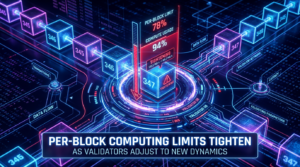
In a notable shift within the blockchain landscape, per-block computing limits are being reduced to maintain overall capacity. This adjustment comes as validators are required to engage in more frequent voting cycles and navigate shorter production windows. The developments are particularly relevant for networks aiming to enhance efficiency while managing scalability challenges.
Strategic Insights on Computing Limits and Validator Dynamics
The recent changes in per-block computing limits and validator operations signal a critical evolution in blockchain technology. Understanding these shifts can provide stakeholders with insights into the operational landscape and potential business impacts.
- Frequent voting cycles may lead to increased operational overhead for validators, impacting profitability.
- Shorter production windows necessitate enhanced coordination among validators to ensure network stability.
- Reduced computing limits could drive innovation in optimization techniques, fostering a competitive edge for early adopters.
- These changes may influence the overall transaction throughput, affecting user experience and network adoption.
- Stakeholders must reassess their strategies to align with the evolving dynamics of validator responsibilities.
Understanding the Shift in Per-Block Computing
The reduction in per-block computing limits is a strategic response to the growing demands on blockchain networks. As transaction volumes increase, networks face the challenge of maintaining efficiency without sacrificing security. This balancing act is crucial for sustaining user confidence and network integrity.
Validators, the backbone of blockchain consensus, are now tasked with more frequent voting. This shift means they must be more agile and responsive to network changes. As validators adapt, the implications for their operational models become significant. Increased voting frequency can strain resources, making it imperative for validators to optimize their processes.
Market Implications and Validator Adaptation
The market is poised to react to these adjustments. Validators may need to invest in technology that allows for faster decision-making and improved communication. The costs associated with these investments could impact their bottom line, leading to a reevaluation of economic models within the ecosystem.
Moreover, the demand for enhanced efficiency may spur innovation. Solutions that optimize validator performance could become highly sought after, presenting opportunities for technology providers. As the landscape evolves, companies that can deliver these solutions may gain a competitive advantage.
Validator Responsibilities: A New Era
With the increased frequency of voting and shorter production windows, validators must adapt their strategies. The new dynamics require a shift in focus from merely participating in the network to actively managing their roles within it. This evolution could lead to a more engaged and proactive validator community.
However, the implications extend beyond just operational changes. The pressure to perform may lead to a consolidation among validators, as smaller entities struggle to keep pace with the demands of the network. This consolidation could reshape the validator landscape, impacting competition and service offerings.
FAQ: Understanding the Changes in Validator Dynamics
- What are per-block computing limits? These limits refer to the computational capacity allocated for processing transactions within a single block in a blockchain network.
- Why are validators voting more frequently? Increased transaction volumes necessitate quicker consensus processes, prompting validators to engage in more frequent voting.
- What impact will this have on transaction speeds? While the aim is to enhance throughput, the strain on validators may initially lead to slower transaction confirmations as they adapt.
- How can validators optimize their operations? By investing in technology and refining their processes, validators can improve efficiency and maintain profitability.
External Factors Influencing Blockchain Dynamics
As blockchain technology continues to evolve, external factors such as regulatory changes and market demands will play a significant role. Stakeholders must remain vigilant and adaptable to these influences. For example, regulatory scrutiny around validator operations could impose additional requirements, further complicating the landscape.
Additionally, competition among blockchain networks may compel validators to innovate continuously. Those who can leverage technology to enhance their performance will likely thrive in this dynamic environment. The pressure to maintain relevance in a rapidly changing market cannot be underestimated.
Conclusion: Preparing for the Future of Blockchain
As per-block computing limits shrink and validator responsibilities expand, the blockchain ecosystem is entering a new phase. Stakeholders must prepare for the implications of these changes, ensuring they are equipped to navigate the evolving landscape. The future will favor those who can adapt swiftly and effectively.
For more insights into blockchain technology and validator dynamics, visit Blockchain.com.



