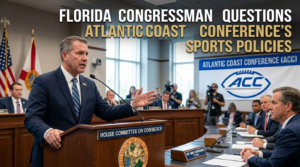
Florida Congressman Jimmy Patronis has formally requested the Atlantic Coast Conference (ACC) to clarify its policies regarding sports and athlete compensation. This inquiry comes amid growing scrutiny of collegiate athletics, particularly following recent changes in NCAA regulations. The ACC, which oversees numerous universities in the southeastern United States, is now under pressure to address these concerns transparently.
Implications of Patronis’s Inquiry
The request for clarification from Congressman Patronis highlights a significant intersection of politics, education, and sports. With the NCAA’s recent adjustments to allow athletes to profit from their name, image, and likeness (NIL), the landscape of college sports is shifting rapidly. This inquiry could lead to broader implications for how collegiate athletics are governed.
Key Stakeholders Involved
- Congressman Jimmy Patronis: Advocating for transparency and regulation in college sports.
- Atlantic Coast Conference (ACC): Governing body for the member universities’ athletic programs.
- Collegiate Athletes: Directly affected by changes in policies regarding compensation and benefits.
- NCAA: National governing body for college sports, overseeing policy changes.
Strategic Insights on the ACC’s Response
The ACC’s response to Patronis’s inquiry will be crucial in shaping its reputation and the future of college athletics. The conference must navigate a complex landscape where regulatory compliance and competitive integrity are at stake.
Potential Outcomes of the Inquiry
- Increased scrutiny on how member institutions handle athlete compensation.
- Potential for new regulations that may standardize NIL agreements across the conference.
- Pressure on the NCAA to enhance oversight of collegiate sports.
Market and Regulatory Implications
The inquiry by Patronis is not just a political maneuver; it reflects a broader trend within the sports industry towards greater accountability and transparency. As universities begin to navigate the NIL landscape, the implications of this inquiry could extend beyond the ACC, influencing how other conferences respond to similar challenges.
A Closer Look at NIL Regulations
The NCAA’s decision to allow athletes to profit from their NIL rights has opened up various opportunities and challenges. Compliance with these new regulations is essential for maintaining competitive balance among institutions. Without a clear framework, disparities in how universities manage NIL deals could lead to inequities in recruiting and player retention.
Key Takeaways from Patronis’s Request
Understanding the implications of Congressman Patronis’s inquiry requires a nuanced analysis of the current landscape of college athletics. Here are some strategic interpretations:
- The ACC must prioritize transparent communication to maintain trust among stakeholders.
- Potential for increased regulatory oversight could reshape the competitive dynamics of college sports.
- Universities may need to develop comprehensive compliance strategies to align with evolving NIL regulations.
- Failure to address these issues could result in reputational damage for the ACC and its member institutions.
Understanding the Broader Context
The inquiry into the ACC’s policies is emblematic of the evolving relationship between collegiate athletics and regulatory bodies. As more states enact laws governing athlete compensation, the pressure on the ACC and other conferences to adapt will only intensify. This situation presents both challenges and opportunities for institutions looking to enhance their athletic programs while ensuring compliance with new regulations.
What’s Next for the ACC?
As the ACC prepares its response to Patronis, it must consider not only the immediate implications of this inquiry but also the long-term effects on its governance structure. Engaging stakeholders—athletes, coaches, and university administrators—will be vital in crafting a cohesive strategy that addresses current concerns while positioning the conference for future success.
Frequently Asked Questions
What prompted Congressman Patronis’s inquiry?
The inquiry stems from growing concerns about the impact of NIL regulations on college sports and the need for clarity in how these policies are implemented by the ACC.
How could this affect collegiate athletes?
Depending on the ACC’s response, collegiate athletes may see changes in how they can engage in NIL opportunities, potentially leading to more equitable compensation structures across member institutions.
What role does the NCAA play in this situation?
The NCAA is responsible for overseeing the implementation of NIL policies and ensuring compliance among its member institutions, which includes the ACC.
For more details on the Atlantic Coast Conference’s policies, visit the ACC’s official website.