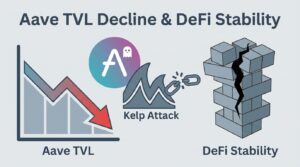
Aave’s Total Value Locked (TVL) has seen a significant decline of $10 billion following a recent exploit involving the Kelp protocol, where attackers borrowed $190 million in Wrapped Ether (WETH) using unbacked rsETH. This incident has raised concerns about the security and reliability of decentralized finance (DeFi) protocols.
Business Impact of Aave’s TVL Drop
The drop in Aave’s TVL is a critical indicator of investor confidence in DeFi protocols. With the recent exploit, stakeholders are questioning the robustness of Aave’s security measures and the overall health of the DeFi ecosystem. The implications are multifaceted, affecting not just Aave but the broader market.
Why Aave's TVL Decline matters
The story around Aave's TVL Decline: Implications of the Kelp Attack on DeFi Stability fits into a broader sequence of market and compliance decisions. For context, see Aave's TVL Decline. A connected update on Innovative Token Model Enhances DeFi Staking Opportunities helps clarify the strategic direction behind these changes.
Reading both pieces together can help readers track how positioning, licensing priorities, and execution are evolving. (The decentralized finance (DeFi) ecosystem continues to evolve, introducing innovative solutions that enhance user engagement and financial productivity. One of the latest advancements in…)
Why Aave's TVL Decline matters
Coverage of Aave's TVL Decline: Implications of the Kelp Attack on DeFi Stability points to wider momentum across similar operators and jurisdictions. For context, see Aave's TVL Decline. For comparison, Arbitrum-Native Exchange Launches Precious Metals Perpetuals Amid Growing Onchain Commodity Trading provides a closely related perspective on the same underlying trend.
Reading both pieces together can help readers track how positioning, licensing priorities, and execution are evolving. (The rise of decentralized finance (DeFi) has ushered in a new era for commodity trading, with Arbitrum's native exchange recently launching precious metals perpetual…)
Why Aave's TVL Decline matters
The story around Aave's TVL Decline: Implications of the Kelp Attack on DeFi Stability fits into a broader sequence of market and compliance decisions. For context, see Aave's TVL Decline. A connected update on Ethereum Foundation Launches Initiative to Subsidize Security Audits for Builders helps clarify the strategic direction behind these changes.
Reading both pieces together can help readers track how positioning, licensing priorities, and execution are evolving. (The Ethereum Foundation has announced a new initiative aimed at enhancing the security of projects built on its blockchain. In collaboration with leading audit…)
Why Aave's TVL Decline matters
Coverage of Aave's TVL Decline: Implications of the Kelp Attack on DeFi Stability points to wider momentum across similar operators and jurisdictions. For context, see Aave's TVL Decline. For comparison, Morpho: The Rise of the Second-Largest Lending Protocol in DeFi provides a closely related perspective on the same underlying trend.
Reading both pieces together can help readers track how positioning, licensing priorities, and execution are evolving. (Morpho, a decentralized finance (DeFi) lending protocol, has recently gained significant attention in the cryptocurrency community as it has risen to become the second-largest…)
Why Aave's TVL Decline matters
The story around Aave's TVL Decline: Implications of the Kelp Attack on DeFi Stability fits into a broader sequence of market and compliance decisions. For context, see Aave's TVL Decline. A connected update on Aave DAO Approves $25 Million Grant to Aave Labs helps clarify the strategic direction behind these changes.
Reading both pieces together can help readers track how positioning, licensing priorities, and execution are evolving. (The Aave Decentralized Autonomous Organization (DAO) has reached a significant milestone by passing the proposal titled 'Aave Will Win' with an overwhelming 75% support…)
Why Aave's TVL Decline matters
The story around Aave's TVL Decline: Implications of the Kelp Attack on DeFi Stability fits into a broader sequence of market and compliance decisions. For context, see Aave's TVL Decline. A connected update on Aave Checkpoint: Enhancing DAO Proposal Review with AI and Human Oversight helps clarify the strategic direction behind these changes.
Reading both pieces together can help readers track how positioning, licensing priorities, and execution are evolving. (Aave, a leading decentralized finance (DeFi) protocol, has introduced a groundbreaking feature known as Aave Checkpoint. This innovative system aims to enhance the review…)
Why Aave's TVL Decline matters
The story around Aave's TVL Decline: Implications of the Kelp Attack on DeFi Stability fits into a broader sequence of market and compliance decisions. For context, see Aave's TVL Decline. A connected update on Curve Finance Expands FXSwap Pools with frxUSD for Global Currency Swaps helps clarify the strategic direction behind these changes.
Reading both pieces together can help readers track how positioning, licensing priorities, and execution are evolving. (Curve Finance, a decentralized exchange known for its innovative liquidity pools, has recently expanded its FXSwap pools to include frxUSD as the base dollar…)
Key Takeaways from the Aave Incident
Understanding the ramifications of the Kelp attack on Aave can help stakeholders navigate the evolving landscape of DeFi. Here are some strategic insights:
- The $10 billion drop in TVL underscores vulnerabilities in DeFi protocols, prompting a reevaluation of risk management strategies.
- Investors may shift towards platforms with stronger security measures, impacting Aave’s market share.
- Regulatory scrutiny is likely to increase, as incidents like this attract attention from financial regulators concerned about consumer protection.
- The incident highlights the necessity for more robust auditing processes within DeFi projects.
- Stakeholders must consider diversifying their investments to mitigate risks associated with centralized exploits.
Context of the Kelp Attack
The Kelp protocol’s exploit involved an unbacked borrowing mechanism that allowed attackers to manipulate the system to their advantage. By borrowing a substantial amount of WETH, the attackers managed to destabilize Aave’s liquidity pool, leading to the drastic reduction in TVL. The attack serves as a stark reminder of the vulnerabilities inherent in DeFi protocols, where decentralized governance can sometimes lead to unforeseen exploits.
Market Implications
The fallout from the Kelp attack extends beyond Aave, impacting the entire DeFi landscape. Aave’s TVL decline may lead to:
- Increased volatility in DeFi token prices as investor sentiment fluctuates.
- Heightened competition among DeFi platforms to enhance security features and attract liquidity.
- Potential shifts in user behavior, with some users opting for more traditional finance solutions.
Regulatory Landscape Post-Aave Incident
As DeFi continues to grow, incidents like the Kelp attack are likely to attract increased regulatory scrutiny. Regulators may push for:
- Stricter compliance requirements for DeFi platforms to ensure consumer protection.
- Enhanced transparency measures to provide users with clearer insights into platform risks.
- Collaboration with industry stakeholders to develop best practices for security and risk management.
Future Outlook for Aave and DeFi
In the wake of this incident, Aave will need to reassess its security protocols and investor communication strategies. The platform’s ability to recover from this setback will depend on its responsiveness to stakeholder concerns and its commitment to improving security measures. Furthermore, the DeFi industry as a whole may need to adapt to a more cautious approach as investors become wary of potential exploits.
FAQs about Aave and DeFi Security
What is Aave?
Aave is a decentralized finance protocol that allows users to lend and borrow cryptocurrencies without intermediaries.
What does TVL stand for?
Total Value Locked (TVL) represents the total amount of assets staked or locked in a DeFi protocol, indicating its overall health and liquidity.
How can DeFi protocols improve security?
DeFi protocols can enhance security through regular audits, implementing multi-signature wallets, and utilizing insurance mechanisms to protect against exploits.
Where can I find more information about Aave?
For more details, you can visit the official Aave website at aave.com.
Additional Insights on DeFi Security
As the DeFi sector evolves, the importance of security cannot be overstated. With the rise of sophisticated attacks, protocols must prioritize the development of comprehensive security frameworks. This includes not only technological safeguards but also community engagement and education to foster a culture of security awareness among users. By integrating advanced risk assessment tools and enhancing user verification processes, DeFi platforms can build trust and resilience against future threats.



