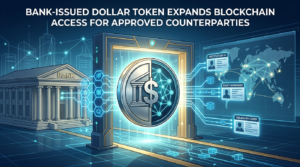
In a significant move for digital finance, a bank-issued dollar token has been launched, allowing only approved counterparties to access this new form of currency. This development brings permissioned bank money onto a public blockchain, marking a notable shift in how traditional banking interacts with blockchain technology. The implications for both the banking sector and digital asset markets are substantial, as this token aims to bridge the gap between conventional finance and the burgeoning world of cryptocurrencies.
Strategic Insights on Bank-Issued Dollar Token
The introduction of a bank-issued dollar token is more than just a technological advancement; it represents a strategic pivot for financial institutions looking to innovate within regulatory frameworks. By utilizing a public blockchain, banks can offer a more transparent and efficient means of transaction, while still maintaining control over who can access these digital assets. This duality could set the stage for broader acceptance of blockchain technology in mainstream finance.
- This initiative could enhance liquidity in the digital asset market by providing a stable currency option.
- Approved counterparties may experience reduced transaction costs and faster settlement times.
- Regulatory compliance remains paramount, potentially influencing how other financial institutions approach blockchain integration.
- Market participants may witness increased competition among banks to issue similar tokens, fostering innovation.
Understanding Permissioned Bank Money
Permissioned bank money refers to digital currencies issued by banks that restrict access to a select group of entities, contrasting with public cryptocurrencies like Bitcoin. This model enables banks to leverage blockchain technology while adhering to regulatory requirements. By doing so, they can maintain oversight and control over the monetary supply, a crucial aspect for financial stability.
Key Features of the Bank-Issued Dollar Token
| Feature | Description |
|---|---|
| Access Control | Limited to approved counterparties, ensuring compliance and oversight. |
| Blockchain Utilization | Operates on a public blockchain, enhancing transparency and efficiency. |
| Regulatory Alignment | Designed to meet existing regulatory frameworks, reducing legal risks. |
| Transaction Speed | Faster settlement times compared to traditional banking methods. |
Market Implications of the New Token
The launch of a bank-issued dollar token could reshape the landscape of digital finance. As traditional banks begin to embrace blockchain technology, the potential for innovation in payment systems and financial products expands. This could lead to a more diverse range of financial instruments available to businesses and consumers alike.
Moreover, the regulatory environment surrounding digital currencies is evolving. As banks pilot these initiatives, they may set precedents for future regulatory frameworks. This could encourage other financial institutions to explore similar pathways, thereby accelerating the adoption of blockchain technology across the financial sector.
Potential Challenges Ahead
Despite the promising aspects of this new token, challenges remain. The need for robust cybersecurity measures is paramount, as any vulnerabilities could undermine trust in the system. Additionally, the limited access model may restrict broader adoption among smaller players in the market.
Frequently Asked Questions
What is a bank-issued dollar token?
A bank-issued dollar token is a digital currency created by a bank that allows only approved counterparties to access and transact with it, operating on a public blockchain.
How does this token differ from cryptocurrencies like Bitcoin?
Unlike Bitcoin, which is open to anyone, a bank-issued dollar token restricts access to specific entities, ensuring compliance with regulatory standards.
What are the benefits of using a bank-issued dollar token?
Benefits include enhanced liquidity, reduced transaction costs, and faster settlement times, all while maintaining regulatory compliance.
How might this affect traditional banking?
This development could drive banks to innovate further, integrating blockchain technology into their services and potentially leading to increased competition in the digital asset space.
For more information about the implications of this new token, visit Bank’s official site.