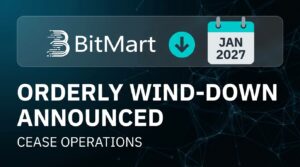
Cryptocurrency exchange BitMart disclosed on Saturday that it will begin a structured wind-down of its trading platform, with all trading activity set to halt on August 26 and full cessation of operations scheduled for January 31, 2027. The company cited a deliberate assessment of its operating conditions and broader market dynamics as the driving force behind the decision. While the announcement stops short of detailing specific financial pressures, the timeline gives users roughly 18 months to withdraw assets and close positions. The move adds BitMart to a growing list of mid-tier exchanges exiting the market amid tightening regulatory scrutiny and compressed margins.
What BitMart’s Exit Signals for Mid-Tier Exchanges
Before parsing the strategic implications, it’s worth grounding the discussion in what this actually means for the ecosystem. BitMart, while not among the top five global exchanges by volume, maintained a meaningful user base and listed hundreds of tokens. Its departure removes another layer of liquidity from an already consolidating market.
- Trading will be fully suspended on August 26, giving active traders a narrow window to unwind positions or migrate to alternative platforms
- The January 2027 deadline for complete operational shutdown suggests ongoing obligations around custody, compliance, and user fund disbursement that the exchange intends to honor in stages
- BitMart’s language around “operating conditions” and “market” factors points to margin compression and possibly rising compliance costs, though no specific figures were disclosed
- Mid-tier exchanges without differentiated products or deep institutional relationships face mounting pressure as larger platforms absorb market share
- Users holding assets on BitMart should prioritize withdrawal timelines, particularly for less liquid tokens that may see reduced support as the wind-down progresses
A Market That Keeps Shrinking at the Edges
The crypto exchange landscape has been contracting for over two years. Regulatory enforcement actions, most visibly in the United States but increasingly in Asia and Europe, have raised the cost of doing business for platforms that once operated with minimal oversight. BitMart itself suffered a significant security breach in December 2021, losing an estimated $150 million in user funds (a distinction that, at the time, placed it among the larger exchange hacks on record). Recovery from incidents like that is expensive, both financially and reputationally.
What makes this wind-down notable is its orderliness. Unlike FTX’s collapse or smaller exchanges that simply went dark, BitMart’s structured approach to shutting down its trading platform suggests the company retains sufficient reserves to manage a controlled exit. That’s a low bar, arguably, but one that matters to users with funds still on the platform.
Still, the broader pattern is unmistakable. Exchanges without clear regulatory standing, robust security infrastructure, or institutional-grade products are finding it harder to justify continued operations. The question isn’t whether more will follow. It’s how many can manage the exit as cleanly as BitMart appears to be attempting.
Operational Timeline and What Users Should Expect
| Milestone | Date | Details |
|---|---|---|
| Trading halt | August 26, 2025 | All spot and derivatives trading suspended; no new orders accepted |
| Withdrawal period | August 2025 – January 2027 | Users expected to withdraw remaining assets during this window, though specific token-by-token timelines have not yet been published |
| Full operational shutdown | January 31, 2027 | Complete cessation of all platform services, including custody and account access |
The 18-month runway between trading cessation and final shutdown is unusually generous by industry standards. But users holding smaller-cap tokens should not assume smooth withdrawals throughout that entire period. Exchanges in wind-down mode typically delist less liquid assets early in the process.
How Users and Traders Can Navigate This Transition
Behavioral responses to platform closures tend to follow predictable patterns, and understanding those patterns can help users make better decisions under pressure. When an exchange announces a shutdown, the instinct is often to rush. That urgency, while understandable, can lead to costly mistakes: transferring assets to unfamiliar wallets, accepting poor exchange rates on illiquid pairs, or overlooking tax implications of forced liquidations.
A more deliberate approach starts with inventory. Users should catalog every asset held on BitMart, noting which tokens have active markets on alternative exchanges and which may require direct wallet custody. For tokens with limited external liquidity, early action matters more. Waiting until the final months of the wind-down introduces unnecessary risk.
Equally important is documentation. Screenshots of balances, transaction histories, and any communication from BitMart regarding the wind-down process should be preserved. In past exchange closures, users who maintained thorough records were better positioned to resolve disputes or file claims if complications arose. And complications, in this industry, have a way of surfacing late.
Reframing the situation also helps. Rather than viewing the closure purely as a disruption, experienced traders may treat it as an opportunity to consolidate holdings on fewer, more established platforms. Reducing exchange counterparty risk has been a recurring theme since 2022, and events like this reinforce why self-custody or custody with regulated entities remains the safer default posture.
Frequently Asked Questions
Can I still withdraw my funds from BitMart?
Yes. BitMart has indicated that withdrawals will remain available through the wind-down period, which extends until January 31, 2027. However, specific token withdrawal timelines have not been confirmed, so acting sooner is advisable.
Why is BitMart shutting down?
The exchange pointed to an evaluation of operating conditions and market factors. No single cause was identified publicly, though the decision aligns with broader industry trends of consolidation and rising compliance costs that have squeezed smaller platforms.
What happens to assets left on BitMart after January 2027?
BitMart has not yet detailed its policy for unclaimed assets after the final shutdown date. Users should monitor official communications closely and complete withdrawals well before the deadline to avoid potential complications.



