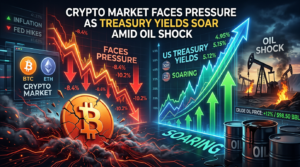
In a significant market shift, major cryptocurrencies experienced declines during the overnight trading sessions leading into Thursday’s U.S. market open. This downturn coincided with a surge in long-dated Treasury yields to levels not seen in years, driven by an unexpected oil price shock. As traders recalibrated their expectations, the likelihood of a Federal Reserve interest rate hike next week rose sharply to 64%, raising concerns across the crypto landscape.
Market Reactions to Economic Indicators
The reaction from the cryptocurrency market was swift and pronounced. Bitcoin, Ethereum, and other leading tokens saw substantial drops as investors reacted to the rising cost of borrowing. The correlation between traditional financial markets and cryptocurrencies has become increasingly evident, particularly in volatile economic conditions.
Impact of Rising Treasury Yields
Long-term Treasury yields have surged, reflecting growing inflation concerns and expectations of tighter monetary policy. This shift has implications for risk assets, including cryptocurrencies. As yields climb, the opportunity cost of holding non-yielding assets like Bitcoin increases, leading to a potential sell-off.
Key Takeaways: Implications for Crypto Investors
Understanding the current economic landscape is crucial for investors in the cryptocurrency market. Here are some strategic interpretations of the recent developments:
- Market Volatility: Expect increased volatility in crypto prices as economic indicators fluctuate.
- Interest Rate Sensitivity: Higher interest rates may lead to reduced appetite for riskier assets.
- Investment Strategy Reevaluation: Investors may need to reassess their portfolios in light of changing economic conditions.
- Correlation with Traditional Markets: The crypto market’s dependency on macroeconomic factors is becoming more pronounced.
- Potential for Regulatory Scrutiny: As traditional markets react, regulatory bodies may increase oversight of the crypto sector.
Understanding the Oil Shock
The recent spike in oil prices, attributed to geopolitical tensions and supply chain disruptions, has been a catalyst for the broader economic upheaval. Rising oil prices typically lead to increased inflation, prompting central banks to consider tightening monetary policy. This dynamic is critical for investors, as it can impact everything from consumer spending to corporate profits.
Oil Prices and Inflationary Pressures
As oil prices rise, the cost of goods and services also tends to increase. This inflationary pressure can lead to higher interest rates as central banks attempt to manage economic stability. The current environment suggests that investors should remain cautious, particularly in sectors sensitive to inflation.
Market and Regulatory Implications
The interplay between rising Treasury yields and oil prices underscores a complex scenario for the cryptocurrency market. With the Federal Reserve potentially poised to raise interest rates, the environment for cryptocurrencies may become increasingly challenging. Investors are advised to stay informed and agile, as regulatory responses may also evolve in reaction to these economic shifts.
Potential Regulatory Developments
As the economic landscape shifts, regulators may take a closer look at the cryptocurrency sector. Increased scrutiny could lead to new regulations aimed at protecting investors and ensuring market stability. Understanding these potential changes is crucial for stakeholders in the crypto space.
FAQs About the Current Market Dynamics
What caused the recent decline in cryptocurrency prices?
The decline is primarily attributed to rising long-dated Treasury yields and an unexpected oil price shock, which have heightened concerns about inflation and potential Federal Reserve interest rate hikes.
How do rising interest rates affect cryptocurrency investments?
Higher interest rates can increase the opportunity cost of holding non-yielding assets like cryptocurrencies, leading to potential sell-offs as investors seek better returns in traditional markets.
What should investors consider in this environment?
Investors should closely monitor economic indicators, reassess their investment strategies, and stay informed about potential regulatory changes that may impact the cryptocurrency market.
Conclusion: Navigating Uncertainty
The current market dynamics present both challenges and opportunities for cryptocurrency investors. Understanding the relationship between macroeconomic factors and crypto prices is essential for making informed decisions. As we move forward, the ability to adapt to changing conditions will be crucial.
For more insights into the evolving crypto landscape, visit The Defiant.



