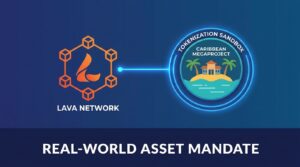
Lava Network, a blockchain infrastructure protocol, has entered a preliminary agreement to architect a tokenization sandbox for Alba Bay, an ambitious Caribbean residential development spanning more than 40,000 units. The deal marks Lava’s inaugural real-world asset (RWA) mandate, positioning the protocol at the intersection of decentralized infrastructure and large-scale property development. BHL, the entity behind the Alba Bay project, is betting that tokenized frameworks can streamline capital formation and ownership structures for what would rank among the region’s largest planned communities.
Why Lava’s Caribbean Tokenization Deal Matters for RWA Markets
The agreement, while still preliminary, signals a tangible shift in how blockchain protocols are pursuing revenue beyond DeFi-native use cases. Real-world asset tokenization has attracted enormous attention from institutional players and regulators alike, yet most mandates to date have centered on treasury bonds, commodities, or fund shares. A residential megaproject of this scale entering the tokenization pipeline is a different animal entirely.
- First mover positioning: Lava Network secures its first RWA engagement, giving it a reference case that could attract similar infrastructure-layer mandates from property developers globally.
- Scale of the underlying asset: With over 40,000 residential units planned, Alba Bay represents a tokenization surface area that dwarfs most pilot projects currently in market.
- The sandbox model suggests a phased, regulatory-conscious approach rather than a full deployment, which may appeal to Caribbean jurisdictions exploring digital asset frameworks.
- Capital formation implications: Tokenized ownership structures could open Alba Bay to fractional investment, broadening the pool of potential buyers and investors beyond traditional real estate channels.
- For the broader RWA sector, this deal tests whether blockchain infrastructure protocols can compete with enterprise-grade tokenization platforms for large development contracts.
What a Tokenization Sandbox Actually Involves
The term “sandbox” carries specific weight here. Rather than deploying a fully operational tokenization layer from day one, Lava and BHL appear to be constructing a controlled environment where token structures, compliance mechanisms, and ownership transfer logic can be tested before scaling across the entire development. This is not unusual in regulated sectors (a distinction that separates serious infrastructure plays from vaporware announcements), but it does mean the project’s real impact remains months, possibly years, from materializing.
Sandboxes of this type typically involve defining token standards for property units, establishing smart contract logic for fractional ownership or rental income distribution, and stress-testing interoperability with fiat on-ramps and local legal frameworks. The Caribbean context adds a layer of complexity: regulatory regimes vary significantly across island jurisdictions, and whether Alba Bay’s host territory has a clear digital asset framework will shape how quickly the sandbox can graduate to production.
Alba Bay: A Megaproject Seeking Modern Capital Rails
BHL’s Alba Bay development is, at least on paper, one of the more ambitious residential projects announced in the Caribbean basin. More than 40,000 units across a planned community of that size would require substantial capital deployment over multiple phases. Traditional real estate financing for projects of this magnitude typically involves a mix of institutional debt, sovereign incentives, and pre-sale commitments.
Tokenization offers an alternative pathway. By representing ownership stakes or development-phase participation as on-chain tokens, BHL could theoretically access a global investor base without the friction of cross-border real estate transactions. Whether that theory converts into practice depends on execution, regulatory clarity, and market appetite for tokenized Caribbean property exposure. Still, the structural appeal is hard to dismiss.
BHL has not disclosed the project’s total estimated development cost or its timeline for first-phase delivery. That gap leaves open questions about how far along the physical development actually is, and whether the tokenization layer is being designed in parallel with construction planning or layered onto an already-advancing project.
Broader Market Context: RWA Tokenization Gains Traction
The Lava Network blockchain infrastructure protocol enters the RWA space at a moment when tokenized assets under management are climbing rapidly. Boston Consulting Group has projected that tokenized illiquid assets could reach $16 trillion by 2030. BlackRock’s BUIDL fund, Franklin Templeton’s on-chain money market fund, and a growing roster of tokenized credit products have validated institutional interest.
But residential real estate tokenization has lagged behind financial instruments. The reasons are structural: property assets carry jurisdiction-specific legal requirements, title registration complexities, and valuation opacity that financial securities do not. A 40,000-unit Caribbean development testing these waters could either demonstrate a viable model or expose the friction points that have kept large-scale property tokenization at the margins.
Frequently Asked Questions
What is Lava Network’s role in the Alba Bay project?
Lava Network has signed a preliminary agreement to help design a tokenization sandbox for the development. This involves building the blockchain infrastructure layer that would support tokenized ownership or investment structures for the residential units.
Is the Alba Bay tokenization live?
No. The project is in a sandbox phase, meaning the tokenization framework is being designed and tested rather than deployed at scale. Production timelines have not been publicly confirmed.
How many units does Alba Bay plan to build?
More than 40,000 residential units are planned, making it one of the larger announced developments in the Caribbean region.
Why does this matter for the RWA sector?
Most RWA tokenization activity has focused on financial instruments like bonds and fund shares. A residential megaproject of this size entering the pipeline tests whether tokenization infrastructure can handle the legal and operational complexity of large-scale real estate, which arguably remains the sector’s hardest unsolved problem.



