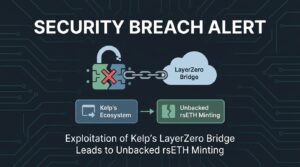
In a recent incident highlighting vulnerabilities in decentralized finance (DeFi), an attacker successfully minted unbacked rsETH via Kelp’s LayerZero bridge. This breach occurred in a matter of minutes, allowing the perpetrator to borrow WETH on Aave V3 and V4 before the markets could react and freeze the assets. The event raises significant concerns about the security protocols in place across DeFi platforms.
Strategic Insights on the Exploit
The implications of this incident are multifaceted, affecting not only Kelp but also the broader DeFi ecosystem. Stakeholders must consider the following:
The Importance of Security in DeFi
The recent security breach involving Kelp’s LayerZero bridge highlights the ongoing vulnerabilities within decentralized finance platforms. Similarly, CoW Swap is currently facing its own security challenges as its domain has been locked, prompting concerns among users and investors. The CoW Swap team is working with security experts to address the situation, emphasizing the critical need for robust security measures in the DeFi landscape, as noted in the report on the domain lock incident at CoW Swap Faces Domain Lock.
Why Security Breach in Kelp's LayerZero Bridge matters
Developments around Security Breach: Exploitation of Kelp's LayerZero Bridge Leads to Unbacked rsETH Minting can be better understood when viewed alongside parallel moves in the same market. For context, see Security Breach in Kelp's LayerZero Bridge. Related reporting on Crypto Exchange Reports Security Breach Affecting 2,000 Accounts offers additional context for how operators and regulators are approaching this phase.
Reading both pieces together can help readers track how positioning, licensing priorities, and execution are evolving. (A prominent cryptocurrency exchange has recently disclosed a security incident that has raised concerns among its user base. The exchange confirmed that approximately 2,000…)
Why Security Breach: Exploitation of Kelp's LayerZero matters
Developments around Security Breach: Exploitation of Kelp's LayerZero Bridge Leads to Unbacked rsETH Minting can be better understood when viewed alongside parallel moves in the same market. For context, see Security Breach: Exploitation of Kelp's LayerZero Bridge. Related reporting on Major Security Breach in Polkadot's Hyperbridge Protocol Leads to $2 Billion Minting Incident offers additional context for how operators and regulators are approaching this phase.
Reading both pieces together can help readers track how positioning, licensing priorities, and execution are evolving. (In a significant incident that has raised alarms in the cryptocurrency community, an attacker has exploited a vulnerability in the Polkadot interoperability protocol known…)
Enhancing Security in DeFi Platforms
The recent exploitation of Kelp’s LayerZero bridge underscores the pressing need for improved security measures within decentralized finance (DeFi) platforms. As incidents like these become more frequent, the introduction of new security features aimed at protecting depositor funds is critical. For instance, a recent initiative seeks to prevent compromised curator keys from redirecting funds, thereby enhancing trust in the system as a whole. Such developments are vital for safeguarding user assets in an increasingly complex digital landscape, as detailed in a recent report on security enhancements for cryptocurrency platforms here.
Understanding Validator Configurations in LayerZero Contracts
The recent security breach involving Kelp’s LayerZero bridge has drawn attention to the underlying vulnerabilities in decentralized finance systems, particularly those related to validator configurations. A recent analysis of LayerZero OApp contracts revealed that nearly 50% of these contracts depend on single-validator security setups, which can lead to significant risks, as seen in the exploitation of KelpDAO’s rsETH. Stakeholders are urged to reassess their security frameworks to address these vulnerabilities and learn from the insights provided by the security analysis of LayerZero OApp contracts, which can be found in detail here.
- The rapid execution of the exploit underscores the need for enhanced security measures within bridge protocols.
- Market participants may experience increased volatility as confidence in DeFi security is shaken.
- Regulatory scrutiny may intensify as incidents like this draw attention to the need for oversight in unregulated financial spaces.
- Developers and investors are likely to reassess risk management strategies in light of this breach.
Background of the Incident
Kelp, a decentralized finance platform utilizing the LayerZero protocol, was targeted due to its bridge functionality, which facilitates the transfer of assets across different blockchains. The attacker minted rsETH, a synthetic asset, without backing it with any collateral. This tactic exploited the liquidity provided by Kelp, allowing the individual to leverage unbacked assets to borrow WETH from Aave, a popular lending platform.
Market and Regulatory Implications
The ramifications of this exploit extend beyond Kelp and Aave, potentially affecting the entire DeFi landscape. The incident may prompt a review of existing security measures by other platforms, as the ease with which the exploit was executed raises questions about the robustness of current protocols. Furthermore, regulatory bodies may see this as a catalyst for establishing clearer guidelines and oversight in the DeFi space.
Stakeholder Reactions
In the aftermath of the incident, various stakeholders have voiced their concerns. Developers are calling for improved security protocols, while investors are expressing anxiety over the safety of their assets. Additionally, users of Kelp and Aave are seeking assurances that their funds are secure and that measures are being taken to prevent future occurrences.
Key Takeaways from the Exploit of Kelp’s LayerZero Bridge
This incident serves as a crucial learning opportunity for the DeFi ecosystem. The following key takeaways highlight the business impact and necessary responses:
- Security Enhancements Required: Platforms must prioritize security audits and implement more stringent measures to safeguard against similar attacks.
- Investor Vigilance: Investors should remain cautious and perform due diligence when engaging with DeFi protocols, especially those involving bridges.
- Potential for Regulatory Action: Increased incidents of exploitation may lead to regulatory frameworks that impose compliance requirements on DeFi platforms.
- Market Volatility Expected: The incident may trigger market fluctuations as confidence in the security of DeFi assets is tested.
Understanding the DeFi Landscape
Decentralized finance (DeFi) represents a paradigm shift in how financial services are delivered, removing intermediaries and enabling peer-to-peer transactions. However, this innovation comes with significant risks, particularly concerning security. As evidenced by the Kelp incident, vulnerabilities in smart contracts and bridge protocols can lead to substantial financial losses. Stakeholders must navigate this complex landscape with a focus on security, transparency, and regulatory compliance.
Frequently Asked Questions
What is Kelp’s LayerZero bridge?
Kelp’s LayerZero bridge is a protocol that allows for the transfer of assets across different blockchains, facilitating liquidity and enabling users to interact with multiple DeFi platforms.
What does unbacked rsETH mean?
Unbacked rsETH refers to a synthetic asset that has been minted without any underlying collateral, making it vulnerable to exploitation and market manipulation.
How can such incidents be prevented in the future?
Preventative measures may include enhanced security audits, the implementation of multi-signature wallets, and the adoption of stricter governance protocols within DeFi platforms.
For more information on Kelp and its services, visit Kelp’s official website.