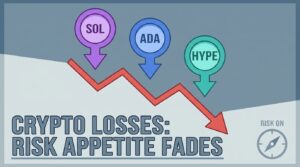
A broad pullback swept through digital asset markets on the session, with Solana, Cardano and Hyperliquid absorbing the heaviest selling pressure. The downturn reflected a cooling of risk appetite that had, until recently, buoyed altcoin valuations across the board. While Bitcoin held relatively steady compared to smaller-cap tokens, the altcoin segment bore the brunt of profit-taking and repositioning. The move raises fresh questions about whether the recent rally in layer-1 protocols and decentralised exchange tokens had outpaced underlying fundamentals.
What the Selloff Signals for Altcoin Positioning
Before parsing the individual movers, it’s worth framing what a session like this tells market participants about the current cycle. The losses were not random. They clustered around tokens that had posted outsized gains in prior weeks, suggesting a rotation dynamic rather than a structural breakdown. Still, the speed of the pullback caught some leveraged traders off guard.
- Solana (SOL) led major layer-1 losses, retreating sharply as on-chain activity metrics showed a slight dip in daily active addresses after weeks of sustained growth
- Cardano (ADA) declined in tandem, with selling concentrated during Asian and early European trading hours
- Hyperliquid’s native token dropped notably, reflecting vulnerability in DeFi-adjacent assets when broader sentiment shifts
- Bitcoin dominance ticked higher during the session, a pattern consistent with capital rotating out of altcoins and into perceived safer digital assets
- No single catalyst triggered the move; instead, a confluence of macro caution and technical exhaustion appears responsible
Solana’s Pullback in Context
SOL had been one of the standout performers over recent months, driven by a surge in meme coin activity, rising DEX volumes, and growing institutional interest in its ecosystem. That momentum, arguably, made it a prime candidate for a correction once sentiment turned.
The Solana network’s transaction throughput remains among the highest of any layer-1 blockchain, but elevated network usage alone has never insulated a token from broader market drawdowns. Traders watching the SOL/BTC pair noted a breakdown from a short-term ascending channel, a technical signal that often precedes further relative weakness against Bitcoin.
What remains less clear is whether this represents a healthy consolidation or the beginning of a deeper unwind. On-chain data shows whale wallets have not materially reduced positions, which some analysts interpret as a sign that larger holders view the dip as temporary.
Cardano and the Persistence of Sentiment-Driven Swings
Cardano’s decline followed a familiar script. ADA tends to amplify moves in either direction during periods of shifting risk appetite (a pattern its community has debated for years without resolution). The token gave back gains accumulated over the prior two weeks, settling near a support zone that has held through multiple tests this quarter.
Development activity on Cardano’s GitHub repositories has remained steady, and the network’s total value locked in DeFi protocols, while modest compared to Ethereum or Solana, has been gradually climbing. But in sessions like this one, fundamentals take a back seat to positioning and momentum. ADA’s correlation with broader altcoin indices remains high, limiting its ability to decouple from market-wide selling pressure.
Hyperliquid: A Newer Name Under Pressure
Among the day’s notable losers, Hyperliquid stood out. The decentralised perpetuals exchange has attracted significant trading volume in recent months, carving out a niche in on-chain derivatives. Its token, however, carries a thinner liquidity profile than established layer-1 assets, which amplifies volatility in both directions.
The selloff in Hyperliquid’s token may also reflect profit-taking by early participants who accumulated positions during its initial growth phase. Newer DeFi tokens often face this dynamic: rapid appreciation draws attention, but the holder base lacks the depth to absorb concentrated selling without meaningful price impact.
How Macro Conditions Are Shaping Crypto Risk Appetite
This pullback did not occur in isolation. Equity markets showed signs of hesitation during the same session, with tech-heavy indices giving back early gains. Treasury yields edged higher, and the dollar index firmed modestly. None of these moves were dramatic on their own, but together they created an environment where leveraged crypto positions became harder to justify.
Funding rates on perpetual futures contracts for SOL and ADA had been elevated heading into the session, indicating crowded long positioning. When spot prices began to slip, cascading liquidations added fuel to the decline. Open interest across major altcoin futures fell measurably, confirming that the move was at least partly driven by forced selling rather than organic distribution.
What distinguishes this from a trend reversal?
The absence of a clear fundamental trigger matters here. Trend reversals in crypto typically accompany regulatory shocks, exchange failures, or macroeconomic dislocations. This session looked more like a positioning flush, the kind of event that resets leverage without necessarily changing the medium-term trajectory.
Frequently Asked Questions
Why did Solana drop more than Bitcoin?
Altcoins like SOL carry higher beta to market sentiment. When risk appetite contracts, capital tends to rotate toward Bitcoin, which is perceived as less volatile within the crypto universe. Solana’s recent outperformance also made it a natural target for profit-taking.
Is Hyperliquid’s decline a sign of broader DeFi weakness?
Not necessarily. Hyperliquid’s token has a relatively thin liquidity profile compared to established DeFi protocols, which means it reacts more sharply to shifts in sentiment. The platform’s trading volumes have remained robust even as its token price corrected.
Should investors be concerned about Cardano’s fundamentals?
On-chain development metrics and DeFi growth on Cardano have not deteriorated. The price action appears driven by market-wide risk reduction rather than any Cardano-specific issue. That said, ADA’s high correlation with altcoin indices means it rarely escapes broad selloffs unscathed.
What would signal a deeper correction ahead?
Watch for sustained increases in Bitcoin dominance, persistent negative funding rates, and a breakdown below key support levels on weekly charts. If whale wallets begin distributing in size, that would mark a more concerning shift than what the current data shows.