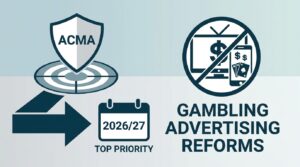
Australia’s communications regulator has drawn a line in the sand. The Australian Communications and Media Authority (ACMA) released its compliance and enforcement priorities for the 2026/27 financial year, placing the rollout of proposed gambling advertising restrictions at the centre of its agenda. The move signals that the watchdog is preparing to wield expanded supervisory powers once pending federal legislation clears parliament, a development that could reshape how gambling operators engage with Australian consumers across broadcast, digital, and social media channels.
What ACMA’s Enforcement Shift Means for the Gambling Sector
Before diving into the specifics, it helps to frame the strategic weight of this announcement. ACMA’s annual priorities don’t just reflect internal planning; they telegraph where regulatory pressure will land hardest. For gambling operators, media companies, and advertising platforms, the message is unambiguous: compliance with the new advertising framework won’t be optional, and enforcement will be proactive rather than reactive.
- Gambling advertising reform sits at the top of ACMA’s priority list, alongside its permanent mandates on scam prevention and consumer protection
- If parliament passes the pending legislation, new advertising boundaries could take effect within the financial year, giving operators a narrow window to adjust
- ACMA’s expanded supervisory role means it will police not just traditional broadcast media but digital and social platforms where gambling ads have proliferated
- The regulator’s focus on vulnerable citizens suggests enforcement actions may prioritise cases involving exposure of minors or at-risk populations to gambling content
- Operators who treat this as a distant regulatory exercise risk being caught flat-footed when compliance deadlines arrive
A Regulator Preparing for Broader Powers
ACMA has long held responsibility for monitoring gambling-related advertising in broadcast media. But the proposed reforms would substantially widen that remit. The regulator would gain authority to oversee advertising restrictions across a broader spectrum of platforms, including online and app-based environments where gambling brands have aggressively expanded their presence in recent years.
That expansion matters. Digital advertising spend by gambling companies in Australia has grown significantly, with operators leveraging targeted campaigns, influencer partnerships, and sponsorship deals that blur the line between entertainment content and promotional material (a distinction regulators have been slow to enforce). Under the proposed framework, ACMA would have clearer statutory tools to intervene when those boundaries are crossed.
The regulator’s permanent priorities already include reducing gambling-related harm and combating telecommunications scams. Adding the advertising reforms to its annual enforcement focus indicates that ACMA’s compliance and enforcement operations will dedicate dedicated resources and investigative capacity to the new rules from day one.
Why the Timing Creates Urgency
Legislation is still pending. Yet ACMA’s decision to flag enforcement readiness before the bill passes parliament is itself a strategic signal. It tells the industry: we are not waiting for royal assent to start preparing.
For gambling operators, this creates a compressed timeline. Brands will need to audit their current advertising practices, renegotiate media partnerships, and build internal compliance frameworks capable of meeting standards that haven’t been finalised. The challenge is real. Operators accustomed to self-regulation or industry codes of practice will face a harder-edged enforcement environment where ACMA can impose penalties rather than issue guidance.
And while the specific contours of the advertising restrictions remain subject to parliamentary debate, the direction of travel is clear: fewer gambling ads during live sport broadcasts, tighter controls on digital targeting, and stricter rules around the use of promotional incentives like bonus bets and sign-up offers.
How Operators Should Reframe Their Compliance Strategy
Regulatory shifts of this scale don’t just demand legal compliance. They require a fundamental reframing of how organisations perceive risk, communicate internally, and allocate resources. This is where principles drawn from neuro-linguistic programming offer a practical lens for leadership teams navigating the transition.
First, consider the framing effect. When compliance teams present new advertising restrictions purely as constraints, the organisational response tends toward resistance and minimal effort. Reframing the reforms as an opportunity to differentiate through responsible marketing changes the internal conversation entirely. Operators who position themselves as leaders in responsible advertising may find that consumer trust becomes a competitive advantage, particularly as public sentiment continues to shift against saturated gambling promotions.
Second, anchoring matters. Leadership teams should anchor their compliance planning not to the minimum requirements of the legislation but to the regulator’s stated enforcement posture. ACMA has signalled proactive enforcement. That means the anchor point for internal standards should be set above the statutory floor, not at it. Organisations that calibrate their behaviour to “what can we get away with” rather than “what does the regulator expect” tend to find themselves on the wrong side of early enforcement actions.
Third, the concept of representational systems applies to stakeholder communication. Different audiences within a gambling business process regulatory change differently. Legal teams think in terms of statutory language. Marketing teams respond to visual examples of compliant versus non-compliant campaigns. Operational staff need procedural clarity. Effective compliance rollouts tailor the message to each audience’s dominant processing mode rather than distributing a single policy document and hoping for alignment.
Finally, there is the question of identity-level change. Organisations that treat compliance as an external imposition rarely sustain it. Those that integrate responsible advertising into their brand identity, making it part of who they are rather than something they are forced to do, build more durable compliance cultures. Whether the industry genuinely embraces that shift remains an open question.
The Broader Regulatory Landscape
ACMA’s gambling advertising focus doesn’t exist in isolation. The Australian government has been tightening its approach to gambling regulation across multiple fronts, from the National Consumer Protection Framework to proposed reforms around online wagering account verification. State and territory regulators have also increased scrutiny of inducement advertising and VIP programs.
| Regulatory Area | Current Status | ACMA’s Role |
|---|---|---|
| Gambling advertising restrictions | Legislation pending in federal parliament | Primary enforcement body once enacted |
| Telecommunications scam prevention | Permanent priority; active enforcement ongoing | Lead regulator for telco-related scam disruption |
| Protection of vulnerable populations | Ongoing mandate across all ACMA functions | Cross-cutting priority informing all enforcement decisions |
| Digital platform oversight | Expanding under proposed reforms | New authority over online and app-based gambling advertising expected |
Still, the gambling advertising piece carries particular political weight. Public debate around the volume and timing of gambling ads during live sport has been intense, and the government faces pressure to deliver tangible reform before the next election cycle. ACMA’s readiness to enforce gives the legislation operational credibility the moment it passes.
Frequently Asked Questions
When will the new gambling advertising restrictions take effect?
The restrictions are contingent on federal parliament passing the pending legislation. If enacted as anticipated, the new rules are expected to take effect within the 2026/27 financial year, though exact dates depend on the parliamentary timeline and any transitional provisions built into the law.
Does ACMA’s announcement change anything for operators right now?
Legally, no. But strategically, yes. ACMA has effectively put the industry on notice that enforcement infrastructure is being built in parallel with the legislative process. Operators who delay compliance planning risk being unprepared when the rules land.
Which advertising channels will be affected?
The proposed reforms are expected to cover broadcast media, digital platforms, social media, and potentially app-based advertising environments. The scope is broader than existing broadcast-focused restrictions, reflecting the migration of gambling advertising spend toward online channels.
What penalties could operators face for non-compliance?
Specific penalty frameworks will depend on the final legislation. ACMA’s existing enforcement toolkit includes formal warnings, enforceable undertakings, infringement notices, and civil penalty proceedings. The regulator’s stated intention to prioritise this area suggests early enforcement actions are likely to be visible and consequential.