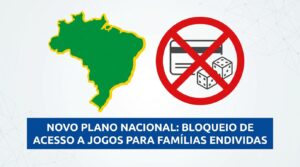
President Luiz Inácio Lula da Silva has announced that Brazil will introduce a national self-exclusion scheme designed to cut off access to betting platforms for up to one year. The measure targets households struggling with debt, a problem Lula explicitly linked to the rapid expansion of online gambling across the country. By framing the initiative as a consumer protection mechanism rather than an outright industry crackdown, the administration is walking a politically delicate line between regulation and restriction.
What Lula’s Gambling Restrictions Signal for the Brazilian Market
The announcement lands at a moment when Brazil’s regulated gambling sector is still taking shape. Operators who secured licences under the country’s 2023 regulatory framework now face the prospect of mandatory exclusion tools that could materially reduce their active user base. Before diving into the broader implications, here are the core strategic takeaways:
- One-year platform blocks will be available to individuals or families who self-identify as financially distressed, creating a government-administered exclusion registry
- The scheme positions Brazil alongside jurisdictions like the UK and Sweden that mandate self-exclusion infrastructure, though the debt-linked trigger is unusual
- Licensed operators will likely bear compliance costs for integrating with the national registry
- Unlicensed platforms operating outside Brazil’s regulatory perimeter may not be reachable by the scheme, raising enforcement questions
- Consumer advocacy groups have broadly welcomed the move, but the gambling industry’s tax revenue contribution gives operators leverage in shaping implementation details
A Market Still Finding Its Regulatory Footing
Brazil legalised sports betting and online gambling through a landmark framework that took effect in 2024, opening one of the world’s largest untapped gambling markets. Dozens of operators rushed to secure licences. Revenue projections for the sector have been aggressive, with some estimates placing annual gross gaming revenue potential above $20 billion within five years.
Yet the social costs arrived faster than the tax receipts.
Reports of low-income Brazilians spending government welfare payments (particularly Bolsa Família transfers) on betting apps triggered a political backlash that Lula has now channelled into policy. The president’s language was pointed: he spoke of “setting limits” on the “damage” gambling inflicts on vulnerable households. That framing matters. It signals that future regulatory tightening is not off the table, and operators who dismiss the rhetoric as populist posturing may be miscalculating. The Brazilian federal government’s official communications have consistently tied gambling reform to broader social protection goals, a pattern that suggests this is more than a one-off announcement.
How the Self-Exclusion Mechanism Could Work
Details remain sparse, but the broad contours follow a familiar model. Individuals would register through a centralised system, triggering a block across all licensed platforms for a minimum of twelve months. What remains less clear is whether the scheme will be purely voluntary or whether third parties (creditors, family members, social workers) could initiate exclusion on someone’s behalf.
That distinction carries significant legal and operational weight. Voluntary self-exclusion is standard practice in mature gambling markets. Third-party exclusion, however, introduces due process questions and could face constitutional challenges in Brazil’s courts. Operators would also need to build or adapt identity verification systems capable of cross-referencing a national registry in real time, a non-trivial technical requirement for smaller licensees.
Comparison With Global Self-Exclusion Models
| Jurisdiction | Scheme Name | Exclusion Period | Trigger |
|---|---|---|---|
| Brazil (proposed) | Not yet named | 1 year (minimum) | Debt-linked / voluntary |
| United Kingdom | GAMSTOP | 6 months to 5 years | Voluntary self-exclusion |
| Sweden | Spelpaus | 1 month to indefinite | Voluntary |
| Netherlands | CRUKS | 6 months minimum | Voluntary or court-ordered |
Brazil’s debt-linked framing stands out. No other major jurisdiction has explicitly tied self-exclusion eligibility to household financial distress as a primary policy rationale, though in practice most people who self-exclude cite financial harm as a motivating factor.
The Enforcement Gap Nobody Wants to Talk About
Even the best-designed exclusion registry only works against operators who participate. Brazil’s gambling market still includes a substantial grey segment: platforms operating without licences, often hosted offshore, that fall outside the regulatory perimeter. A self-excluded individual blocked from licensed apps could, in theory, migrate to unlicensed alternatives within minutes. This is not a hypothetical concern. Sweden’s Spelpaus system saw measurable channelling of excluded players toward unlicensed sites after its 2019 launch.
Arguably, the scheme’s effectiveness will depend less on its design and more on Brazil’s willingness to enforce ISP-level blocking of unlicensed operators (a separate and politically contentious undertaking).
Reframing Responsible Gambling as Economic Policy
What makes Brazil’s approach distinctive is its explicit connection between gambling harm and household economics. In most jurisdictions, responsible gambling frameworks are built around addiction and mental health language. Lula’s administration has reframed the issue as an economic one: families spending money they do not have on platforms designed to keep them spending. This reframing has consequences beyond rhetoric. It opens the door to interventions that would look unusual in a traditional responsible gambling context, including potential linkages between betting platform data and government welfare databases, spending caps tied to income verification, or even automatic exclusion triggers for recipients of social assistance programmes.
Whether any of those measures materialise depends on implementation details that have not yet been disclosed. But the policy direction is clear, and it tilts toward a more interventionist model than most gambling industries are accustomed to navigating.
Frequently Asked Questions
When will Brazil’s self-exclusion scheme launch?
No official launch date has been confirmed. The announcement establishes policy intent, but regulatory drafting and technical implementation will follow on a timeline the government has not yet specified.
Will the scheme apply to all gambling platforms in Brazil?
At least on paper, it would cover all licensed operators. Unlicensed platforms present an enforcement challenge that the current announcement does not address in detail.
Can someone be excluded involuntarily?
This remains one of the open questions. The president’s remarks referenced families, which could imply a household-level mechanism, but no legal text has been published to clarify whether third-party exclusion is under consideration.
How does this affect gambling operators already licensed in Brazil?
Operators will likely need to integrate with a centralised exclusion registry, absorb associated compliance costs, and potentially redesign onboarding and verification workflows. The financial impact depends on the scheme’s uptake rate and how broadly eligibility criteria are drawn.



