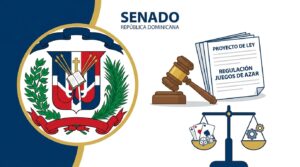
The Senate Plenary of the Dominican Republic has approved the first reading of a sweeping legislative bill that would bring unified regulation to the country’s fragmented gambling sector. The framework consolidates previously separate proposals into a single law covering lotteries, sports betting shops, casinos, and online betting platforms. Spearheaded by Senate Vice President Pedro Catrain and Senator Félix Ramón Bautista Rosario, the bill represents one of the most ambitious regulatory overhauls in the Caribbean gaming market in recent years.
What the Dominican Senate Bill Actually Does
Before unpacking the strategic implications, it helps to understand the scope of what passed its first reading. This is not a narrow amendment or incremental update. The bill, developed by the Senate’s Finance Committee, merges independent regulatory proposals into a centralised piece of legislation that would govern every individual and legal entity operating games of chance in the Dominican Republic.
- Establishes a unified supervisory framework replacing the current patchwork of rules across lotteries, casinos, sports betting, and digital platforms
- Creates a single regulatory authority with oversight powers across all gambling verticals
- Brings online betting operators under formal legislative scrutiny for the first time at this scale in the country
- Aims to reduce unlicensed activity by raising compliance standards and enforcement mechanisms
- Consolidates proposals from multiple senators into one cohesive law, arguably streamlining what had become a legislative bottleneck
Why a Unified Gambling Law Matters for the Caribbean Market
The Dominican Republic’s gambling industry has expanded rapidly, yet the regulatory infrastructure has not kept pace. Casinos, lottery operators, and a growing number of sports betting outlets have operated under overlapping and sometimes contradictory rules. Online platforms, in particular, have existed in a grey zone (a distinction regulators have been slow to enforce). That gap between market growth and regulatory clarity has created risks for operators, consumers, and the government alike.
By consolidating oversight into a single legislative instrument, the Senate is signalling that fragmentation is no longer tenable. The move mirrors broader trends across Latin America and the Caribbean, where jurisdictions like Colombia and Puerto Rico have pursued centralised gambling regulation to attract legitimate investment while curbing illicit operations.
Still, passing a first reading is not the same as enacting law. The bill must clear additional legislative stages, and the details of enforcement, licensing fees, tax rates, and digital compliance standards will determine whether the framework achieves its stated goals or becomes another well-intentioned but under-implemented statute.
The Online Betting Dimension
Perhaps the most consequential element of the bill is its explicit inclusion of online betting platforms. The Dominican Republic has seen a surge in digital wagering, driven by smartphone penetration and a young, tech-savvy population. Yet until now, the legislative treatment of these platforms has been inconsistent at best.
Bringing online operators under a formal supervisory regime would require them to meet licensing standards, submit to audits, and comply with responsible gambling provisions. For international operators already active in the Dominican market through the Dominican Republic’s casino and gaming regulatory bodies, this could mean new compliance costs but also greater legal certainty. Whether that trade-off attracts or deters investment depends heavily on how the final regulations are structured.
How Centralised Regulation Reshapes Stakeholder Dynamics
A unified law changes the power map. Lottery operators who previously navigated one set of rules now share a regulatory umbrella with casino conglomerates and digital-first sportsbooks. That convergence creates both friction and opportunity.
| Stakeholder | Current Position | Potential Impact Under New Law |
|---|---|---|
| Casino operators | Regulated under existing but outdated frameworks | Subject to modernised licensing, potentially higher compliance thresholds |
| Lottery operators | Governed by separate lottery-specific rules | Brought under the same supervisory authority as casinos and online platforms |
| Online betting platforms | Operating in a regulatory grey zone | Formal licensing requirements; greater legitimacy but new obligations |
| Government revenue authorities | Fragmented tax collection across verticals | Centralised taxation framework with clearer enforcement tools and potentially broader revenue capture |
Not everyone sees consolidation as a net positive. Smaller lottery operators, for instance, may lack the resources to meet compliance standards designed with larger casino groups in mind.
Strategic Framing: What Decision-Makers Should Watch
Regulatory reform in gambling markets rarely unfolds in a straight line. The Dominican Republic’s bill has cleared its first legislative hurdle, but the path from approval in principle to operational enforcement involves committee negotiations, potential amendments, and the practical challenge of building institutional capacity within whatever supervisory body emerges. Executives evaluating market entry or expansion should track three variables closely: the final tax and fee structure, the timeline for licensing applications, and whether the law includes reciprocity provisions for operators licensed in other Caribbean or Latin American jurisdictions.
And while the political will appears strong, with senior Senate leadership driving the initiative, the real test arrives when enforcement begins. A law on paper and a law in practice are two very different things.
Frequently Asked Questions
What types of gambling does the Dominican Republic bill cover?
The legislation encompasses lotteries, casinos, sports betting shops, and online betting platforms. It is designed to regulate all individuals and legal entities operating games of chance within the country under a single framework.
Has the bill been fully enacted?
No. The Senate Plenary approved the first reading, which means the bill must still pass through additional legislative stages before becoming law. Amendments remain possible during subsequent readings.
How does this compare to gambling regulation elsewhere in Latin America?
The approach aligns with a broader regional trend toward centralised oversight. Colombia, for example, regulates online gambling through its Coljuegos authority, and several Caribbean jurisdictions have moved toward unified frameworks in recent years. The Dominican Republic’s bill, at least on paper, follows a similar logic.
Will this affect international operators?
Likely yes. International platforms currently active in the Dominican market would need to comply with new licensing and supervisory requirements. The specifics, including whether existing operators receive transitional provisions, have not yet been finalised.