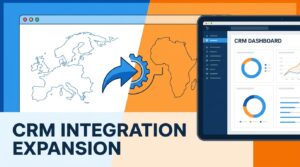
Fast Track, the Malta-headquartered CRM and player engagement platform, has confirmed a new integration of its solution with an operator holding licences across both European and African markets. The partnership extends Fast Track’s footprint into regions where localised player engagement and regulatory compliance increasingly dictate competitive advantage. While the operator’s identity has not been widely disclosed in full detail, the deal signals continued demand for specialised CRM tooling among operators managing complex, multi-jurisdictional portfolios.
What This Integration Signals for CRM in iGaming
Operator-side CRM has quietly become one of the most consequential technology layers in online gambling. The ability to segment players, automate retention workflows, and remain compliant with divergent regulatory frameworks across territories is no longer optional. It is, arguably, the difference between sustainable growth and churn-driven stagnation. This latest deal from Fast Track underscores a broader pattern: operators with cross-continental reach are gravitating toward platforms that can handle both the scale and the regulatory nuance of multi-market operations.
- Cross-border compliance pressure: Operators active in both Europe and Africa face starkly different regulatory environments, from GDPR-aligned data handling in Europe to emerging licensing frameworks across several African jurisdictions.
- Fast Track’s modular CRM architecture allows operators to tailor engagement strategies market by market, rather than applying a single playbook across all territories.
- Retention economics: With customer acquisition costs rising across mature European markets, CRM-driven retention has become a primary lever for margin protection.
- Africa’s growth trajectory: The continent’s online gambling sector continues to expand rapidly, and operators entering or scaling there need engagement tools that adapt to mobile-first user behaviour and local payment ecosystems.
Why Africa Changes the CRM Equation
European CRM strategies don’t transplant neatly into African markets. The user base skews younger, mobile penetration drives nearly all interaction, and payment fragmentation (a polite term for dozens of competing mobile money providers) forces operators to rethink how and when they engage players. Fast Track’s platform, which supports real-time event-driven automation, is positioned to handle these variables. But whether any single CRM layer can truly accommodate the gap between, say, a Swedish-regulated market and a Kenyan one remains an open question that the industry hasn’t fully answered.
Still, the commercial logic is hard to argue with. Africa’s regulated betting market has attracted significant operator investment over the past three years, and the operators moving fastest are those pairing local market knowledge with scalable technology infrastructure. Fast Track’s CRM and engagement platform fits that mould, offering API-driven integration that can sit alongside an operator’s existing tech stack rather than replacing it wholesale.
The Broader CRM Arms Race
This deal doesn’t exist in isolation. The iGaming CRM space has grown increasingly competitive, with providers like Optimove, Xtremepush, and others vying for operator contracts. What distinguishes the current wave of integrations is specificity: operators are no longer shopping for generic marketing automation. They want systems that understand gambling-specific triggers, from bonus abuse detection to responsible gambling interventions triggered by behavioural signals.
Fast Track has built its proposition around exactly this kind of vertical depth. The company’s platform processes player events in real time, enabling operators to trigger communications, offers, or compliance actions within seconds of a qualifying behaviour. That capability matters most in markets where regulators are tightening expectations around duty-of-care obligations (a distinction that varies enormously between, for instance, the UK Gambling Commission’s approach and the lighter-touch frameworks still common in parts of Africa).
Operational Realities Behind Multi-Market CRM
Running a CRM system across multiple regulatory jurisdictions introduces friction that pure technology cannot eliminate. Operators must navigate:
| Challenge | European Markets | African Markets |
|---|---|---|
| Data privacy regulation | GDPR and national-level requirements | Emerging frameworks, often less prescriptive but evolving quickly |
| Player communication channels | Email, push notifications, SMS | SMS and mobile app messaging dominate; email penetration lower |
| Responsible gambling mandates | Increasingly stringent, with real-time intervention expectations | Varies widely; some jurisdictions have minimal formal requirements |
| Payment integration | Card and e-wallet ecosystems well established | Mobile money fragmentation requires localised handling |
Each row in that table represents a decision point where CRM configuration diverges. And the cost of getting it wrong isn’t abstract: regulatory penalties in Europe can be severe, while in Africa, operational missteps risk losing hard-won local licences.
How Framing Shapes Operator Strategy
Beyond the technical mechanics, the way operators frame their CRM approach internally shapes outcomes more than most acknowledge. Neuro-linguistic programming principles offer a useful lens here. Operators that frame CRM as a compliance burden tend to underinvest in it, treating player engagement as a cost centre rather than a growth engine. Those that reframe CRM as a strategic asset, one that directly influences lifetime value and regulatory standing, consistently allocate more resources and see measurably better retention metrics.
Language matters in player-facing communications too. The difference between a bonus notification that reads as transactional and one that feels personalised can shift conversion rates by double-digit percentages. Fast Track’s segmentation engine allows operators to tailor not just the timing and channel of a message, but its tone and framing, adapting to player behaviour patterns rather than relying on static templates. This kind of adaptive communication mirrors NLP’s emphasis on matching language to the recipient’s mental model, meeting the player where they are rather than broadcasting a uniform message.
Anchoring effects also play a role. When an operator presents a retention offer alongside a reference point (“players like you typically enjoy…”), engagement rates tend to climb. The CRM systems enabling this level of contextual personalisation are the ones winning operator contracts right now. And the operators deploying them with genuine sophistication, rather than bolting them on as an afterthought, are the ones pulling ahead in crowded markets.
Frequently Asked Questions
What does Fast Track’s CRM platform do?
It provides real-time player engagement, segmentation, and automated communication tools designed specifically for iGaming operators. The platform processes behavioural events as they happen, enabling operators to trigger personalised actions instantly.
Why is CRM integration important for multi-market operators?
Operators active across different regulatory jurisdictions need CRM systems that can adapt messaging, compliance triggers, and engagement strategies to each market’s specific requirements. A one-size-fits-all approach creates both regulatory risk and player experience gaps.
How does Africa’s iGaming market differ from Europe’s?
Mobile-first behaviour dominates. Payment ecosystems rely heavily on mobile money rather than cards. Regulatory frameworks are less mature in many jurisdictions but are evolving, which means operators need flexible systems that can scale alongside changing rules.



