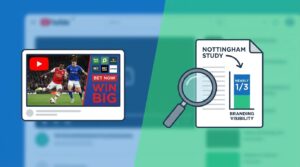
Researchers at the University of Nottingham have published findings showing that gambling-related branding appeared in close to one-third of sampled Premier League YouTube highlight clips. The study raises fresh questions about the scale of incidental gambling exposure reaching digital audiences, including younger viewers who fall outside traditional broadcast regulation. With the Premier League commanding one of the largest global sports audiences on YouTube, the implications stretch well beyond the UK’s regulatory perimeter.
What the Nottingham Research Actually Measured
The study systematically analysed official Premier League highlight videos hosted on YouTube, cataloguing every instance where gambling brand logos, shirt sponsorships, LED perimeter board advertisements, and other branded assets were visible on screen. The result: gambling imagery appeared in roughly 30% of the sampled content. That figure covers not just deliberate advertising placements but ambient exposure baked into the stadium environment itself.
This matters because YouTube highlight packages are consumed differently from live broadcasts. They’re shorter, often replayed, and algorithmically recommended to users whose age verification is, at best, nominal. A 15-year-old watching a goal compilation encounters the same gambling branding as a 40-year-old watching the live match (a distinction regulators have been slow to enforce).
Why Digital Gambling Exposure Demands a Different Framework
Traditional broadcast advertising rules in the UK operate under Ofcom and the Advertising Standards Authority. But YouTube sits in a grey zone. Pre-roll ads can be regulated. In-content branding embedded in stadium footage? Less so. The Nottingham findings highlight a gap that existing frameworks weren’t designed to address.
The Premier League’s official digital channels distribute highlight content globally, reaching markets where gambling advertising may be restricted or outright prohibited. What plays as a compliant sponsorship arrangement inside an English stadium becomes, on YouTube, an unregulated export of gambling imagery to jurisdictions with stricter rules.
And while the UK government’s 2023 gambling white paper introduced measures around direct advertising, it largely sidestepped the question of incidental brand exposure in digital sports content. Whether that omission was deliberate or simply reflects the pace at which policy trails technology remains an open question.
Scale of the Problem: Gambling Sponsorship Across the Premier League
| Sponsorship Type | Estimated Visibility in Highlights | Regulatory Coverage |
|---|---|---|
| Shirt front sponsors (gambling) | High — visible in most match footage | Voluntary phase-out by 2026 agreed |
| LED perimeter boards | Moderate to high — depends on camera angles | Subject to broadcast ad rules, not digital redistribution |
| Sleeve and training kit branding | Lower — less prominent in wide shots | Minimal specific regulation |
| Stadium naming or partnership signage | Variable — typically brief exposure in highlights | Not consistently covered by current frameworks |
The Premier League clubs collectively agreed in 2023 to a voluntary ban on front-of-shirt gambling sponsorship, effective from the 2026–27 season. Still, that commitment doesn’t touch perimeter advertising, sleeve deals, or the broader ecosystem of branded content that travels through digital highlights.
Cognitive Framing and Repeated Exposure: The NLP Dimension
Beyond regulatory mechanics, the Nottingham study intersects with well-established principles in behavioural science and neuro-linguistic programming. Repeated visual exposure to brand imagery operates below conscious attention thresholds, gradually normalising the association between elite sport and gambling. This process, sometimes described as “anchoring” in NLP terminology, links the emotional intensity of a Premier League goal to the gambling brand visible at the moment of celebration. Over time, the viewer doesn’t need to consciously register the logo. The association builds anyway.
Research in cognitive psychology supports this mechanism. Mere exposure effects, first documented by Robert Zajonc in the 1960s, demonstrate that repeated encounters with a stimulus increase positive affect toward it, even without conscious recognition. Applied to gambling branding in sports highlights, this suggests that younger viewers who repeatedly watch Premier League content on YouTube may develop favourable attitudes toward gambling brands before they’re old enough to place a legal bet. The framing is subtle but persistent. Each replay reinforces the link. Each shared clip extends the reach.
What makes digital distribution particularly potent is the viewer’s sense of agency. Choosing to watch a highlight clip feels like an active decision, which NLP practitioners recognise as increasing receptivity to embedded messaging. The viewer isn’t passively receiving a television broadcast; they’re engaging with content they selected. That psychological distinction amplifies the branding’s impact in ways that traditional advertising models don’t fully capture.
Arguably, this is where the regulatory conversation needs to shift. Measuring advertising seconds or counting logo appearances captures the surface. It misses the deeper behavioural architecture at work.
Frequently Asked Questions
Does the Premier League’s voluntary gambling sponsorship ban cover YouTube highlights?
No. The agreed phase-out applies specifically to front-of-shirt gambling sponsors from the 2026–27 season onward. Perimeter board advertising, sleeve sponsorships, and ambient branding visible in digital highlight packages remain outside the scope of that commitment.
Are children protected from gambling content on YouTube?
YouTube’s age-gating mechanisms are limited in practice. While direct gambling advertisements can be restricted through Google’s ad policies, in-content branding embedded in sports footage isn’t classified as advertising by the platform, so it bypasses those controls entirely.
What did the Nottingham researchers recommend?
The study points toward the need for regulatory frameworks that account for digital redistribution of sports content, particularly where gambling branding is incidentally but consistently visible. Specific policy recommendations from the research team have centred on extending broadcast-style protections to official digital highlight channels.
How does this compare to other European leagues?
Several European markets have moved faster. Italy banned gambling sponsorship in sport entirely in 2019 under the Dignity Decree. Spain imposed significant restrictions in 2021. The Premier League’s approach, relying on voluntary industry agreements rather than statutory prohibition, remains an outlier among major leagues.
What Comes Next for Regulators and Broadcasters
The Nottingham findings land at a moment when the UK Gambling Commission is already under pressure to demonstrate that the 2023 white paper’s reforms are producing measurable outcomes. If incidental digital exposure continues at the levels this study documents, the voluntary shirt-sponsorship ban risks looking like a symbolic concession rather than a substantive intervention.
For the Premier League itself, the tension is commercial. Gambling companies remain among the most willing spenders in football sponsorship, and clubs outside the top six rely heavily on that revenue. But the reputational calculus is shifting. Each new study quantifying youth exposure to gambling branding through football content makes the status quo harder to defend publicly.
Whether the next move comes from Parliament, from the Gambling Commission, or from YouTube’s own content policies is the part nobody seems willing to predict.