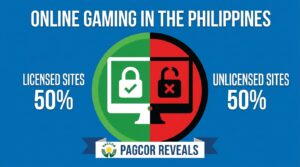
The Philippine Amusement and Gaming Corporation (PAGCOR) has disclosed that roughly half of all online gaming sites accessed within the Philippines operate without proper authorisation. The revelation underscores a persistent enforcement gap in one of Southeast Asia’s most active online gambling markets, where regulators have struggled to keep pace with a sprawling digital ecosystem. PAGCOR, the country’s sole gaming regulator and operator, flagged the issue as part of broader efforts to tighten oversight and protect Filipino consumers from unregulated platforms.
What PAGCOR’s Findings Signal for Philippine Online Gaming
The scale of unlicensed activity is striking, even for a market long associated with regulatory complexity. Before unpacking the broader implications, here are the core takeaways from PAGCOR’s latest assessment:
- Approximately 50% of online gaming platforms accessed by Filipino users lack PAGCOR licensing, exposing players to unregulated environments with no consumer protection mechanisms in place.
- Unlicensed operators siphon revenue away from the regulated market, reducing the tax base that funds government programmes and public services.
- PAGCOR’s enforcement capacity faces structural limitations, particularly in blocking offshore-hosted domains that fall outside Philippine jurisdiction.
- The regulator has signalled intent to collaborate with internet service providers (ISPs) and telecommunications companies to restrict access to unlicensed sites.
- Licensed operators face an uneven competitive landscape, competing against platforms unburdened by compliance costs, responsible gaming mandates, or tax obligations
The Enforcement Gap: Why Unlicensed Sites Persist
Blocking unlicensed gambling websites sounds straightforward. In practice, it is anything but. Many of these platforms are hosted on servers outside the Philippines, making direct regulatory action difficult. When one domain gets blocked, operators frequently resurface under a new URL within days, sometimes hours. This cat-and-mouse dynamic is not unique to the Philippines; jurisdictions from the UK to Australia have grappled with similar challenges. But the sheer proportion of unlicensed traffic in the Philippine market (a distinction regulators have been slow to quantify publicly until now) suggests the problem has outpaced existing countermeasures.
PAGCOR has historically focused enforcement resources on Philippine Offshore Gaming Operators (POGOs), which cater primarily to foreign players. That focus, while politically prominent, arguably left domestic-facing unlicensed sites with less scrutiny. The agency’s latest disclosure may represent a pivot toward addressing the demand side of the equation.
How Unlicensed Platforms Undercut the Regulated Market
Licensed operators in the Philippines bear significant compliance costs. These include licensing fees paid to PAGCOR’s regulated gaming framework, responsible gaming requirements, anti-money laundering protocols, and tax obligations that fund national infrastructure. Unlicensed competitors carry none of these burdens.
The result: a market caught between two frameworks. One is regulated, taxed, and accountable. The other operates in a grey zone, offering players higher payouts or more aggressive promotions precisely because it faces no regulatory overhead. For legitimate operators, the competitive distortion is measurable. And for the Philippine treasury, the lost revenue is substantial, though no official figure has been released quantifying the exact shortfall.
Comparative Regulatory Burden
| Factor | Licensed Operators | Unlicensed Operators |
|---|---|---|
| PAGCOR licensing fees | Required | None |
| Tax contributions | Subject to Philippine gaming tax rates | No tax obligations to the Philippine government |
| AML compliance | Mandatory reporting and KYC protocols | Typically absent |
| Responsible gaming tools | Self-exclusion, deposit limits, age verification | Rarely implemented |
| Consumer dispute resolution | PAGCOR-mediated | No formal recourse available to players |
Consumer Risk and the Psychology of Unregulated Play
Beyond the fiscal implications, the proliferation of unlicensed sites carries real consequences for Filipino consumers. Players on unregulated platforms have no guaranteed recourse if winnings are withheld, personal data is mishandled, or games are rigged. Yet many users gravitate toward these sites anyway, often unaware of their unlicensed status.
This is where behavioural patterns become relevant. From a neuro-linguistic programming perspective, unlicensed operators frequently deploy sophisticated persuasion techniques designed to anchor player attention and override cautious decision-making. Aggressive welcome bonuses, countdown timers creating artificial urgency, and social proof notifications (“Player X just won ₱50,000!”) tap into cognitive biases that licensed platforms are increasingly required to moderate. The framing effect plays a central role here: when a site presents itself with professional design, localised payment options, and Filipino-language interfaces, users unconsciously associate it with legitimacy. The visual and linguistic cues mimic those of regulated platforms, making it difficult for the average consumer to distinguish between the two.
Anchoring bias compounds the problem. When a player’s first interaction with an unlicensed site involves a large promotional offer, that initial anchor shapes their perception of value throughout their engagement. Even when payouts become inconsistent or withdrawal processes turn opaque, the anchored expectation of high returns keeps players engaged longer than rational assessment would warrant. Regulators across Southeast Asia have begun studying these patterns, but translating behavioural insights into enforceable policy remains a slow process.
Still, awareness campaigns that educate players on how to verify licensing status could disrupt some of these dynamics. PAGCOR maintains a public registry of licensed operators, though its visibility among casual players is limited.
What Comes Next for PAGCOR’s Crackdown
PAGCOR has indicated that ISP-level blocking will form a key pillar of its enforcement strategy going forward. Coordination with the National Telecommunications Commission (NTC) could accelerate domain-level restrictions, though the technical and legal frameworks for sustained blocking remain under development. Whether this approach proves more durable than previous efforts depends largely on the speed of implementation relative to operators’ ability to migrate domains.
The agency is also exploring partnerships with international regulatory bodies to share intelligence on cross-border unlicensed operators. This mirrors approaches taken in Europe, where multi-jurisdictional cooperation has yielded some success in disrupting offshore gambling networks.
One question lingers beneath the surface of PAGCOR’s announcement. If half the market is already operating outside regulatory reach, does the current licensing framework need structural reform to bring more operators into the fold, or does enforcement simply need sharper teeth?
Frequently Asked Questions
How can Filipino players verify if a gaming site is licensed by PAGCOR?
Players can check PAGCOR’s official website, which maintains a list of authorised online gaming operators. Any site not appearing on that registry should be treated as unlicensed, regardless of how professional its interface appears.
What risks do players face on unlicensed gaming platforms?
The risks range from financial loss due to rigged games or withheld payouts to exposure of personal and financial data. There is no regulatory body mediating disputes on behalf of players using these platforms, which means complaints have essentially nowhere to go.
Why is it difficult for PAGCOR to shut down unlicensed sites?
Most unlicensed platforms host their operations on servers outside Philippine jurisdiction. Blocking individual domains offers only temporary relief, as operators can register new URLs rapidly. Sustained enforcement requires coordination across ISPs, telecoms regulators, and sometimes foreign governments.