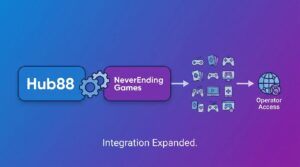
Hub88, the B2B platform provider, has struck a content integration deal with NeverEnding, making the studio’s full catalogue of titles available to operators through its aggregation platform. The partnership broadens Hub88’s supplier network while giving NeverEnding a wider distribution channel across regulated markets. For operators already connected to Hub88, the addition means immediate access to NeverEnding’s games without the friction of a separate technical integration.
What This Deal Signals for Both Parties
Content aggregation partnerships rarely generate headlines on their own. But the cumulative effect of these deals reshapes how operators build their game lobbies and, ultimately, how players encounter new studios. Here’s what stands out from this particular tie-up:
- Reduced integration burden: Operators on Hub88 gain NeverEnding’s titles through a single existing API connection, cutting weeks off what would otherwise be a standalone integration process.
- Distribution scale for NeverEnding: Plugging into Hub88’s operator network gives the studio access to a broader base of licensed operators across multiple jurisdictions.
- Hub88 continues to deepen its content library, a competitive necessity in an aggregation market where breadth and exclusivity drive operator loyalty.
- Market timing: The deal arrives as operators increasingly favour platform-level content access over direct supplier relationships, a structural shift that benefits aggregators.
The Aggregation Layer: Why It Keeps Growing
Platform aggregation has become the default distribution model for small and mid-sized game studios. The economics are straightforward. Building direct integrations with dozens of operators is expensive, slow, and resource-intensive. Aggregators like Hub88’s platform for iGaming content distribution compress that process into a single technical handshake, letting studios focus on game development rather than infrastructure.
Still, the model carries trade-offs. Studios cede a layer of commercial control. Aggregators take a revenue share. And the sheer volume of games flowing through these platforms can make visibility a challenge for newer providers. NeverEnding’s bet here is that Hub88’s reach outweighs those costs (a calculation most studios in their position tend to make, though not all see the returns they expect).
What makes this particular segment interesting is how competitive it has become. Hub88 operates alongside several well-established aggregators, each racing to sign exclusive or early-access deals with emerging studios. The result: a market where speed of integration and breadth of operator network have become the primary differentiators.
NeverEnding’s Position in the Studio Landscape
NeverEnding occupies a space that dozens of studios are currently fighting over. The company develops slot and casino game content aimed at regulated markets, competing for lobby placement against both established heavyweights and a growing wave of boutique providers. Securing aggregation deals is arguably the single most important commercial activity for studios at this stage of growth.
Whether this particular partnership materially shifts NeverEnding’s trajectory depends on factors neither party has disclosed publicly: the number of operators likely to activate the content, the jurisdictions where deployment will be prioritised, and the commercial terms underpinning the arrangement. NeverEnding has not released specific performance metrics tied to the deal.
How Operators Benefit from Expanding Content Pipelines
From the operator side, the value proposition is less about any single studio and more about optionality. A richer content library allows operators to test new games with player segments, rotate lobby placements more frequently, and respond to regional preferences without committing to heavy upfront integration work.
Three dynamics are worth tracking:
| Factor | Operator Impact |
|---|---|
| Content volume | More titles available for A/B testing and lobby optimisation |
| Integration efficiency | Single API connection reduces technical overhead significantly |
| Regulatory coverage | Aggregators typically handle certification across jurisdictions, easing compliance burden for operators |
| Commercial flexibility | Operators can activate or deactivate studio content based on performance data, with minimal switching cost |
And while content volume matters, operators have grown more selective. Raw game counts no longer impress procurement teams the way they did five years ago. Performance data, player retention metrics, and proven engagement rates now drive activation decisions.
Strategic Framing: What Shapes Decisions Like These
Deals of this nature sit at the intersection of commercial strategy and cognitive framing. In behavioural terms, the aggregation model works partly because it reduces decision fatigue for operators. Rather than evaluating each studio independently across technical, commercial, and regulatory dimensions, operators delegate a portion of that filtering to the aggregator. This is a form of anchoring: the platform’s existing reputation and track record serve as a mental shortcut for the operator’s procurement team.
For studios, the decision to aggregate rather than go direct reflects a reframing of priorities. The question shifts from “how do we reach every operator?” to “how do we reach operators efficiently enough to preserve margin?” That reframe, subtle as it sounds, changes internal resource allocation, team structure, and even product development timelines. Studios building for aggregation tend to standardise their game frameworks more aggressively, optimising for rapid deployment across platforms rather than bespoke operator customisation.
There is also a reciprocity dynamic at play. Aggregators that deliver measurable results for studios earn preferential access to future titles. Studios that perform well on a platform get better visibility and promotional support. The relationship compounds over time, which is precisely why early partnerships carry outsized strategic weight. Whether Hub88 and NeverEnding build that kind of compounding relationship remains to be seen.
Frequently Asked Questions
What does Hub88 do?
Hub88 operates a B2B content aggregation platform that connects game studios with online casino and sportsbook operators. Operators integrate once with Hub88 and gain access to a broad library of third-party game content.
Who is NeverEnding?
NeverEnding is a game development studio producing casino content, including slots, for regulated iGaming markets. The company focuses on building titles designed for wide distribution through aggregation partnerships.
How does this partnership affect operators?
Operators already connected to Hub88 can activate NeverEnding’s games without any additional technical integration. It expands their content options at no extra infrastructure cost.
Is this an exclusive deal?
Neither party has indicated exclusivity. NeverEnding may distribute through other aggregation platforms simultaneously, though specific terms have not been disclosed.