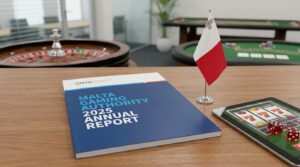
The Malta Gaming Authority (MGA) has released its latest annual report, outlining regulatory activities, enforcement actions, and strategic priorities across both the igaming and land-based gambling sectors. The report, published in 2025, provides a comprehensive look at how one of Europe’s most established gambling regulators is navigating an increasingly complex licensing landscape. For operators, compliance teams, and policy watchers, the document offers a window into where the MGA is directing its attention and resources.
What the MGA’s Annual Report Signals for the Industry
Beyond the raw data, the annual report functions as a regulatory roadmap. It reveals enforcement trends, licensing volumes, and the authority’s evolving posture toward emerging segments of the gambling market. Here are the key strategic takeaways:
- The MGA continues to position Malta as a hub for igaming licensing, reinforcing its role as one of the EU’s primary regulatory jurisdictions for online gambling operators
- Enforcement activity across both online and land-based sectors suggests a tightening of compliance expectations, particularly around anti-money laundering (AML) obligations
- The report covers the full scope of the authority’s mandate, including player protection measures, responsible gambling initiatives, and cross-border cooperation with other regulators
- Land-based gambling oversight remains a parallel priority, even as digital operations dominate the licensing pipeline
- Regulatory modernisation efforts appear aimed at keeping pace with technological shifts in the sector, from crypto-adjacent products to AI-driven compliance tools
Regulatory Scope and Licensing Activity
Malta’s gambling framework has long served as a benchmark for jurisdictions building their own regulatory architectures. The Malta Gaming Authority’s official regulatory portal hosts detailed information on its licensing categories, which span B2C and B2B operations across casino, sports betting, and other verticals.
What makes the 2025 report particularly worth examining is the breadth of its coverage. The MGA doesn’t simply count licences issued. It maps the full lifecycle of regulatory engagement: applications reviewed, licences suspended or revoked, compliance audits conducted, and sanctions imposed. That granularity matters because it distinguishes active regulation from passive licensing (a distinction regulators have been slow to enforce in several other jurisdictions).
Still, the report raises questions about capacity. As the number of licensed operators grows, so does the supervisory burden. Whether the MGA’s resources have scaled proportionally is something the report addresses in part, though not with the level of detail some industry observers might prefer.
How Land-Based and Online Sectors Are Treated Differently
One notable dimension of the report is how it handles the regulatory divide between land-based and online gambling. These are not mirror images of each other. The compliance challenges differ sharply.
Land-based operations face physical inspection regimes, location-based licensing constraints, and direct oversight of cash handling. Online operators, by contrast, contend with data protection mandates, geolocation verification, and platform integrity audits. The MGA’s report addresses both, but the weight of attention arguably tilts toward igaming, which generates the bulk of Malta’s gambling-related economic activity. That tilt is neither surprising nor inappropriate, but it does leave the land-based sector looking like a regulatory afterthought in places.
Enforcement Trends and What They Reveal
Enforcement data is where annual reports earn their real value. Licence counts tell you about market appetite. Sanctions tell you about market discipline.
The MGA has historically been willing to act against operators that fall short of compliance standards, including through licence cancellations and financial penalties. The 2025 report continues this pattern. And while specific figures from the report would need to be verified against the published document, the trajectory is consistent with a regulator that views enforcement not as exceptional but routine.
This matters for operators weighing jurisdictional risk. A regulator that enforces predictably is, paradoxically, more attractive than one that enforces rarely. Predictability reduces uncertainty. Uncertainty is expensive.
Cross-Border Cooperation
The report also touches on the MGA’s engagement with international regulatory bodies. In a sector where operators frequently hold licences across multiple jurisdictions, coordination between regulators is no longer optional. It is structural. The MGA’s participation in multilateral frameworks and bilateral agreements reflects this reality.
Frequently Asked Questions
What does the MGA annual report cover?
The report details the authority’s regulatory activities across igaming and land-based gambling, including licensing data, enforcement actions, player protection initiatives, and strategic priorities for the year ahead.
Why does Malta’s gambling regulation matter globally?
Malta is one of the largest igaming licensing jurisdictions in the European Union. Regulatory decisions made by the MGA often influence how other jurisdictions approach their own frameworks, particularly in areas like AML compliance and responsible gambling.
Does the report address emerging technologies?
Yes, at least in broad terms. The MGA has signalled interest in how technologies such as blockchain-based gaming products and AI-driven compliance solutions intersect with existing regulatory requirements. The depth of that coverage varies by topic.
The Broader Regulatory Landscape
Malta’s position in the European gambling ecosystem is not static. Competing jurisdictions, from the Isle of Man to Gibraltar to newer entrants like Greece, are actively refining their own licensing propositions. The MGA’s annual report, then, is not just an internal accountability document. It functions as a competitive statement, a signal to the market that Malta remains both serious and sophisticated in how it governs gambling activity.
Yet seriousness alone does not guarantee relevance. The next few years will test whether Malta’s regulatory infrastructure can adapt to pressures that didn’t exist when the framework was first built: the convergence of gaming and gambling, the rise of decentralised platforms, and growing political appetite across Europe for harmonised gambling regulation. The MGA’s 2025 report shows a regulator that is aware of these currents. Whether awareness translates into agility is the question that remains open.