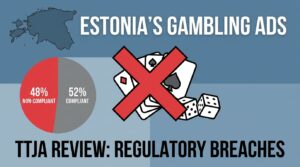
Estonia’s Consumer Protection and Technical Regulatory Authority (TTJA) has disclosed that close to half of all gambling advertisements it evaluated failed to meet the country’s advertising regulations. The finding, drawn from a systematic review of marketing materials across multiple channels, puts fresh pressure on operators to overhaul their promotional strategies. It also signals that Estonian regulators are prepared to tighten enforcement in a market where compliance gaps have persisted longer than authorities expected.
What the TTJA’s Advertising Review Uncovered
The scope of non-compliance is striking. According to TTJA’s assessment, roughly 50% of the gambling advertisements scrutinised contained violations ranging from misleading bonus claims to insufficient responsible gambling disclosures. Some ads targeted vulnerable demographics or failed to include mandatory warnings about the risks of gambling. The authority reviewed ads across digital platforms, broadcast media, and outdoor placements, suggesting the problem is not confined to a single channel but runs through the sector’s marketing apparatus broadly.
That breadth matters. When violations cluster in one medium, regulators can apply targeted fixes. When they appear everywhere, the implication is structural: operators either misunderstand the rules or have calculated that the cost of non-compliance is lower than the cost of restraint.
Strategic Implications for Gambling Operators in Estonia
Before unpacking the broader consequences, here are the core takeaways from the TTJA’s findings:
- Compliance failure rate near 50% across all reviewed gambling advertisements, indicating systemic rather than isolated issues
- Operators risk escalated enforcement actions, including potential fines and licence conditions, if advertising practices are not corrected
- Responsible gambling messaging requirements appear to be the most commonly neglected element in non-compliant ads
- The review covered digital, broadcast, and outdoor advertising, meaning no channel is exempt from scrutiny
- Estonia’s approach may influence regulatory posture in neighbouring Baltic states, where similar advertising debates are underway
A Regulatory Climate That’s Shifting Fast
Estonia has historically maintained a relatively permissive stance toward licensed gambling operators. But the TTJA’s latest review suggests the tolerance window is narrowing. Across Europe, advertising restrictions on gambling have accelerated sharply over the past two years. Italy imposed a near-total ban. The Netherlands introduced strict cooling-off periods for promotional content. Belgium tightened influencer marketing rules. Estonia, while not yet at that stage, is clearly moving along the same trajectory.
And while some operators have invested in compliance infrastructure, others appear to treat advertising guidelines as aspirational rather than binding (a distinction regulators have been slow to enforce until now). The TTJA’s willingness to publish these findings publicly is itself a signal: it puts operators on notice that the next step may involve sanctions rather than warnings.
How Operators Should Recalibrate
For gambling companies operating in Estonia, the practical question is not whether to adjust but how quickly. Several areas demand immediate attention:
| Compliance Area | Common Violation | Recommended Action |
|---|---|---|
| Bonus Advertising | Misleading terms or omitted wagering requirements | Full disclosure of conditions in the ad itself, not buried in landing pages |
| Responsible Gambling Warnings | Missing or insufficiently prominent disclaimers | Standardised warning placement across all formats |
| Audience Targeting | Ads reaching minors or vulnerable groups | Age-gating tools and stricter media placement criteria |
| Digital Channels | Retargeting users who have self-excluded | Integration of exclusion databases with ad platforms, which remains technically challenging for smaller operators |
Still, technical fixes alone won’t resolve the deeper issue. Operators need to embed compliance into their marketing culture, not bolt it on as an afterthought.
The Behavioural Dimension: Why Ads Work the Way They Do
Understanding why gambling advertisements so frequently push regulatory boundaries requires looking beyond legal frameworks into how these messages are designed to influence behaviour. Gambling marketing relies heavily on psychological anchoring, where bonus figures and potential winnings are presented prominently to create a reference point that shapes decision-making. The framing effect plays a central role: ads emphasise what players stand to gain while minimising or omitting the statistical likelihood of loss.
Scarcity cues are another common lever. Phrases like “limited-time offer” or “exclusive bonus” trigger urgency, bypassing the slower, more deliberative thinking that might lead a consumer to read the terms and conditions. These techniques are well-documented in behavioural science and, arguably, represent the core tension regulators face. The ads are not always factually false. They are, however, designed to exploit cognitive shortcuts in ways that responsible gambling frameworks are meant to counteract.
Regulators like the TTJA are increasingly recognising that compliance is not just about what an ad says but about how it makes people feel and act. This shift toward evaluating the psychological impact of advertising, rather than merely its literal content, is likely to reshape enforcement standards across the Baltic region. Operators who grasp this distinction early will find themselves better positioned when the rules inevitably tighten further. Those who continue optimising for engagement over transparency may find that the regulatory cost eventually outweighs the marketing return.
What Comes Next for Baltic Gambling Regulation?
Latvia and Lithuania have both signalled interest in harmonising certain aspects of gambling oversight with EU-wide trends. Estonia’s TTJA findings could accelerate that process. When one Baltic state publishes data showing widespread non-compliance, it creates political pressure on neighbouring regulators to demonstrate they are not lagging behind. The Estonian Consumer Protection and Technical Regulatory Authority has positioned itself as a first mover in this regard.
Whether this translates into formal sanctions, revised advertising codes, or cross-border regulatory coordination remains to be seen. But the direction is clear enough.
Frequently Asked Questions
What percentage of gambling ads in Estonia were found non-compliant?
The TTJA’s review found that nearly half of the gambling advertisements assessed violated Estonian advertising regulations, covering issues from misleading bonus promotions to absent responsible gambling warnings.
Which advertising channels were reviewed?
The authority examined ads across digital platforms, broadcast media, and outdoor placements. No single channel was exempt from the review.
Could operators face penalties?
Yes. While the TTJA has so far focused on publishing its findings and issuing guidance, the public nature of this review suggests that enforcement actions, including fines or licence conditions, could follow if operators do not correct their practices. The timeline for such measures has not been specified.
How does Estonia’s approach compare to other European markets?
Estonia’s regulatory posture is tightening but remains less restrictive than markets like Italy or the Netherlands, which have implemented outright bans or severe limitations on gambling advertising. The trajectory, however, points toward convergence.



