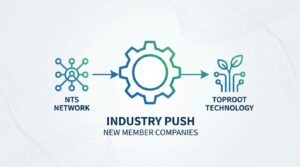
NTS Network and TopRoot Technology have been announced as new member companies, signaling a broadening of participation within the industry consortium they’ve joined. While the additions may appear incremental on the surface, the onboarding of firms with distinct technological profiles points to a deliberate expansion strategy. The move comes at a time when industry alliances are increasingly shaping competitive dynamics and regulatory positioning across the technology sector.
What These Membership Additions Signal for the Broader Ecosystem
New member announcements often get treated as routine housekeeping. They rarely are. When organizations like NTS Network’s infrastructure platform and TopRoot Technology step into a consortium, the composition of that group shifts in ways that affect strategic direction, resource pooling, and the kinds of standards that get prioritized. Below are the key business implications worth tracking:
- Diversified technical capabilities: Both companies bring specialized expertise that fills gaps in the existing membership base, potentially accelerating collaborative R&D timelines.
- The addition of two firms simultaneously suggests coordinated recruitment rather than organic interest, which hints at a more aggressive growth phase for the consortium.
- Market credibility boost: For NTS Network and TopRoot Technology alike, membership confers a degree of industry validation that can open doors with enterprise clients and regulators.
- Competitive signaling: Rival alliances will likely interpret these additions as a land-grab for influence in emerging technical standards.
Who Are NTS Network and TopRoot Technology?
NTS Network operates in the networking and connectivity infrastructure space, providing solutions that underpin enterprise-grade communications. Their focus on scalable, resilient network architectures has positioned them as a growing player in markets where uptime and throughput are non-negotiable. TopRoot Technology, by contrast, leans into foundational software layers and root-level system optimization (a distinction that matters more than it might initially seem). Together, the two companies represent complementary rather than overlapping competencies.
That complementarity is arguably the point.
Consortiums thrive when members don’t compete directly with each other but instead contribute puzzle pieces to a larger picture. NTS Network’s infrastructure orientation paired with TopRoot Technology’s deep-system capabilities creates the kind of vertical integration potential that attracts further membership and, eventually, shapes procurement decisions at the enterprise level. Whether the two firms will collaborate on joint initiatives or simply coexist under the same umbrella remains to be seen.
Why Consortium Membership Still Matters in 2024
Industry alliances have gone through cycles of relevance and irrelevance over the past two decades. Yet the current environment has revived their strategic importance for several concrete reasons. Regulatory frameworks in the EU, the United States, and parts of Asia-Pacific increasingly reference industry-developed standards when drafting compliance requirements. Being inside the room where those standards take shape gives member companies an asymmetric advantage.
There’s also the procurement angle. Large enterprises and government agencies often use consortium membership as a qualifying criterion in RFP processes. It functions as a shorthand for interoperability commitment and peer validation. For mid-sized firms like NTS Network and TopRoot Technology, this can be the difference between making a shortlist and being filtered out before evaluation even begins.
| Factor | NTS Network | TopRoot Technology |
|---|---|---|
| Primary Focus | Network infrastructure and connectivity | Root-level system software and optimization |
| Target Market | Enterprise communications, ISPs | Platform developers, system integrators |
| Strategic Value to Consortium | Scalable deployment expertise | Deep-stack technical differentiation |
| Likely Collaboration Areas | Standards for network resilience | Interoperability at the OS and firmware level, with broader implications for security auditing |
The Psychology of Strategic Alliances: An NLP-Informed Perspective
Beyond the mechanics of membership, there’s a cognitive dimension to how industry alliances function that deserves attention. Neuro-linguistic programming principles suggest that the way organizations frame their participation in consortiums directly influences stakeholder perception and internal motivation. When a company announces membership, it isn’t merely joining a list. It is anchoring its identity to a larger narrative of collaboration and innovation.
This anchoring effect works on multiple levels. Internally, employees interpret consortium membership as a signal that leadership is investing in long-term positioning rather than short-term extraction. That reframing can shift team behavior toward more collaborative, standards-oriented thinking. Externally, clients and partners process the announcement through what NLP practitioners call representational systems: they see the logo on a member page, hear about joint initiatives at conferences, and begin to associate the company with credibility and forward momentum.
Still, the framing has to be authentic. Organizations that join alliances purely for optics without contributing meaningfully tend to erode trust faster than they build it. The rapport-building principle in NLP applies here: sustained engagement and genuine value exchange create durable relationships, while performative membership gets noticed and discounted. For NTS Network and TopRoot Technology, the real test begins after the press release. How they show up in working groups, contribute to draft standards, and engage with fellow members will determine whether the membership translates into tangible business outcomes or remains a line item on a website.
And there’s a subtler dynamic at play. Consortium participation reshapes how companies talk about themselves. The language shifts from competitive differentiation (“we’re better than”) to ecosystem contribution (“we enable”). That linguistic pivot, small as it sounds, recalibrates sales conversations, partnership negotiations, and even internal strategy documents in ways that compound over quarters.
Frequently Asked Questions
What does consortium membership typically involve for new companies?
Members usually commit to participating in working groups, contributing to technical standards development, and in many cases paying annual dues. The depth of involvement varies significantly from one organization to the next.
Will NTS Network and TopRoot Technology collaborate directly?
No formal joint projects have been announced. But their complementary technical profiles make collaboration plausible, particularly around interoperability standards where network infrastructure meets system-level software.
How does this affect competitors outside the consortium?
Competitors may find themselves responding to standards they had no hand in shaping. That’s the quiet power of these alliances: influence over the rules of engagement before the market fully crystallizes.



