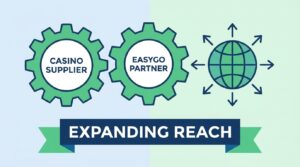
A fresh distribution agreement between an online casino game supplier and an operator under the Easygo umbrella signals continued momentum in the iGaming content supply chain. While specific details around the deal remain sparse, the partnership reflects a broader pattern of game studios seeking rapid market access through established operator networks. Easygo, known for its technology-driven approach to online gambling, has been steadily building a portfolio of operator brands that attract content providers looking for scale.
What This Deal Tells Us About iGaming Content Strategy
Partnerships like this one rarely exist in isolation. They tend to reveal where the market’s gravitational pull is heading, and right now, that pull favors operators with strong technical infrastructure and proven player engagement metrics. Here’s what stands out from a strategic perspective:
- The supplier gains immediate access to Easygo’s player base without the overhead of building direct-to-consumer channels
- Easygo-owned operators diversify their game libraries, a critical factor in player retention across competitive markets
- Content aggregation deals of this nature often serve as precursors to deeper integrations, including exclusive title launches or co-developed products
- For the supplier, aligning with an operator group rather than a single brand multiplies distribution potential across multiple properties simultaneously
Easygo’s Expanding Operator Ecosystem
Easygo has carved out a distinct position in the online gambling landscape. Rather than operating as a single-brand entity, the company has built and acquired multiple operator properties, creating an ecosystem that functions almost like a marketplace for game content. That structure makes it an attractive partner for suppliers at various stages of growth.
The company’s technology stack, which emphasizes fast integration and data-driven player experiences, lowers the friction that typically slows down supplier onboarding. For a game studio, the difference between a two-week integration and a two-month one can determine whether a title launches into relevance or obscurity. Speed matters in a sector where hundreds of new slots and table games hit the market every month.
And while Easygo’s exact market share figures remain undisclosed, the company’s footprint across crypto-friendly and traditional fiat gambling platforms gives it reach that spans multiple player demographics (a distinction that not every operator group can claim).
Why Supplier-Operator Deals Are Accelerating
The iGaming supply chain has shifted. Five years ago, the biggest challenge for a game supplier was building a quality product. Today, distribution is arguably the harder problem to solve. The market is saturated with competent studios producing visually polished, mechanically sound games. What separates winners from the rest is access to eyeballs.
Operators hold that access. They control the lobby, the promotional calendar, the recommendation algorithms. A supplier without strong operator relationships is, in practice, invisible to most players regardless of product quality.
This dynamic has driven a surge in B2B content deals across the sector. According to industry tracking, the number of supplier-operator integration announcements increased substantially through 2023 and into 2024, with mid-tier studios particularly aggressive in pursuing partnerships. The logic is straightforward: broader distribution leads to more gameplay data, which feeds back into better product development. It becomes a flywheel.
The Role of Aggregation Platforms
Many of these deals are facilitated through aggregation platforms that sit between suppliers and operators, handling technical integration, compliance checks, and content delivery. Easygo’s technology-driven online gambling platform has the infrastructure to support direct integrations, but aggregators still play a role in connecting smaller studios to operator networks at scale. Whether this particular deal involved an aggregation layer or was negotiated directly hasn’t been specified.
Reading Between the Lines: Market Positioning
Deals like this one don’t just distribute games. They position both parties within the market’s competitive hierarchy. For the supplier, landing an Easygo-affiliated operator validates product quality and opens doors to further conversations with other operator groups. For Easygo’s properties, fresh content keeps the platform experience from going stale.
But there’s a tension worth noting. As operators accumulate thousands of titles from dozens of suppliers, the challenge shifts from content acquisition to content curation. Players don’t browse 4,000 games. They play what’s surfaced to them. Which means the real value of a supplier-operator deal increasingly depends on what happens after the contract is signed: lobby placement, tournament inclusion, promotional featuring.
Less clear is whether this agreement includes any preferential positioning commitments.
Frequently Asked Questions
What does Easygo do in the iGaming industry?
Easygo operates as a technology company that owns and manages multiple online gambling operator brands. Its infrastructure supports both cryptocurrency and fiat currency gambling, giving it a broad player demographic reach.
Why are supplier-operator partnerships important?
Distribution determines visibility. In a market flooded with new game releases every week, suppliers need operator relationships to ensure their titles reach players. Without these partnerships, even high-quality games risk going unnoticed.
How do these deals typically work?
The supplier integrates its game content into the operator’s platform, either directly or through an aggregation layer. Revenue is typically shared based on net gaming revenue generated by the supplier’s titles. Terms vary, and exclusive arrangements sometimes apply to specific markets or game types.
Does this affect players directly?
Yes. More supplier partnerships mean a wider variety of games available on the platform, which translates to more choice and, ideally, better-curated gaming experiences for end users.